The Silent Crisis: Rethinking Global Maternal Health in an Era of Shrinking Aid
Every day, more than 700 women across the globe lose their lives due to complications arising from pregnancy and childbirth. This sobering statistic, provided by the World Health Organization (WHO), represents not just a failure of health systems, but a profound global injustice. While maternal mortality has seen historical declines over the past few decades, the momentum is stalling. As foreign aid budgets contract and geopolitical priorities shift, policymakers in low-income nations are facing a harsh reality: they must do more with significantly less.
In early June, philanthropist Melinda French Gates signaled a renewed urgency to address this gap by pledging $215 million to improve women’s health globally. With a targeted focus on underfunded regions, particularly in Africa, the initiative aims to catalyze progress in maternal care. However, as experts observe, the solution to this enduring crisis lies not merely in the volume of funding, but in a radical shift toward cost-effective, community-based, and evidence-based interventions.
The Landscape of Inequality: A Statistical Reality
The burden of maternal mortality is far from evenly distributed. Geography remains the most significant determinant of a woman’s survival during childbirth. Currently, approximately 87% of all maternal deaths occur within Southern Asia and Sub-Saharan Africa. The latter, struggling with infrastructure and healthcare workforce shortages, accounts for nearly 70% of these tragic outcomes.
The disparity is not confined to the developing world. Even in high-income nations, where medical technology is abundant, systemic inequities persist. In the United States, for instance, Black women are more than three times as likely as their white counterparts to die from maternity-related causes. This indicates that while the causes of mortality may vary—ranging from lack of basic supplies in rural Ethiopia to systemic racial bias in American hospitals—the common denominator is a failure to prioritize maternal health as a fundamental human right.
Chronology of a Crisis: From Global Ambition to Resource Scarcity
The global push to reduce maternal mortality reached a zenith during the era of the Millennium Development Goals (MDGs), where significant international resources were funneled into maternal health initiatives. These efforts saw success in many regions, but the transition to the Sustainable Development Goal (SDG) era has been marked by a plateauing of these gains.
- The Early 2000s: Global focus shifted toward universal access to reproductive health. Countries like Ethiopia began massive overhauls of their health systems.
- 2005: Ethiopia liberalized its abortion laws, a move that would eventually serve as a blueprint for reducing maternal deaths linked to unsafe procedures.
- 2014–2017: The University of British Columbia launched the Community-Level Interventions for Pre-eclampsia (CLIP) program, proving that community-health workers could effectively manage hypertensive disorders.
- 2020s: The COVID-19 pandemic severely disrupted global supply chains and redirected healthcare funding, leading to a "crisis of access" for expectant mothers.
- June 2024: Melinda French Gates’ $215 million pledge re-centered the conversation on underfunded maternal health areas, emphasizing that current funding models are insufficient to meet the remaining challenges.
The Pivot: Moving Away from Hospital-Centric Models
For decades, the standard response to maternal mortality has been to build massive, hospital-centered delivery models. While tertiary care facilities are essential for complex obstetric emergencies, they are often inaccessible to women in remote, rural areas. Furthermore, they are prohibitively expensive to maintain in resource-constrained environments.
Policymakers are now realizing that "simple is better." By scaling up low-cost, proven interventions that can be administered at the community level, nations can save lives before a woman ever reaches a hospital.
Tackling Postpartum Hemorrhage (PPH)
Postpartum hemorrhage remains the leading killer of women during childbirth. Yet, it is largely manageable. The active management of the third stage of labor—involving the administration of uterotonic drugs and controlled cord traction—can reduce severe PPH by 60–70%.
While oxytocin is the gold standard, its requirement for a cold chain makes it difficult to store in remote villages. The use of misoprostol, a heat-stable and oral alternative, has been a game-changer. Coupled with the use of simple plastic blood-collection drapes to accurately measure blood loss and the deployment of non-pneumatic anti-shock garments (NASG) to stabilize women in shock, these interventions represent a triumph of low-tech, high-impact medicine.
Managing Pre-eclampsia
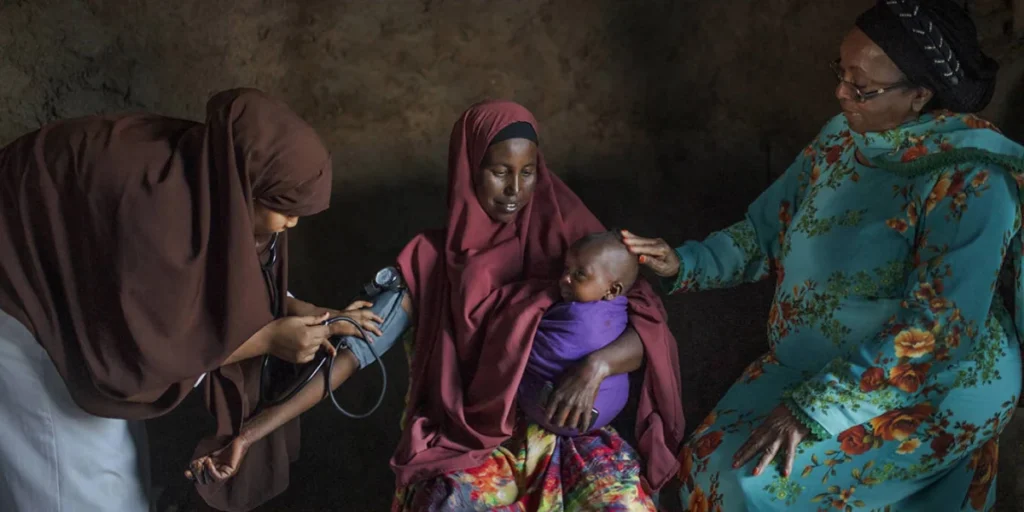
Pre-eclampsia affects 3–8% of pregnancies worldwide. If left untreated, it progresses to eclampsia, characterized by seizures and death. The CLIP program demonstrated that blood-pressure monitoring does not require a doctor; with basic training, community-health workers can identify high-risk patients, administer antihypertensives, and facilitate urgent referrals. This model turns the home visit into a life-saving diagnostic encounter.
Safe Abortion and Reproductive Rights
Unsafe abortions account for roughly 8% of maternal deaths globally. These deaths are entirely preventable. Ethiopia’s experience serves as a clear case study: after the government liberalized abortion laws in 2005 and integrated follow-up care into the public health system, the share of maternal deaths linked to unsafe abortion plummeted from 32% to less than 10% within a decade. Providing legal, safe, and accessible services effectively eliminates the risk of infection and hemorrhage associated with underground procedures.
Official Responses and Strategic Implications
The international community, including organizations like the WHO and various global health NGOs, is increasingly echoing the call for "multi-sectoral" approaches. The success of Bangladesh in rapidly reducing maternal mortality is the benchmark for this strategy.
Bangladesh’s approach was holistic:
- Infrastructure: It incentivized the growth of private and public medical facilities to ensure C-sections were available to those who needed them.
- Human Resources: It empowered community-based skilled birth attendants to serve as the first line of defense.
- Social Determinants: It addressed underlying issues such as high rates of adolescent pregnancy and poor maternal nutrition, which often predispose women to obstructed labor.
The Financial Challenge
The core implication of these findings is that the future of maternal health cannot rely on the whims of international philanthropy. While the $215 million from the Gates foundation is a necessary injection of capital, it is a drop in the ocean compared to the long-term needs of developing health systems.
Policymakers must prioritize "local resource mobilization." This involves:
- Integrating Maternal Care into National Budgets: Moving beyond "project-based" funding and toward permanent, line-item budget allocations for maternal health.
- Decentralization: Shifting the power and resources from central, urban-based ministries to district-level health authorities who understand the local context.
- Data-Driven Policy: Utilizing mobile technology to track pregnancies and outcomes in real-time, allowing for the rapid deployment of resources where they are needed most.
Conclusion: The Moral and Economic Imperative
Investing in maternal health is not merely a humanitarian gesture; it is an economic necessity. When a mother dies, the ripple effects are devastating—children are left orphaned, families are pushed into poverty, and the economic potential of a generation is compromised.
As foreign aid continues to decline, the global community is being forced to confront the "simplicity" of the solution. We have the knowledge, the drugs, and the tools to prevent the vast majority of maternal deaths. What is lacking is the political will to scale these interventions with the same urgency that we apply to other global health crises.
The path forward is clear: we must stop looking for high-tech "silver bullets" and start investing in the community-level systems that have already proven their worth. If we can provide a woman with a clean blood-collection drape, a heat-stable pill, and a trained health worker in her village, we are not just saving a life—we are preserving the foundation of a society. The challenge now is to ensure that these proven, affordable, and lifesaving interventions reach every woman, regardless of where she lives or the contents of her purse.