The Rise of the Agentic Wallet: How Stripe is Positioning for the Future of AI Commerce
The digital commerce landscape is undergoing a fundamental transformation. For years, the paradigm of online shopping involved a human consumer navigating a storefront, selecting items, and manually entering payment details. Today, that model is being disrupted by "agentic commerce"—a new frontier where autonomous AI assistants, or "agents," execute transactions on behalf of their human users.
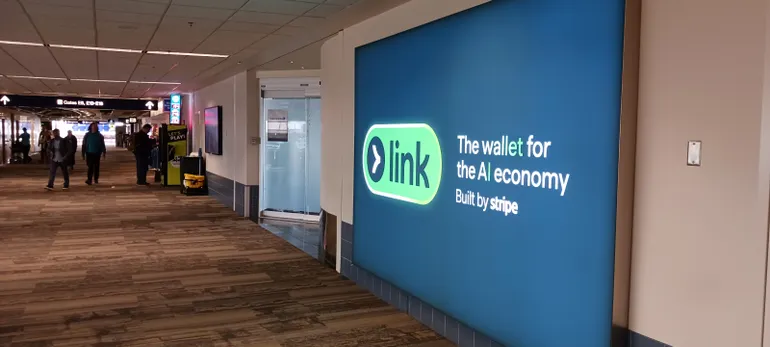
At the center of this shift is Stripe, the global payments infrastructure giant. Recognizing that the future of retail lies in the hands of bots rather than browsers, Stripe is aggressively maneuvering its digital wallet, Link, to become the preferred payment layer for the world’s most powerful artificial intelligence models.
The Strategic Integration: A New Breed of Personal Assistant
Stripe’s recent moves indicate a clear, long-term strategy: to ensure that when an AI makes a purchase, the financial rails underneath are powered by Stripe.
The most notable development in this space occurred on September 8, when Meta Platforms announced the launch of "Muse," its new personal AI agent. As part of its rollout, Meta has integrated Stripe’s Link wallet, effectively granting the AI the capability to complete complex payment transactions autonomously.
This integration is not an isolated experiment. It follows a wave of similar partnerships designed to solidify Stripe’s presence in the AI ecosystem. Last month, Stripe confirmed that Link had been integrated into xAI’s "Grok" bot, the AI assistant developed by Elon Musk’s venture. Simultaneously, the company announced a partnership with Instinct, a high-growth AI assistant startup that operates primarily through text-based interactions.
These partnerships are transformative. By embedding Link directly into these agents, Stripe is moving from being a "back-end" processor that works silently behind the scenes to a front-end participant in the consumer journey.
Chronology of an Evolution: From Payments Processor to Agentic Powerhouse
Stripe’s journey toward agentic commerce did not happen overnight. To understand the current momentum, one must look at the timeline of its strategic pivot:
- April 2026: During its annual developer conference, Stripe officially debuted its "payments for AI agents" initiative. The message was clear: as AI begins to act on behalf of users, the traditional checkout flow must be abstracted away.
- August 2026: Stripe accelerated its momentum by announcing a series of high-profile integrations, including Grok and the text-based assistant Instinct, signaling that the company was ready to scale its agentic footprint.
- September 2026: The partnership with Meta’s Muse was finalized, bringing Stripe’s payment capabilities to one of the most widely used social media ecosystems in the world.
- Late 2026: The market witnessed an explosion of AI agent adoption, with companies like OpenAI, Google, and Microsoft integrating payment tasks into ChatGPT, Gemini, and Copilot—platforms where Stripe already maintains a competitive presence.
The "Agent-as-Wallet" Paradigm
Industry experts argue that the integration of wallets into AI agents is not just a feature update; it is an existential shift in how commerce will function.
"Essentially, the way to think about this is that the agent will be the wallet or the wallet will be the agent," says Richard Crone, CEO of the payments advisory firm Crone Consulting LLC. In this new world, the AI does not simply "fill out" a form; it manages the entire transaction lifecycle—from product discovery and price comparison to checkout and post-purchase support.
Stripe’s Link wallet currently boasts 300 million global users and is integrated with approximately 1 million merchants. By leveraging this existing network, Stripe is attempting to bridge the gap between its traditional merchant-facing business and the emerging consumer-facing demand of AI.
The Security Layer: Protecting the User
One of the primary hurdles for agentic commerce is consumer trust. Users are naturally wary of allowing an AI to access their financial credentials. To address this, Stripe and its partners are implementing sophisticated security protocols.
In the case of Meta’s Muse, the wallet masks sensitive payment information. When the AI initiates a purchase, it utilizes a one-time-use virtual card generated by Link. As Simon Taylor, a prominent fintech commentator and head of market development for Tempo, noted in a recent LinkedIn post, "The agent never sees your real card." This abstraction is critical for widespread adoption, as it limits the blast radius of any potential security breach at the agent level.
Supporting Data and Market Dynamics
Stripe’s aggressive push into the consumer space is driven by a realization that it cannot rely solely on its B2B roots. While Stripe has dominated the merchant side of the digital economy, competitors like PayPal, Apple, and Google have long enjoyed "two-sided" networks—meaning they have direct relationships with both merchants and consumers.
The urgency of Stripe’s position is underscored by the sheer scale of the competitors it faces. PayPal, for example, has already forged deep ties with the large language models (LLMs) that underpin the industry’s leading AI tools. Furthermore, PayPal’s ecosystem supports nine distinct funding options, including Venmo, buy-now-pay-later (BNPL) schemes, and stablecoins.
In contrast, Stripe’s current agentic offerings are primarily focused on credit, debit, and pay-by-bank options. As Crone points out, "For a consumer confronting nine payment options, that’ll make your head spin. An AI agent, however, will assess all of them and decide which is best." For Stripe to remain relevant, it must ensure that its wallet is not just a payment method, but an "intelligent" participant capable of navigating these complex financial choices.
Official Perspectives and Corporate Strategy
Stripe has remained relatively quiet regarding the specific geographic distribution of its 300 million Link users, though the company’s public communications emphasize the efficiency gains that Link provides. According to Stripe’s own reporting, Link significantly improves merchant conversion rates and payment authorization rates by reducing the friction of manual data entry.
Meta, for its part, is looking to monetize the Muse agent through a multi-faceted approach. Industry analysts expect the company to charge merchants a percentage for every sale facilitated by the agent, while also potentially taking a cut of the savings the agent generates for the consumer. This includes "smart" features such as identifying applicable discount codes or automatically cancelling redundant subscription services.
Moreover, the integration comes with built-in protections. Meta’s press release highlights that purchases made via Muse through Link include coverage for damaged items, price drops, and no-fee returns. This "concierge" level of service is designed to make the AI assistant a safer, more reliable shopper than the average human.
Implications: The Existential Battle for Commerce
The race to control the "agentic wallet" is arguably the most important battle in the fintech sector today. If AI agents become the primary interface for shopping, the entities that control the payment layer will effectively control the flow of global commerce.
1. The Death of the Traditional Checkout
We are rapidly approaching a future where the "checkout page" becomes obsolete. When an AI agent executes a purchase, the transaction happens in the background. For merchants, this means that the user experience is no longer defined by their website’s UI, but by the "trust" and "capability" of the AI assistant. Stripe is positioning Link to be the invisible glue in this new reality.
2. The Power of Choice
As agents become more sophisticated, they will perform "agentic consideration." An AI will not just pay for an item; it will choose the payment method that offers the most rewards, the best protection, or the lowest fees. This forces payment providers like Stripe and PayPal to compete not just on ease of use, but on the value-add services they provide to the agent—such as fraud protection and price-drop guarantees.
3. The Need for Scale
Stripe’s reported interest in the past to acquire rivals like PayPal at massive valuations speaks to the company’s understanding of the stakes. In the era of AI, scale is everything. Without a massive consumer footprint, a payment provider risks being sidelined as agents gravitate toward the wallets that offer the most liquidity and the widest merchant acceptance.
Conclusion: A New Era for Stripe
Stripe is in a period of intense transition. By integrating its Link wallet into the most advanced AI agents on the market, the company is attempting to secure its future in a world where consumers are increasingly delegating their purchasing power to machines.
Whether Stripe can successfully transition from being the "plumbing" of the internet to a dominant consumer-facing brand remains to be seen. However, one thing is clear: in the race to dominate agentic commerce, Stripe is no longer playing defense. By aligning itself with industry leaders like Meta, xAI, and various high-growth AI startups, Stripe is betting that the wallet of the future will not be a physical object in a pocket, but a piece of code inside an AI’s logic.
As the lines between personal assistant, digital wallet, and payment processor continue to blur, the company that provides the most seamless, secure, and intelligent experience will undoubtedly define the next decade of global trade.