The Panoptic Pivot: How Uganda’s Traffic Surveillance System Sparked a National Privacy Reckoning
By Wairagala Wakabi
Published: October 21, 2026
Deep Dives: Privacy & Surveillance
Introduction: The Double-Edged Sword of Digital Security
Across the African continent, a familiar narrative has taken root. In the name of enhancing public safety, streamlining urban mobility, and combating the persistent threat of terrorism, governments are rapidly embracing advanced digital surveillance tools. From biometric national identity registries to predictive policing algorithms and ubiquitous closed-circuit television (CCTV) networks, the infrastructure of the modern security state is expanding at an unprecedented pace.
Yet, beneath the official rhetoric of modernization and national security, a darker trend is emerging. Civil liberties advocates, legal scholars, and human rights watchdogs are sounding the alarm: these potent technological apparatuses are increasingly being repurposed from tools of public protection into instruments of political control, targeted dissent suppression, and systemic civil rights erosion.
Uganda stands as a prime case study in this global phenomenon. Long accustomed to a delicate balance between state security imperatives and constitutional freedoms, the East African nation has become a testing ground for how ostensibly benign infrastructural upgrades can swiftly transition into mechanisms of pervasive state oversight.
Main Facts: The Anatomy of Uganda’s Surveillance Expansion
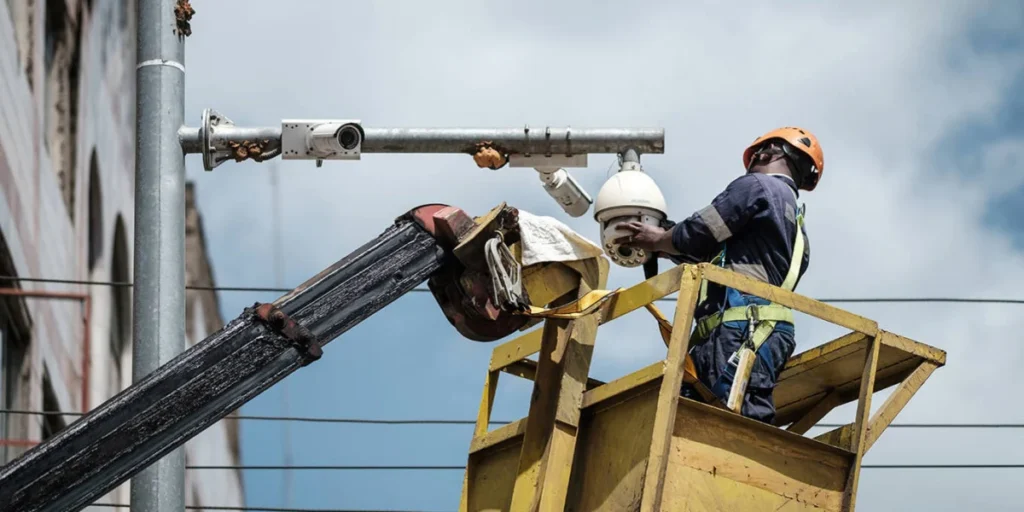
The most recent flashpoint in Uganda’s digital evolution occurred in mid-2025 with the operationalization of the Automated Express Penalty System, widely known as EPSAuto. Designed to overhaul the country’s notoriously chaotic transport sector, the system integrates high-definition CCTV cameras, automated number plate recognition (ANPR) software, and a centralized intelligent transport monitoring system (ITMS).
Core Components of EPSAuto:
- Automated Number Plate Recognition (ANPR): Optical character recognition cameras positioned at major junctions and highways instantly capture, log, and cross-reference vehicle registration plates against national databases.
- Intelligent Transport Monitoring System (ITMS): A centralized software grid that calculates vehicle speeds, tracks transit patterns across urban corridors, and automatically generates traffic infraction fines without requiring human intervention from traffic police.
- Real-Time Biometric and Spatial Mapping: The infrastructure feeds into broader national security databases managed by security agencies, effectively bridging the gap between civilian traffic management and intelligence-gathering operations.
While the government initially marketed EPSAuto as a revolutionary leap toward road safety, revenue accountability, and the reduction of human corruption within the traffic police force, the system almost immediately generated profound controversy. Within weeks of its activation in Kampala, motorists, legal experts, and privacy advocates began questioning the legal boundaries, data security protocols, and ultimate utility of a network that watches every movement on public thoroughfares.
Chronology: From Smart Highways to the Panoptic State
To understand how Uganda arrived at the current crossroads of digital surveillance and civil resistance, it is necessary to examine the systematic rollout of the country’s security architecture over the past decade.
2018–2019: The Genesis of the National CCTV Network
Following a wave of high-profile urban criminality and unsolved assassinations—most notably the 2018 murder of Member of Parliament Ibrahim Abiriga and prominent businessman Gerald Kisitu—President Yoweri Museveni’s administration fast-tracked a multi-million-dollar national security project. Partnering with global technology giants, the government initiated the installation of thousands of facial-recognition-enabled CCTV cameras across Kampala and major metropolitan areas.
2020–2023: Pandemic Controls and Digital Normalization
The COVID-19 pandemic provided an opportune window for the acceleration of state monitoring capabilities. Lockdowns, curfews, and contact-tracing mandates normalized the deployment of digital tracking tools, drone surveillance, and telecommunications data interception. During the heated 2021 general election cycle, these systems were frequently utilized to monitor opposition figures, disrupt communication channels, and restrict assembly under the guise of public health compliance.
2024: The Laying of the ITMS Foundation
As physical infrastructure expanded, the Ministry of Works and Transport, in collaboration with security and private tech contractors, laid the groundwork for the Intelligent Transport Monitoring System. Trials were conducted quietly, circumventing extensive public consultations or parliamentary debates regarding data protection safeguards.
June 2025: The Launch of EPSAuto
Kampala switched on the Automated Express Penalty System. Motorists began receiving automated text messages and digital notices regarding traffic fines, calculated algorithmically based on ANPR data. However, the system’s propensity for erroneous fines, combined with widespread public anxiety over where this continuous stream of location data was being stored and who could access it, triggered immediate pushback.
October 2026: The Reckoning
Current legal challenges, civil society reports, and parliamentary inquiries are probing the limits of EPSAuto and its sister surveillance networks, highlighting a widening chasm between state security ambitions and constitutional privacy rights.
Supporting Data: The Metrics of Monitoring
Quantifying the scale of Uganda’s surveillance apparatus reveals a staggering transformation in urban policing:
- Camera Density: Kampala’s urban center now boasts an estimated 5,000+ active CCTV nodes, many equipped with advanced pan-tilt-zoom (PTZ) lenses and thermal imaging capabilities.
- ANPR Coverage: Major arterial roads connecting Entebbe International Airport to the capital, as well as critical trade corridors toward Jinja and Mbarara, feature 100% ANPR gate coverage.
- Data Ingestion Rates: The ITMS processes millions of data points daily, logging vehicle timestamps, trajectory mapping, and owner identification metadata.
- Public Sentiment and Skepticism: According to a 2025 rapid-response survey conducted by Kampala-based digital rights organization Unwanted Witness, over 74% of urban motorists expressed deep distrust regarding how their movement data is retained, while 82% reported receiving at least one demonstrably false traffic penalty notice attributed to software misidentification.
Official Responses: Security vs. Sovereignty
The official stance of the Ugandan government remains steadfast: security and economic order supersede speculative privacy concerns.
"A modern nation cannot be managed with archaic methods," stated a senior Ministry of Internal Affairs spokesperson during a parliamentary committee hearing in late 2025. "The introduction of EPSAuto and the broader ITMS infrastructure is about bringing discipline to our roads, reducing carnage, and ensuring that criminals cannot use our transport networks with impunity. Those who protest transparency are often those who have something to hide."
Law enforcement agencies emphasize that all data collected under the ITMS and CCTV frameworks is encrypted, stored within secure sovereign servers, and handled in compliance with the Data Protection and Privacy Act of 2019. Officials argue that automated systems remove human discretion—and by extension, bribery—from the traffic penalty process, creating a fairer, more efficient administrative state.
However, independent oversight bodies and institutional watchdogs remain unconvinced. The Uganda Human Rights Commission (UHRC), while acknowledging the state’s mandate to maintain public order, has repeatedly cautioned against unchecked data aggregation.
Legal minds point out a critical loophole: while the Data Protection Act exists on paper, enforcement mechanisms concerning state security exemptions are exceptionally broad. Section 13 of the Act grants sweeping carve-outs for national security agencies, effectively shielding intelligence services, the police, and military intelligence units from independent judicial oversight when accessing citizen data collected via civil infrastructure projects like EPSAuto.
Implications: The Broader Regional and Democratic Fallout
The implications of Uganda’s technological trajectory extend far beyond Kampala’s congested streets, touching upon core questions of democratic governance, human rights, and the future of civil society in East Africa.
1. The Chilling Effect on Political Dissent
When every vehicle movement, transit route, and public gathering can be passively monitored, cataloged, and cross-referenced by state security apparatuses, the cost of political opposition rises exponentially. Activists, opposition politicians, and independent journalists report facing heightened surveillance, arbitrary vehicle interceptions justified by "traffic checks," and intimidation tactics enabled by real-time tracking data. This creates a powerful chilling effect, where citizens self-censor and hesitate to participate in lawful public demonstrations or political organizing.
2. Normalization of the Surveillance State
The incremental rollout of tools like EPSAuto demonstrates a classic "boiling frog" strategy. By introducing digital monitoring under the universally accepted banner of road safety and anti-corruption, governments lower public resistance. Once the infrastructure is normalized and integrated into daily life, expanding its remit to cover broader political or social surveillance requires minimal legislative friction.
3. Cybersecurity and Data Vulnerability
The rapid centralization of vast troves of citizen data—ranging from biometric markers to vehicle registration and real-time GPS trajectories—creates high-value targets for malicious actors. Critics question whether Ugandan state institutions possess the cybersecurity maturity required to safeguard millions of sensitive records against foreign state-sponsored espionage, ransomware attacks, or insider data theft.
4. A Continental Blueprint
Uganda is not an outlier. Across Sub-Saharan Africa, nations from Kenya and Rwanda to Zimbabwe and Ethiopia are importing similar turnkey surveillance technologies—frequently financed and constructed by foreign tech conglomerates with minimal human rights conditionality. The normalization of these tools in Kampala serves as a bellwether for the continent, illustrating how digital authoritarianism can easily wear the mask of municipal progress.
Conclusion: Reclaiming the Digital Public Square
As Uganda navigates the complexities of the digital age, the controversy surrounding EPSAuto and the intelligent transport monitoring network serves as an urgent call to action. The fundamental tension between state-mandated security and individual privacy cannot be resolved through executive fiat or opaque security exemptions.
To safeguard its democratic foundations, Uganda must bridge the gap between technological modernization and constitutional accountability. This requires:
- Rigorous Judicial Oversight: Empowering independent data protection authorities to audit state surveillance databases without blanket national security vetoes.
- Transparent Procurement: Mandating public disclosure and parliamentary scrutiny for all future digital infrastructure and security contracts.
- Robust Civil Society Engagement: Ensuring that legal experts, human rights defenders, and affected citizens have a seat at the table when defining the boundaries of public oversight.
Without these vital corrections, the smart highways of Kampala risk leading the nation not toward a future of orderly prosperity, but into the unyielding confines of the panoptic state.