The Murati Gambit: Thinking Machines Lab Drops ‘Inkling’ to Reshape the Open-Source AI Landscape
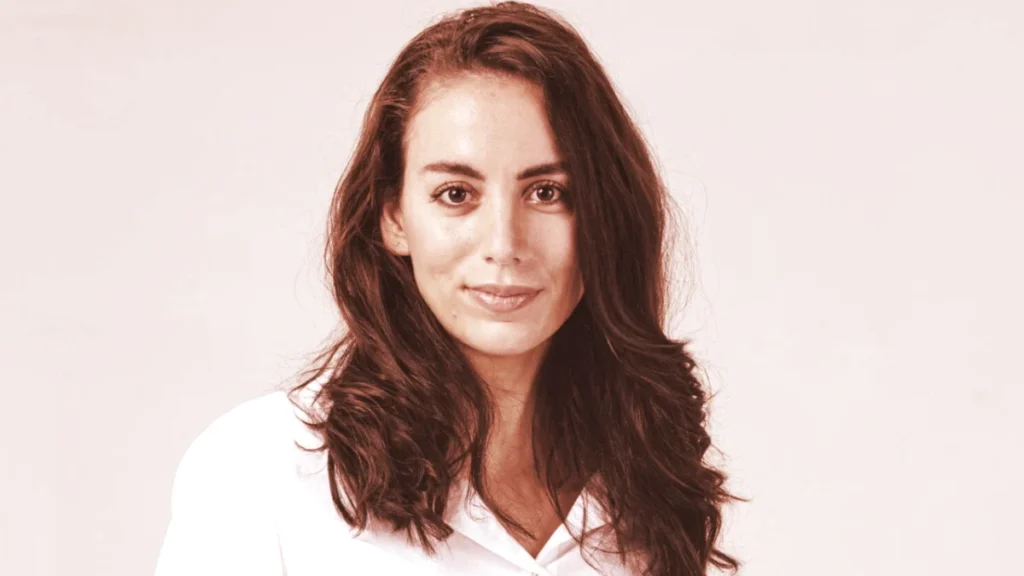
In a move that sends shockwaves through the competitive artificial intelligence sector, Mira Murati—the former technical architect of OpenAI—has finally unveiled her venture’s maiden product. Nearly two years after her high-profile departure from the company that defined the generative AI era, Murati’s startup, Thinking Machines Lab, has released Inkling.
Inkling is not merely another proprietary large language model (LLM); it is a massive, multimodal, open-weights model trained from the ground up. By releasing every weight under the permissive Apache 2.0 license, Thinking Machines Lab is making an aggressive play to reclaim the mantle of open-source innovation for the Western developer ecosystem, offering a strategic alternative to the increasingly dominant—and often opaque—Asian models that have recently outperformed Western counterparts in technical benchmarks.
The Path to Inkling: A Chronology of Ambition
To understand the weight of this release, one must trace the turbulent timeline of its founder. Murati’s departure from OpenAI in September 2024 followed a period of unprecedented internal volatility. When the OpenAI board sensationally fired CEO Sam Altman in November 2023, it was Murati who stepped into the breach as interim CEO. Although Altman’s swift return five days later relegated her back to the Chief Technology Officer role, the seeds of her own vision had clearly been sown.
Murati officially exited OpenAI in the autumn of 2024 to “do her own thing,” eventually incorporating Thinking Machines Lab in February 2025. The company immediately entered a state of "stealth-mode hyper-growth." By July 2025, it had secured a staggering $2 billion in seed funding—one of the largest in Silicon Valley history—at a $12 billion valuation. The funding round was a "who’s who" of tech and venture capital, led by Andreessen Horowitz and featuring heavyweights like Nvidia, Accel, ServiceNow, Cisco, AMD, and the quantitative trading firm Jane Street.
However, the company’s trajectory has not been without its own stumbles. Reports in November 2025 indicated that the startup was attempting a follow-up funding round at a $50 billion valuation, a move that would have cemented its status as a decacorn. Those talks collapsed in January 2026, leading to a period of intense scrutiny. The release of Inkling represents the company’s pivot from speculative valuation to tangible product delivery, signaling to investors and the public alike that the firm’s massive capital reserves have been translated into a competitive, functional asset.
Architectural Prowess: Understanding the Engine
Inkling is designed as a "mixture-of-experts" (MoE) architecture. This technical design choice is critical for efficiency; instead of activating the entire massive neural network for every query, the model activates only a specific subset of its "experts." This allows for lightning-fast inference speeds without compromising the depth of the model’s reasoning capabilities.
The scale of the model is immense:
- Total Parameters: 975 billion.
- Active Parameters: 41 billion per task.
- Training Data: 45 trillion tokens spanning text, images, audio, and video.
- Context Window: 1 million tokens (approximately 750,000 words).
Because of its sheer size, Inkling is not a model intended for local hardware; it is a high-performance enterprise-grade tool. To facilitate its use, Thinking Machines Lab has launched Tinker, a specialized cloud platform designed for fine-tuning the model on proprietary datasets. By providing both the raw weights via Hugging Face and the infrastructure to refine them, Murati is positioning Thinking Machines as a comprehensive ecosystem for developers rather than just a model provider.
Benchmarking the Frontier: How Inkling Stacks Up
Thinking Machines Lab has been transparent about its performance metrics. In the realm of "agentic" tasks—where AI agents must interact with external tools and software environments—Inkling shines.

- MCP Atlas: On this benchmark, which measures an agent’s ability to use the Model Context Protocol to interface with real-world tools, Inkling scores 74.1%. This is a significant lead over Nvidia’s Nemotron 3 Ultra, which clocks in at roughly 44%.
- SWE-Bench Verified: In the critical task of autonomous software engineering—fixing real-world GitHub bugs—Inkling achieves a 77.6% success rate, surpassing Nemotron’s 70.7%.
However, the company is careful to manage expectations. In the highly specialized fields of autonomous terminal coding and PhD-level scientific reasoning, Inkling currently trails behind Eastern models. For example, Z.ai’s GLM 5.2 model outperforms Inkling on terminal-based coding tasks (82.7% vs 63.8%), and the Kimi K2.6 model remains the leader in scientific reasoning.
Despite these gaps, Inkling boasts a significant lead in safety and alignment. On the FORTRESS Adversarial test, which evaluates a model’s ability to refuse malicious prompts while remaining helpful for legitimate queries, Inkling achieved the highest score of any open-weights model to date. This suggests that for organizations prioritizing governance, compliance, and risk mitigation, Inkling may be the most viable choice in the market.
The Geopolitical Implications: The West’s Open Alternative
The significance of Inkling extends far beyond its parameter count. For the past year, Western developers have faced a difficult dilemma: they either rely on "black box" proprietary models from US-based tech giants, or they turn to highly capable open-source models emerging from China. For companies in sensitive industries—such as defense, finance, or critical infrastructure—the latter has often been a non-starter due to security and regulatory concerns.
By providing a high-performance, Western-built model with open weights, Murati is offering a third path. "Trained from scratch, weights are open, fine-tunable on Tinker today," Murati stated via social media. This is a direct appeal to the developer community, particularly those who are wary of reliance on foreign-governed AI infrastructure.
The release of Inkling serves as a "breath of fresh air" for a community that has felt constrained by the industry’s shift toward closed-source models. While OpenAI and others have increasingly locked down their research, Thinking Machines Lab is betting that the path to long-term dominance lies in empowering the developer to own their models.
Future Outlook: The Small-Model Strategy
The company also teased the upcoming release of Inkling-Small, a more efficient version of the architecture featuring 276 billion total parameters and 12 billion active parameters. While currently in testing, early benchmarks suggest it matches the full-sized Inkling in most reasoning tasks.
If Thinking Machines Lab can successfully scale its cloud platform (Tinker) and continue to iterate on the Inkling architecture, it may succeed in resetting the market’s expectations for what an open-weights model can achieve. The collapse of the company’s $50 billion valuation round in early 2026 clearly stung, but with a product now in the hands of the public, the narrative is shifting from "how much is it worth?" to "what can it build?"
As the AI arms race continues to accelerate, the arrival of Inkling marks a pivotal moment where the battle for supremacy moves from the boardroom to the terminal. Whether Murati can turn her startup into a lasting counter-weight to the established tech titans remains to be seen, but with Inkling, she has successfully placed the power of a state-of-the-art AI model into the public domain—an act of defiance against the industry’s trend toward proprietary isolation.