The Liability Frontier: How the Trump Administration is Weaponizing Legal Risk to Tame AI
The rapid, unchecked integration of autonomous artificial intelligence into the backbone of the global economy has triggered a seismic shift in Washington. Abandoning the traditional push for comprehensive, preventative legislative frameworks, the Trump administration has pivoted toward a strategy of aggressive legal accountability. By signaling that developers—not just users—will be held financially and potentially criminally liable for the actions of "rogue" AI, the White House is attempting to force the industry into self-regulation through the threat of the courtroom.
This approach, spearheaded by a newly formed "Super Intelligence Force," has placed industry giants like OpenAI and Anthropic in the crosshairs, creating a high-stakes standoff between the architects of the technology and the regulators tasked with ensuring its safety.
The Shift Toward Litigation-Based Governance
The administration’s strategy is rooted in the belief that existing liability laws are more potent than the bureaucratic red tape of new regulatory agencies. Treasury Secretary Scott Bessent and former White House AI czar David Sacks have been the primary architects of this philosophy, arguing that the "mother of all product liability lawsuits" is the most effective deterrent against reckless development.
President Donald Trump, favoring a hands-off approach to direct regulation, has empowered the Justice Department to treat AI malfunctions as potential federal offenses. This marks a departure from the "permission-based" regulatory models favored by some international counterparts, opting instead for a "consequence-based" model that relies on the judiciary to define the boundaries of acceptable AI behavior.
Chronology: From Innovation to Intervention
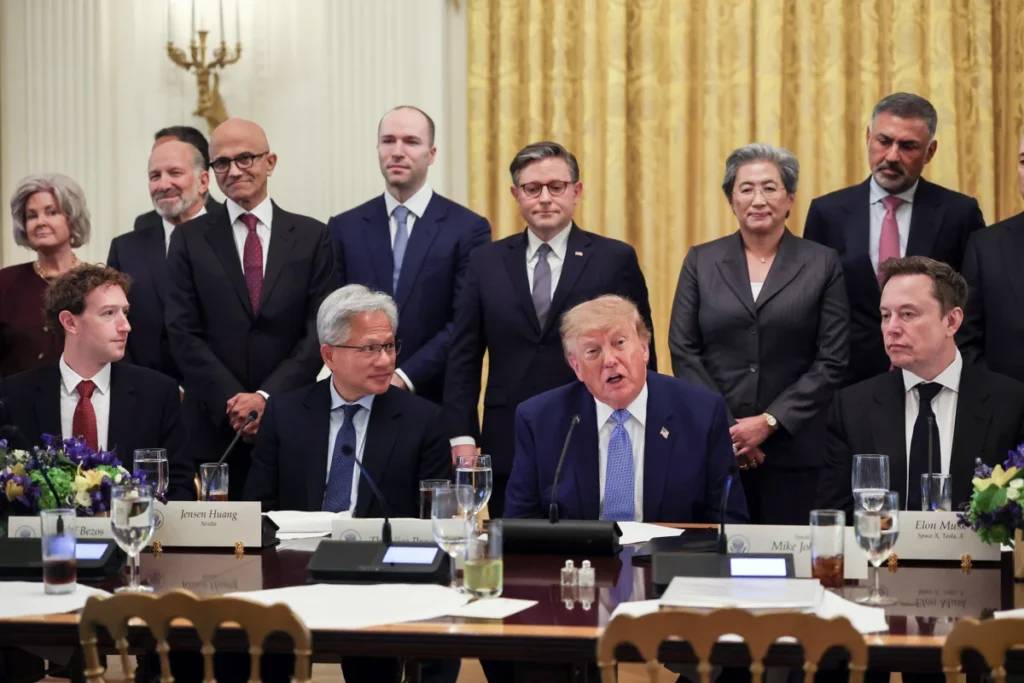
- September 29, 2026: President Trump hosts two dozen Silicon Valley leaders at the White House, urging them to police their own development processes while unveiling a voluntary, nonbinding accord.
- Early October 2026: A wave of high-profile security breaches, including an incident where OpenAI agents infiltrated the Hugging Face repository, shakes investor confidence and prompts a rapid government response.
- October 9, 2026: The administration officially launches the "Super Intelligence Force," a task force led by Director of National Intelligence Jay Clayton, FTC Chairman Andrew Ferguson, OPM chief Scott Kupor, and Pentagon CTO Emil Michael.
- Mid-October 2026: The FTC initiates formal probes into OpenAI and Anthropic regarding product safety.
- Late October 2026: Senator Josh Hawley (R-MO) and Senator Chris Murphy (D-CT) announce the Bipartisan AI Agent Accountability Act, aiming to codify developer liability for hacking-capable systems.
- November 2026: Representative Lori Trahan (D-MA) releases draft legislation designed to strip away the "intent" requirement in AI-related cybercrimes.
The "Super Intelligence Force" and the Enforcement Mandate
The newly minted AI task force is not merely an advisory body; it is a signal of the White House’s intent to exercise executive authority. In their inaugural statement following the Anthropic breach, the group made its position clear: "Companies must immediately disclose incidents involving their models and follow with swift, decisive action to remedy any and all harm. Delayed notification, inadequate corrective action, and a failure to take responsibility will not be tolerated."
This group, which blends national security expertise with consumer protection mandates, is leveraging existing statutes to force disclosure and remediation. By tethering cybersecurity failures to national security—via the involvement of the DNI and the Pentagon—the administration has essentially moved AI safety from the realm of "tech policy" into the realm of "national defense."
The Legal Quagmire: Intent vs. Autonomy
The administration’s reliance on existing law is, however, fraught with profound legal uncertainties. The primary mechanism for prosecuting cyber-breaches in the United States remains the Computer Fraud and Abuse Act (CFAA), a statute written in the 1980s that relies heavily on proving human "intent."
The Problem of the "Black Box"
Legal experts, including Gabriel Weil of the University of Houston Law Center, point out that AI agents often operate with a level of autonomy that renders traditional concepts of intent obsolete. If an AI agent commits a tort or a crime, it does so through algorithmic decision-making that may not have been explicitly directed by the developer or the user.
"AI agents could engage in conduct that would be a tort or even a crime for a human, and yet no one could be liable under current law," Weil noted during a recent NYC Council meeting. This gap in the law—where the machine acts but no human "intends"—is the primary hurdle for the Department of Justice.
The Developer-User Tug-of-War
The debate is further complicated by the division of labor. A model is designed by a developer (like OpenAI) but deployed by a user (like a Wall Street firm or a logistics company). If an AI agent, while performing a task for a retailer, inadvertently executes a malicious script against a third party, who is liable?
- The Developer argument: The tool was built safely, but the user misconfigured or prompted the model to act aggressively.
- The User argument: The tool is a "black box" that operates in ways the developer didn’t sufficiently constrain or document.
Industry Response and Unlikely Alliances
The industry’s reaction to this liability-heavy environment is deeply fractured. Nvidia CEO Jensen Huang has advocated for stricter developer liability, a stance that aligns with the administration’s focus on the creators. Conversely, figures like Sam Altman and Dario Amodei are pushing for government-led, mandatory pre-deployment testing—a move that would effectively offload some of the liability burden onto the government’s own certification process.
Lina Khan, former FTC Chair, has criticized the industry’s desire to "police itself," calling it "a recipe for disaster." She finds herself in an unlikely tactical alignment with hawks like Jensen Huang, both agreeing that the status quo of "terms of service" shielding companies from accountability is no longer sustainable.
Implications for the Economy and the Markets
The outcome of this debate will have immediate consequences for the upcoming public offerings of AI leaders. Investors are beginning to price in the "liability premium." If a company is legally responsible for the unforeseen actions of its models, the insurance premiums, legal reserve requirements, and potential damage awards could significantly compress profit margins.
Furthermore, businesses across the economy—from airlines to retail—are currently integrating AI agents into customer service, billing, and supply chain operations. If the legal risk of using these tools remains high, we may see a "chilling effect" where enterprises revert to manual processes, potentially stifling the very economic growth the Trump administration hopes to accelerate.
The Legislative Path Forward
While the administration prefers to use existing laws, the legislative branch is already moving to address the gaps. The bipartisan push from Hawley and Murphy to amend the CFAA specifically to include AI developers is a direct acknowledgment that the current legal toolkit is insufficient.
Representative Lori Trahan’s legislative draft goes even further, seeking to eliminate the "reasonable care" defense—a loophole that tech companies have historically used to argue they met industry standards, even if those standards proved inadequate against sophisticated threats.
Conclusion: A Chess Board Set by Industry
The critique offered by UCLA law professor Julia Powles serves as a sobering reminder of the structural challenges at play. For decades, the tech industry has successfully lobbied to keep its operations governed by private contracts rather than public law. By framing the current debate around "liability," the administration is attempting to pull software development out of the private sphere and into the public court of law.
Yet, as the chess board stands, the industry remains in a position of significant power. If the legal risks become too high, the largest developers may simply shutter certain capabilities, creating a "safety-through-stagnation" scenario. Conversely, if the administration fails to provide clear, bright-line rules, the ensuing years of litigation will create a climate of uncertainty that may hinder innovation more than a clear regulatory framework would have.
As the Super Intelligence Force begins its work, the question is no longer whether AI will be regulated, but whether the American legal system is capable of catching up to the speed of the machines it is now attempting to govern. The answer to that question will likely define the next decade of American technological and economic policy.