The Interconnected Web of Repression: Azadeh Shahshahani on Global Solidarity and the US War Economy
In an era defined by intensifying geopolitical volatility and domestic civil rights challenges, the lines between foreign policy and local community safety have become increasingly blurred. Azadeh Shahshahani, the legal and advocacy director for Project South and a prominent human rights attorney, argues that the violence inflicted upon Black, brown, and Muslim communities in the Global South is intrinsically linked to the patterns of repression seen within the borders of the United States.
As an Iranian American who cut her teeth in the legal trenches of Atlanta, Shahshahani offers a unique vantage point on how militarism abroad and authoritarianism at home function as two sides of the same coin. Her work seeks to dismantle the "playbook" of state violence that relies on dehumanization and the normalization of suffering to maintain power.
The Geography of State Violence: From Tehran to Atlanta
Shahshahani’s perspective is informed by a lived experience that spans continents. Born in Iran just days after the 1979 revolution, her name—which translates to "free-spirited"—reflects the initial hope of a generation. That hope was quickly eclipsed by the rise of a theocracy and, crucially, by the geopolitical machinations of the United States.
"We cannot separate US imperialism and militarism—the attacks against Black and brown people in the Global South—from US government repression against Black and brown communities and Muslim communities in the US South," Shahshahani explains. She points to the Iran-Iraq War as a seminal moment in her understanding of this dynamic. During the eight-year conflict, the United States provided strategic support to Saddam Hussein, a decision that resulted in the deaths of over a million people. For a young Shahshahani, the trauma of seeing her own neighborhood bombed by US-backed forces left an indelible mark. Today, as she observes the modern-day bombing of regions across the Middle East, she sees the same cycles of trauma being inflicted upon a new generation of children.
Chronology of a Failed Policy: The "Old Playbook"
The historical trajectory of US interventionism reveals a persistent pattern: the pursuit of strategic resources, most notably oil, followed by economic and military destabilization.
- The Post-Revolutionary Era (1980s): The US government, seeking to contain the newly established Iranian theocracy, supported the Iraqi invasion, leading to catastrophic loss of life and regional instability.
- The Post-9/11 Expansion (2001–Present): In the wake of the September 11 attacks, the US government implemented a sweeping infrastructure of surveillance and mass detention targeting Muslim communities. Shahshahani notes that this was not a novel invention but a refinement of existing tools like COINTELPRO, adapted for a post-9/11 landscape.
- The Current Crisis (2024–2026): We are currently witnessing a convergence of xenophobic rhetoric and aggressive state action. From the dehumanizing language used by political figures to describe populations in the Global South to the militarized raids on immigrant communities in the US, the playbook remains consistent.
This strategy of "othering" is not confined to foreign policy; it is exported back into the American heartland. When the establishment successfully normalizes the dehumanization of people in the Global South, the rhetoric becomes a weapon to be used against immigrants, Muslims, and marginalized communities within the United States.
Supporting Data: The Cost of Normalizing Repression
The domestic manifestation of this state-sponsored violence is most visible within the US prison-industrial complex. In Georgia, the Stewart Detention Center serves as a grim testament to the consequences of this policy.
Records indicate that at least fourteen individuals have died while in custody at Stewart. The circumstances of these deaths—including at least four suicides and multiple instances of prolonged solitary confinement—highlight a system that prioritizes containment over human rights. When the state treats human beings as disposable, whether in a war zone abroad or in a detention facility in the US South, it reflects a foundational disregard for the sanctity of life that is essential to maintaining the status quo of a "war economy."
The Erosion of Democratic Checks and Balances
The parallels between the erosion of democracy in the Global South and the political climate in the United States are striking. Shahshahani observes that autocratic tendencies are becoming increasingly sophisticated as they learn from one another.
"The issue of the erosion of democracy is pretty significant," she notes. "They are taking steps toward eroding any type of system of checks and balances that we have in this country."
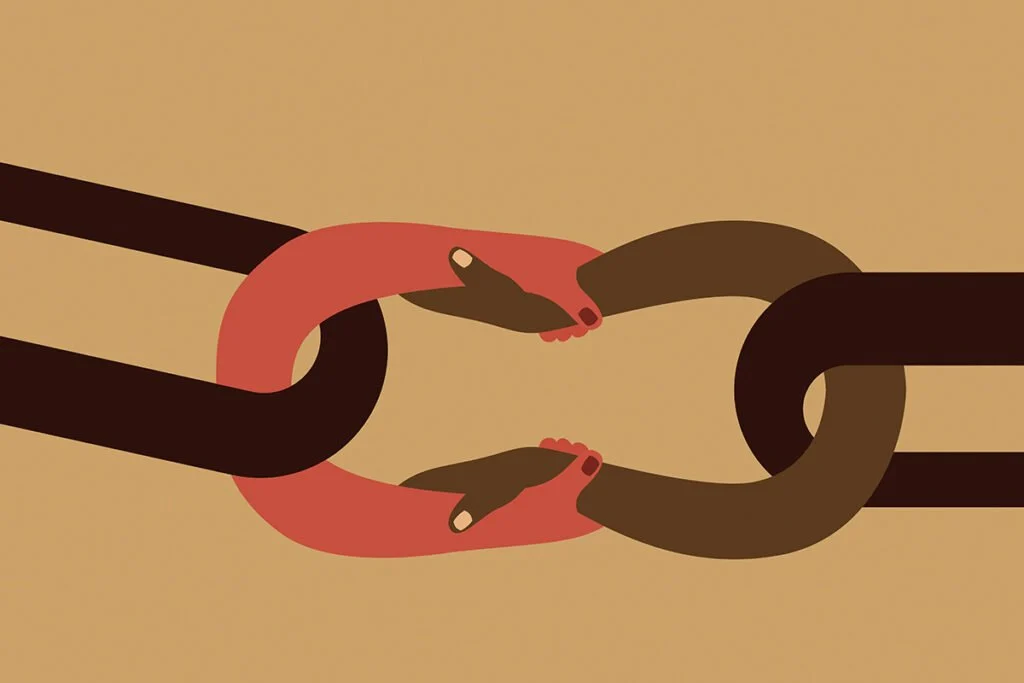
For Project South, the solution is rooted in intentional, transnational solidarity. By facilitating exchanges between organizers in the Philippines, Palestine, and the US South, they aim to build a collective resistance that transcends national borders. These exchanges allow activists to share survival strategies and legal frameworks, ensuring that when one community faces state repression, they are supported by a global network of comrades.
Implications: The Necessity of Coalition-Building
The primary lesson of the last quarter-century is that crises are frequently exploited to enact repressive legislation that affects everyone, not just the targeted group. The surveillance apparatus built after 9/11 did not stop at Muslim communities; it created a infrastructure of control that now monitors protesters, environmental activists, and organizers of all stripes.
Shahshahani advocates for a shift in strategy: "The state and White supremacist forces of repression thrive on our isolation. We need to be connected to movement organizations and each other."
Strategies for Accountability: The People’s Tribunal
One of the most effective tools for accountability, according to Shahshahani, is the "People’s Tribunal." When formal legal systems fail to provide justice, these community-led initiatives document human rights abuses and provide a platform for victims to testify.
The success of the National Union of People’s Lawyers in the Philippines serves as a model. By presenting evidence of extrajudicial killings and state-sanctioned violence at the International Criminal Court (ICC) in The Hague, these activists have successfully initiated proceedings against figures like former President Rodrigo Duterte. This model demonstrates that international legal pressure, when fueled by grassroots documentation, can pierce the shield of sovereign impunity.
Conclusion: Toward a Transnational Future
As the world navigates the 25th anniversary of 9/11, the mandate for human rights advocates is clear: we must resist the temptation to retreat into isolated, nationalistic bubbles. The "war economy" is global, and therefore the movement for justice must be equally expansive.
Shahshahani’s work serves as a sobering reminder that there is no "them" and "us"—only a shared struggle against systems of power that thrive on division. Whether it is the fight against sanctions that devastate Iranian civilians or the struggle for the rights of detainees in Georgia, the objective remains the same: to stop the normalization of state violence and to build a future where human dignity is not subject to the political whims of the state.
In the final analysis, the fight for democracy in the US South is inseparable from the fight for justice in the Global South. By standing in coalition, movement builders can begin to dismantle the infrastructure of repression, layer by layer, until the "old playbook" of war and dehumanization is rendered obsolete.