The Illusion of Consensus: Why the G7 Evian Summit Fails to Address Global Economic Fractures
By Barry Eichengreen
June 15, 2026
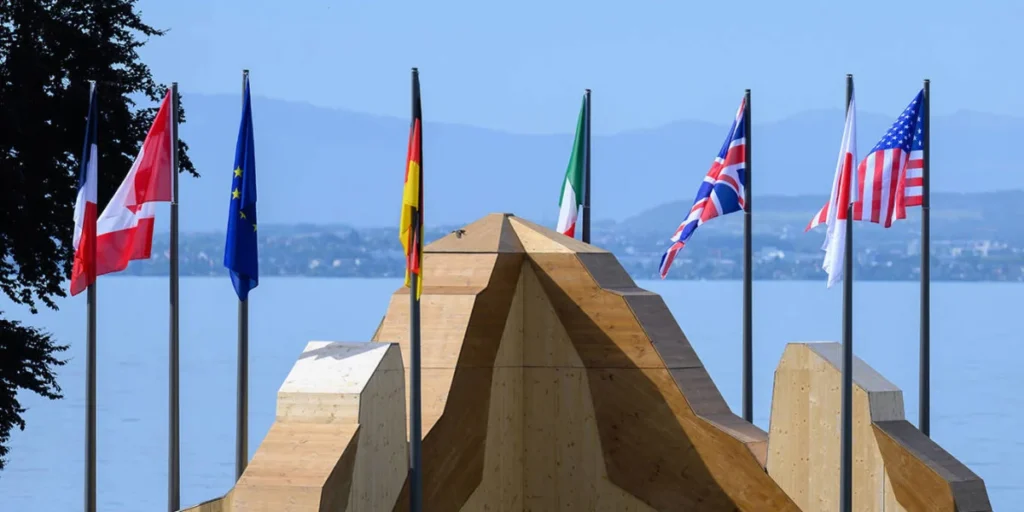
As the French presidency of the G7 draws to a close this week in the tranquil spa town of Évian-les-Bains, the global community finds itself at a precarious economic crossroads. President Emmanuel Macron has utilized France’s six-month tenure to place the thorny issue of global trade and current account imbalances at the very center of the international agenda. While the ambition to confront these systemic fissures is undoubtedly welcome, the structural reality suggests that this gathering will amount to little more than a choreographed spectacle of diplomatic bonhomie.
The G7, once the undisputed cockpit of global economic governance, finds itself increasingly ill-equipped to manage the profound imbalances between the United States, Europe, and China. As leaders convene in the shadow of the Alps, the fundamental question remains: Can a legacy institution designed for the mid-20th century address the volatile, multipolar economic realities of 2026?
Main Facts: The Anatomy of a Stalemate
The core of the Évian-les-Bains summit lies in the widening chasm of global trade imbalances. For years, economists have warned that the reliance of the U.S. consumer on imported goods—coupled with the export-led growth models of East Asia and the persistent fiscal caution of Europe—creates a feedback loop of instability.
The French presidency has framed these imbalances as a primary threat to global security. However, the "Évian agenda" faces a significant hurdle: the G7 no longer represents the totality of global economic power. With China now the world’s second-largest economy and a central player in global supply chains, any attempt by the G7 to dictate terms on trade, exchange rates, or fiscal policy is met with suspicion, if not outright rejection, by Beijing.
The summit’s objectives are lofty—calling for "balanced growth" and "coordinated fiscal stimulus"—but the mechanisms for enforcement are non-existent. The result is an event that prioritizes consensus over concrete policy reform, leaving the root causes of global volatility untouched.
Chronology: A Presidency Defined by Ambition and Friction
The path to Évian-les-Bains has been marked by a series of diplomatic pivots and missed opportunities.
- January 2026: France assumes the G7 presidency, with President Macron signaling a "new era" of global cooperation. He explicitly identifies global imbalances and currency volatility as the "Achilles’ heel" of the post-pandemic recovery.
- March 2026: G7 Finance Ministers meet in Paris. Despite rhetoric regarding the need for synchronized fiscal policies, the U.S. delegation focuses on domestic industrial policy, while Germany reiterates its commitment to fiscal discipline. No joint statement on currency valuation is achieved.
- May 2026: Pre-summit negotiations stall. Tensions between Washington and Brussels regarding cross-border digital taxation and green subsidies reach a boiling point, complicating the final communique drafts.
- June 15, 2026: The summit officially commences in Évian-les-Bains. Leaders are expected to sign a broad, non-binding declaration on global economic stability, masking the deep-seated disagreements regarding trade protectionism.
Supporting Data: The Widening Chasm
To understand why the Évian-les-Bains summit is likely to prove ineffective, one must look at the cold, hard numbers. Current account deficits in the United States have reached record levels relative to GDP, fueled by persistent infrastructure spending and private sector consumption. Simultaneously, China’s surplus remains robust, sustained by a high domestic savings rate and a strategic focus on manufacturing exports.
According to recent International Monetary Fund (IMF) data:
- U.S. Current Account Deficit: Tracking at nearly 4.2% of GDP as of Q1 2026.
- Chinese Trade Surplus: Continues to outpace domestic demand, with export volumes in high-tech sectors rising by 8% year-on-year.
- European Stagnation: The Eurozone’s aggregate trade balance remains positive, but productivity growth has stalled at 0.5%, limiting the bloc’s capacity to serve as a global "engine of growth."
These figures illustrate a systemic deadlock. For the U.S. to reduce its deficit, it requires either a sharp contraction in consumption—politically suicidal—or a significant shift in the exchange rates of its primary trading partners. Neither the G7 nor the G20 possesses the mandate to force such a realignment.
Official Responses: The Rhetoric of Unity
Behind the closed doors of the summit, the official stance is one of guarded optimism. A spokesperson for the Élysée Palace stated earlier this week: "The goal of the Évian summit is not to impose policy, but to harmonize expectations. We are creating a framework for dialogue that prevents competitive devaluations and trade wars."
However, the response from other G7 capitals has been noticeably tepid. In Washington, the administration has emphasized that domestic policy is non-negotiable, effectively signaling that the G7’s "recommendations" will be treated as secondary to the needs of the American labor market. Meanwhile, the Japanese and British delegations have focused on security and technology regulation, largely ignoring the Macron administration’s focus on macro-imbalances. This fragmentation confirms that even among traditional allies, the "G7 spirit" is failing to bridge the divide between domestic political mandates and global economic health.
Implications: The Long-Term Cost of Inaction
The failure of the Évian-les-Bains summit to produce substantive, actionable policy carries profound long-term implications for the global order.
1. The Erosion of Multilateralism
As the G7 continues to function as a talking shop rather than a decision-making body, the vacuum will inevitably be filled by ad-hoc, bilateral agreements. This "minilateralism" favors the powerful at the expense of the emerging economies, ultimately weakening the rules-based international system.
2. Market Volatility
Financial markets thrive on certainty. By signaling that the world’s most powerful leaders have no coherent strategy to address trade imbalances, the summit may inadvertently trigger currency fluctuations. Investors, seeing a lack of coordination, may seek refuge in safe-haven assets, further destabilizing emerging markets that are already grappling with high debt burdens.
3. The Rise of Protectionism
When diplomatic channels fail to address trade imbalances, domestic populism often fills the void. If leaders cannot show their constituents that they are "fixing" the global economy, they are more likely to resort to tariffs, quotas, and retaliatory trade measures. The summit in Évian-les-Bains may be remembered not as a turning point toward stability, but as the moment the international community collectively turned its back on a coordinated solution.
Conclusion: A Spectacle of Stasis
The spa town of Évian-les-Bains is historically known for its healing waters. It is an ironic setting for a summit that is almost certain to fail in providing any remedy for the systemic ailments of the global economy. President Macron’s focus on global imbalances is a courageous attempt to address a genuine crisis, but the tools at his disposal—the G7, its communiqué, and its tradition of diplomatic theater—are insufficient for the task.
As the leaders depart for their respective capitals later this week, the headlines will likely praise the "spirit of Évian" and the "renewed commitment to dialogue." But for those watching the charts, the trade deficits, and the shifting geopolitical sands, the summit will remain a stark reminder of the limits of G7 power. The global economy is not waiting for a communiqué; it is accelerating toward a structural correction that no amount of diplomatic bonhomie can avert.
The G7 must evolve or become a relic. If the lesson of Évian is that the world’s most advanced economies cannot agree on the basic mechanics of trade and investment, then we are entering a period of prolonged, and perhaps dangerous, economic drift. The spectacle will conclude, the cameras will be packed away, and the imbalances will remain—waiting for a crisis that the G7 is currently powerless to prevent.