The Great Reporting Divide: SEC’s Semiannual Proposal Sparks Unprecedented Public Backlash
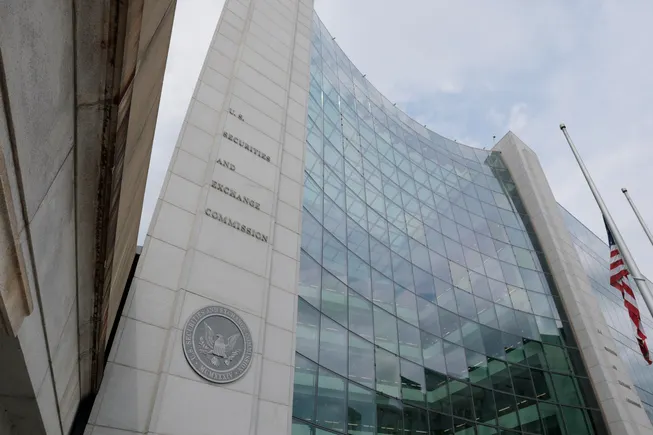
The U.S. financial landscape is currently embroiled in a high-stakes debate over the future of corporate transparency. The Securities and Exchange Commission (SEC), under the leadership of Chairman Paul S. Atkins, recently concluded a 60-day public comment period regarding a controversial proposal that would grant public companies the option to transition from quarterly to semiannual financial reporting.
The initiative, billed by the SEC as a cornerstone of the “Make IPOs Great Again” agenda, seeks to reduce the “rigidity” of current regulatory requirements, which proponents argue discourage private companies from entering the public markets. However, the proposal has been met with a wall of resistance from retail investors, financial experts, and former industry executives, creating a rare and lopsided display of public sentiment that may complicate the agency’s path forward.
The Core Proposal: A Shift in Corporate Transparency
At the heart of the debate is the frequency at which public companies must disclose their financial health. For decades, the U.S. market has operated under a strict quarterly reporting cycle (10-Q filings), a standard that many market participants view as the bedrock of investor confidence and market efficiency.
The SEC’s proposal would allow companies to opt for a semiannual reporting schedule, effectively cutting the volume of mandatory financial disclosures in half. Chairman Atkins and other supporters of the move argue that the current regime creates a short-termist culture, forcing executives to prioritize quarterly earnings targets over long-term strategic growth. By easing these reporting burdens, the Commission aims to make the public markets more attractive, potentially reversing the decline in the number of public companies listed on U.S. exchanges.
Chronology of the Controversy
The tension surrounding this proposal has escalated rapidly since its introduction in early May 2026.
- May 2026: SEC Chairman Paul S. Atkins unveils the “Make IPOs Great Again” agenda, explicitly mentioning the intent to relax reporting requirements to encourage companies to go and stay public.
- May 2026: The official proposal is released for public comment, initiating a 60-day window for stakeholders to weigh in.
- June 2026: As the deadline approaches, the volume of public comments begins to surge, with a distinct trend emerging: the overwhelming majority of commenters express deep skepticism or outright hostility toward the shift.
- July 2026: The comment period officially closes on Monday, July 6. Data analyzed by academic experts reveals an unprecedented disparity between supporters and opponents of the plan.
- Post-Comment Period: The SEC staff begins the arduous process of synthesizing the thousands of submissions to determine whether to proceed with a final rule.
Supporting Data: An Unprecedented Public Rejection
The depth of the opposition is best illustrated by the data compiled by Tzachi Zach, a professor of accounting at The Ohio State University. His tracker, which monitors the influx of public comment letters, paints a stark picture of the public mood.
As of July 3, 2026, 8,011 letters had been submitted to the SEC. Of that total, 7,925—roughly 99%—were explicitly opposed to the proposal. Only 34 letters offered support, while 52 were categorized as having “conditional” views. This lopsided feedback stands in stark contrast to previous regulatory consultations. For instance, in 2018, when the SEC last solicited feedback on the matter of reporting cadence, the response was significantly more balanced, with opposition hovering around 43%.
The current surge in opposition is not merely a numbers game; it represents a cross-section of the investor community, ranging from casual retail participants to institutional heavyweights and former industry insiders.
A Diverse Chorus of Opposition
The range of voices opposing the measure underscores the cultural and structural importance of the quarterly report.
The Voice of the Retail Investor
The retail investor community, particularly those active on platforms like Reddit, has been highly vocal. The community known as “wallstreetbets,” representing millions of retail participants, submitted a scathing critique. They argued that the 10-Q filing is the “single most important leveling mechanism” between retail investors and institutional giants. For these investors, quarterly data is the only guardrail against information asymmetry, ensuring that those with less capital still have access to the same fundamental data as high-frequency trading firms.
The Professional Perspective
Opposition is not limited to retail participants. David Bolling Wells, a former CFO of Netflix, provided a nuanced critique that has resonated throughout the financial sector. While Wells acknowledged that there are theoretical merits to a six-month cycle, he labeled quarterly reporting a “foundational element of democratic capital markets.” His plea to the SEC was clear: maintain the current model to ensure U.S. markets remain the envy of the world.
Academic Concerns
Accounting experts like Sarah McVay of the University of Washington’s Foster School of Business have expressed shock at the proposal. McVay, an expert in financial reporting, views the move as a regressive step that could significantly diminish the quality of information available to investors. Despite her opposition, she acknowledges the political reality that the current SEC commission, characterized by its deregulatory stance, may push the rule through regardless of the public outcry.
Implications for Regulatory Stability
The intensity of the feedback has raised significant questions regarding the legality and stability of the rule if it were to be finalized. Daniel Brinks, a partner at StoneTurn and a former senior enforcement accountant at the SEC, noted that the “one-sided” nature of the comment letters is historically anomalous.
“When the proposal came out, I thought it was a shoe-in that it was going to pass,” Brinks told CFO Dive. “It will be interesting to see if they decide to move forward and whether that opens them up to rules challenges.”
Legal experts suggest that when an agency ignores such a massive volume of negative public feedback without a compelling, evidence-based justification, it leaves the door open for litigation. Opponents could argue that the SEC failed to adequately consider the impact on investor protection—a primary pillar of the Commission’s mandate.
The Path Ahead: Can the SEC Proceed?
The SEC spokesperson has declined to comment on the ongoing feedback process. However, the agency’s internal staff is now tasked with a complex assignment: drafting a final recommendation while navigating the political fallout of a public that is overwhelmingly against the plan.
Chairman Atkins remains steadfast in his messaging. He views the initiative as a necessary evolution for the U.S. capital markets. In his May statement, he emphasized that the coming months would see a series of proposals aimed at redefining the public company experience. “I expect that the Commission will be considering a series of proposals that, if adopted, will not only redefine what it means to be a public company, but will make being public attractive again,” he stated.
Whether this vision for a “less rigid” market will outweigh the concerns of thousands of investors remains the central tension of the current regulatory cycle. For now, the financial community waits to see if the SEC will prioritize the desires of corporate issuers to reduce administrative friction or the mandate to protect the transparency that has long defined the American equity market.
As the agency processes the remaining flood of letters, one thing is certain: the debate over semiannual reporting has become more than just an accounting issue; it has become a referendum on who the U.S. capital markets are truly meant to serve.