The Great Concentration Conundrum: Navigating AI Market Dominance and the S&P 500
Main Facts: The Unprecedented Rise of Mega-Cap Concentration
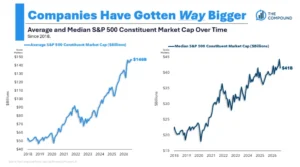
For the better part of a decade, Wall Street has fixated on a singular anxiety: stock market concentration. While the phenomenon is far from new—analysts have tracked the creeping weight of top-tier equities since the mid-2010s—the acceleration observed during the 2020s has shattered historical norms. Today, the modern equity market is defined by an overwhelming reliance on a handful of colossal entities, spearheaded almost entirely by the explosive hype surrounding Artificial Intelligence (AI).
The raw statistics outline an extraordinary landscape:
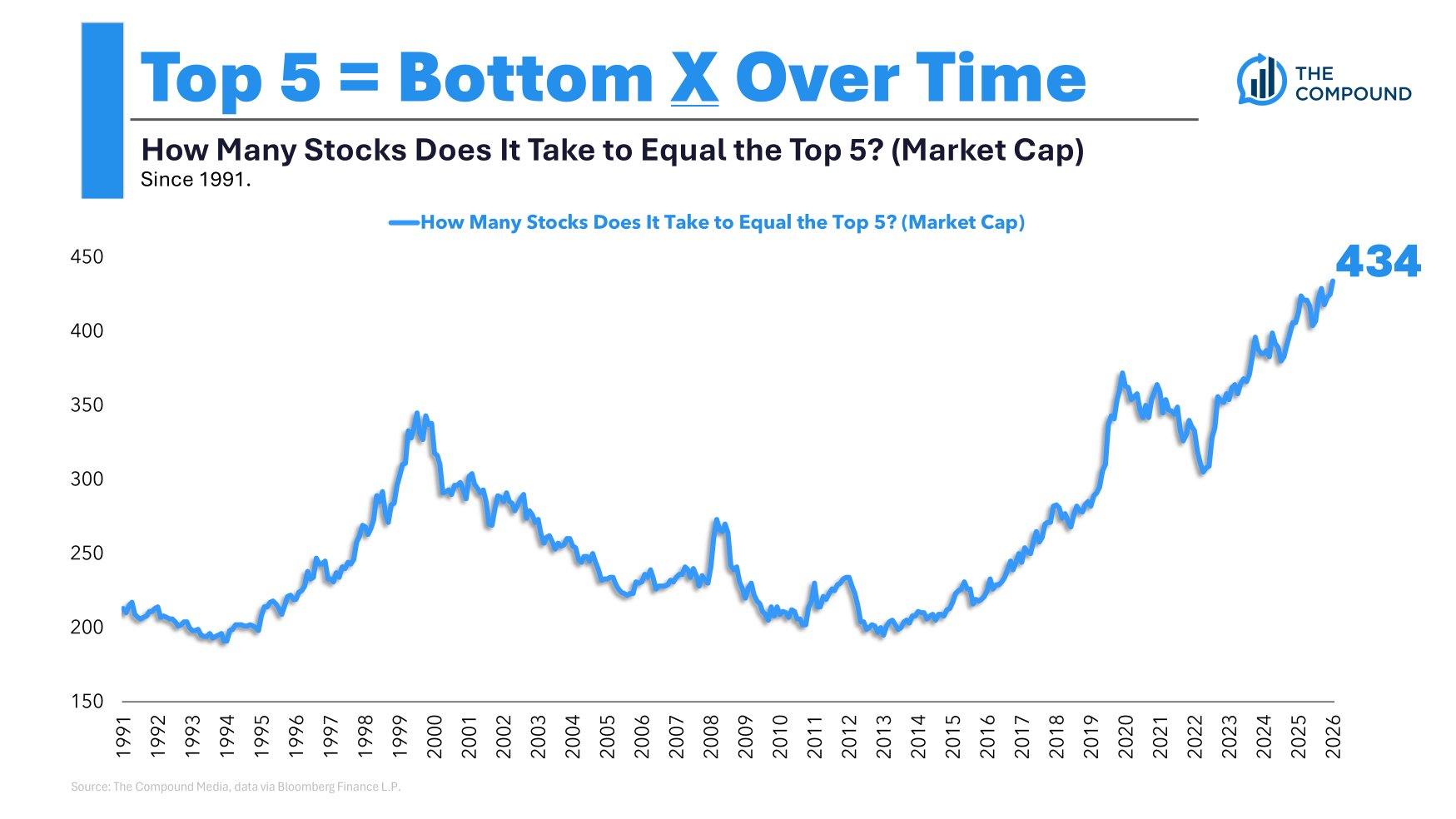
- The Top 5 Reality: Ten years ago, the five largest companies in the S&P 500 commanded a market capitalization roughly equivalent to the bottom 225 stocks combined. Today, that elite cohort—the contemporary "Magnificent 7" derivatives—matches the bottom 434 stocks in the index.
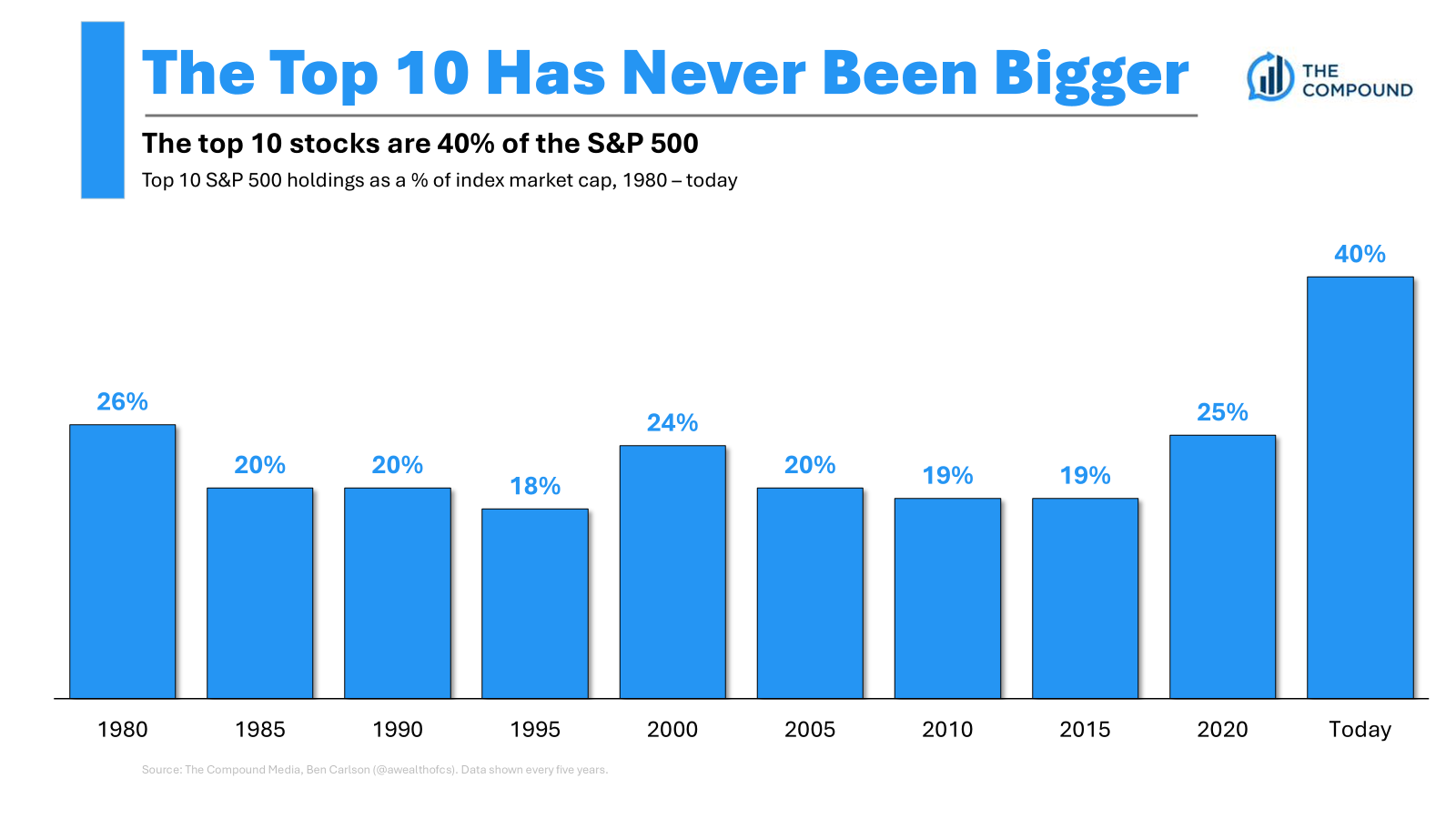
- The Top 10 Milestone: Historically, the top 10 stocks in the S&P 500 hovered between 20% and 25% of the total index value from 1980 onward. In the current decade, that figure has skyrocketed to an astonishing 40%. This level of structural concentration has not been witnessed since the industrial and nifty-fifty boom of the 1950s and 1960s.
- Trillion-Dollar Milestones: Every single enterprise inside the current top 10 boasts a market capitalization measured with four commas—surpassing a collective valuation of $28 trillion.
Investors find themselves pinned between a rock and a hard place. On one side, fundamental performance supports these valuations; the top 10 stocks account for roughly 40% of corporate profits, matching their 40% equity share. On the other side, the looming existential question persists: What happens if AI turns out to be "The One Big Trade" that stumbles?
Chronology: How the Market Got Here
2018: The Initial Whispers of Concentration
The discourse around market dominance began picking up steam around 2018, as companies like Apple, Microsoft, Amazon, and Alphabet began pulling away from the pack. At the time, market commentators warned that passive index investors were unwittingly taking on outsized single-stock bets simply by holding standard S&P 500 funds.
The 2020s: Pandemic Acceleration and the AI Boom
The arrival of the COVID-19 pandemic supercharged digital infrastructure needs, propelling tech giants into unprecedented fiscal territory. However, the true inflection point arrived with the generative AI revolution. Massive capital expenditures (capex) poured into data centers, specialized chips, and foundational models. This cemented a new market dynamic where a select few capital-rich titans could fund multi-billion-dollar AI infrastructures, leaving smaller components of the index in the dust.
The Year-to-Date Whiplash: Breadth vs. Dominance
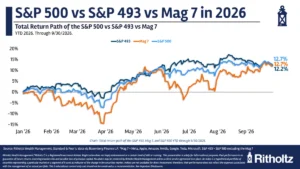
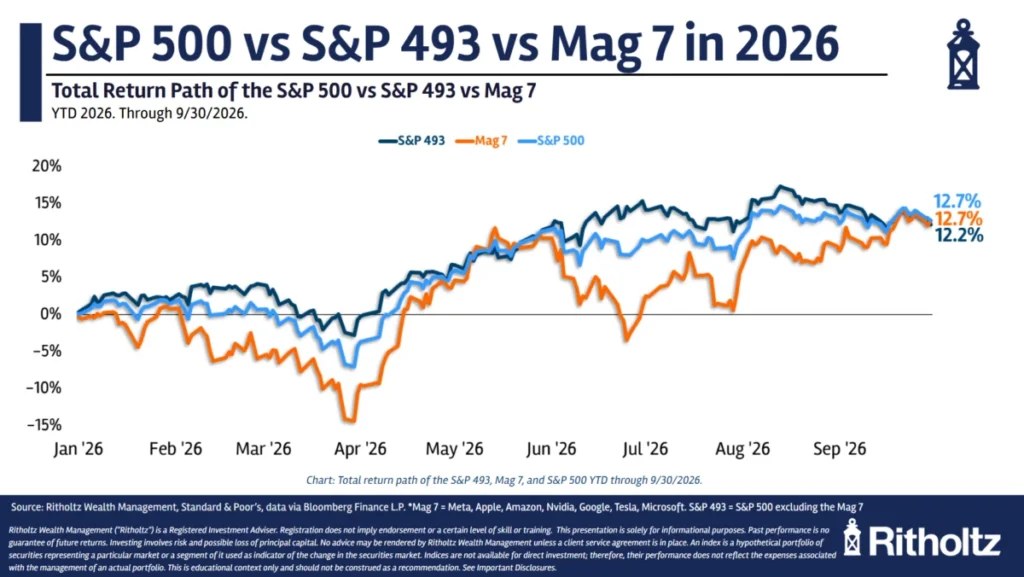
Market behavior over the past twelve months has presented a confusing puzzle for everyday investors. For more than half of the year, the broader index saw a healthy rotation. The "impressive 493" (the S&P 500 excluding the mega-cap tech leaders) drove the market higher, while the leading tech stocks lagged. Analysts and retail investors alike celebrated broadening market breadth.
However, as the calendar progressed, the mega-caps reclaimed their leadership throne, sending alarm bells ringing once again. This cyclical whiplash has forced a fundamental philosophical debate: Does this concentration represent a systemic risk, or is it simply a testament to the undeniable value of owning the market index as a self-cleaning mechanism?
Supporting Data: Comparative Market Structures
To understand how modern concentration stacks up historically and geographically, financial analysts look to comparative breakdowns across asset classes, regions, and alternative weighting strategies.
Global Comparisons
While some international markets—such as certain European and Asian indices—exhibit high degrees of concentration, those foreign exchanges do not anchor the global equity framework in the way the U.S. market does. The U.S. commands roughly two-thirds of global equity market capitalization, meaning American concentration risks export systemic waves worldwide.
Sector Breakdowns: Diversifying Beyond U.S. Tech
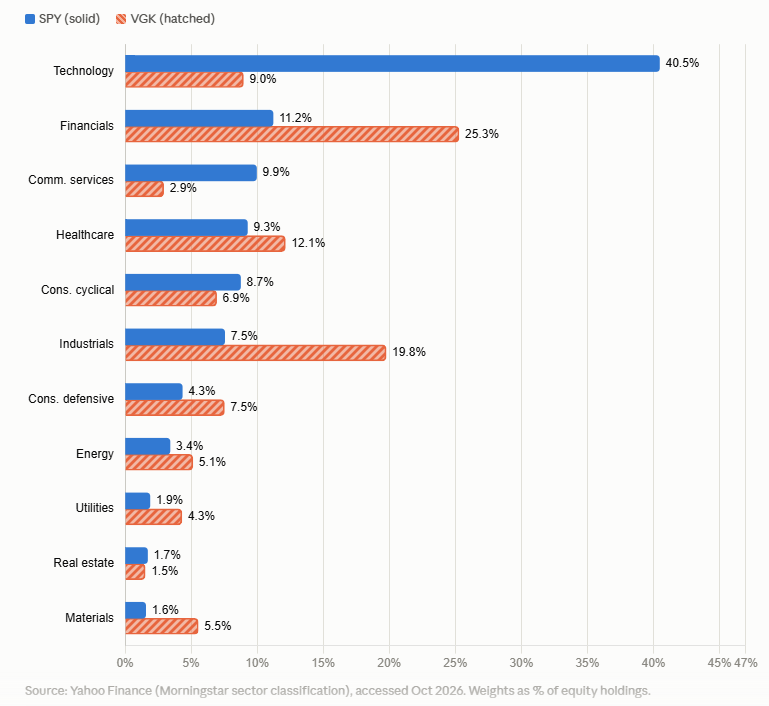
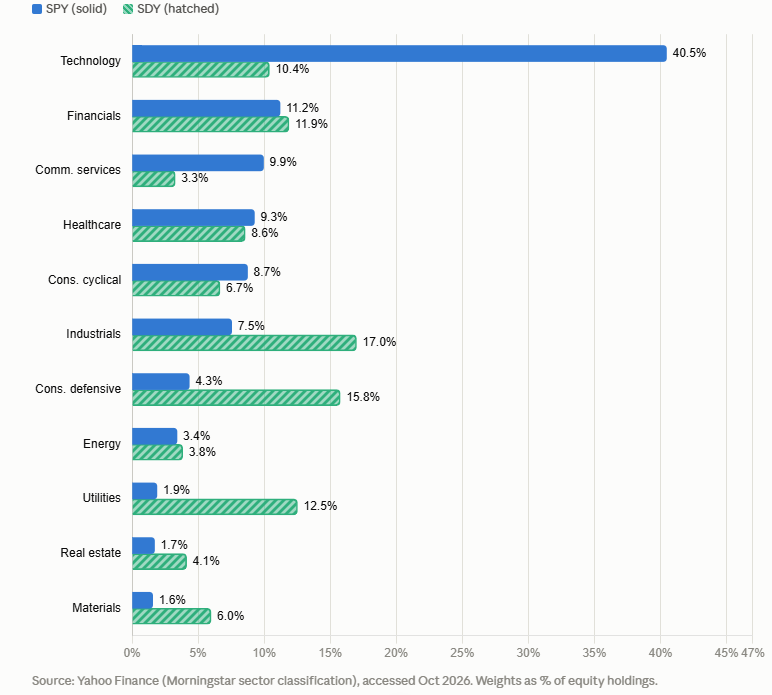
For investors seeking to escape the gravity of the AI trade without entirely abandoning equity risk, alternative fund structures offer drastically different sector allocations:
- Vanguard Europe ETF: Features a significantly heavier weighting toward financials, industrials, and healthcare, with a radically muted exposure to high-flying U.S. tech stocks.
- S&P Dividend and Value ETFs: Shift capital away from speculative growth assets and toward cash-flow-positive, dividend-paying enterprises, offering a structural defense mechanism against tech-sector drawdowns.
- Nasdaq 100: Amplifies the problem rather than solving it, with the top 10 holdings accounting for nearly 50% of the total index value. A correction in AI would likely hit the Nasdaq 100 disproportionately harder than the broader S&P 500.
Implications: Strategic Scenarios and Portfolio Defense
If and when the AI trade faces a major correction, macro-financial ripples will reshape multiple asset classes. Financial strategists project several primary implications for portfolios:
1. The Fate of Equities
While the S&P 500 would inevitably retreat during an AI-driven market shock, the magnitude of the pain would depend entirely on an investor’s asset allocation. Traditional market-cap-weighted index funds would absorb the blow directly, whereas portfolios diversified into value, dividend, or international equities would likely experience a softer landing.
2. The Resurgence of Fixed Income
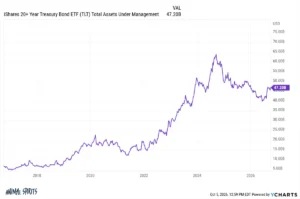
For years, rising interest rates and inflation dampened the traditional role of bonds as a portfolio shock absorber. However, if AI capital expenditures slow down and economic growth cools, central banks would likely cut interest rates fairly quickly. Simultaneously, bonds would finally "earn their keep," delivering robust total returns fueled by high starting yields and capital appreciation from falling interest rates.
3. The Currency and International Play
Because the overwhelming majority of AI capital expenditure originates within the United States, a retrenchment in the tech sector could trigger a decline in the U.S. dollar. For American investors holding foreign developed markets—particularly European equities with lower tech allocations—a weakening dollar would provide a valuable currency tailwind, balancing out domestic losses.
The Core Dilemma: To Diversify or Trust the Index?
Investors navigating this environment face two competing schools of thought:
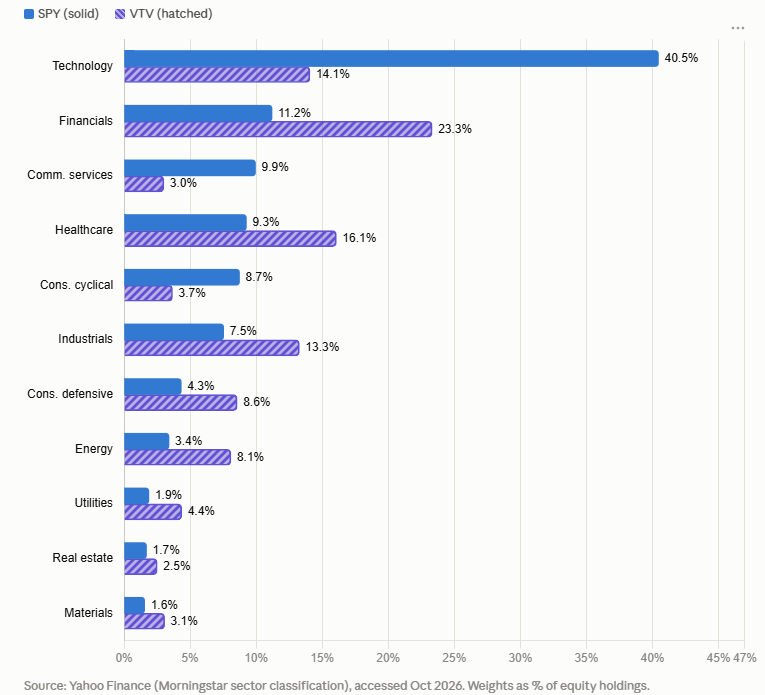
- The Case for Diversification: Proponents argue that the current 40% concentration in the top 10 stocks is an uncompensated risk. By exploring alternative strategies—such as value stocks, low-volatility funds, real estate investment trusts (REITs), and fixed income—investors can hedge against a single-point-of-failure scenario.
- The Case for Passive Indifference: Conversely, some argue that abandoning the index is a fool’s errand. The S&P 500 is a dynamic, self-cleansing organism. If a company stops delivering profits, its weight in the index naturally declines over time. Trying to outsmart the market by avoiding AI entirely carries its own massive opportunity cost—and the psychological burden of regret if the tech monoliths continue their ascent.
Ultimately, extreme positioning—whether going all-in on speculative AI growth or completely retreating to cash and cash equivalents yielding 4%—opens investors up to profound regret. For the rational investor, acknowledging the risks of concentration while leaning into disciplined, thoughtful diversification remains the most resilient path forward through an increasingly top-heavy market.