The Fragile Truce: Trump’s Iran Deal and the Shadow of a Middle Eastern Conflagration
By Shlomo Ben-Ami
June 16, 2026
In a move that has sent shockwaves through the corridors of power in Washington, Tehran, and Tel Aviv, United States President Donald Trump has declared that he alone “calls the shots” regarding the ongoing hostilities with Iran. As the dust settles on a tentative ceasefire agreement aimed at ending the 108-day conflict, the geopolitical landscape of the Middle East finds itself at a precarious crossroads. While the White House touts the deal as a masterstroke of pragmatic diplomacy, critics argue that it is a desperate attempt to extract the United States from a strategic quagmire of its own making—one that leaves Israel’s security interests increasingly sidelined.
The Anatomy of a Tentative Truce: Main Facts
The agreement, reached after more than three months of intense kinetic warfare, represents a significant recalibration of US foreign policy. Stripped of the grandiloquent rhetoric that characterized the early days of the conflict—when the administration spoke of regime change and the total dismantlement of Iran’s regional proxy network—the current deal is markedly modest.
At its core, the ceasefire mandates the reopening of the Strait of Hormuz to unimpeded international maritime traffic. Perhaps most tellingly, the agreement includes provisions for renewed negotiations concerning Iran’s nuclear program—a framework that mirrors the status quo ante bellum. Observers note that the administration has essentially traded the promise of a cessation of hostilities for objectives that were either already in place or subject to ongoing diplomatic discussion prior to the outbreak of war.
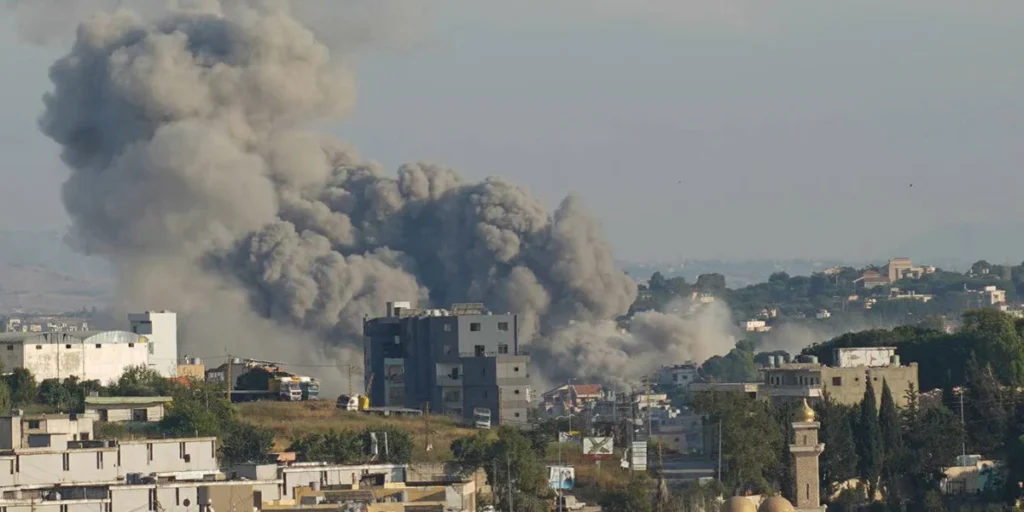
The primary tension now lies in the disconnect between Washington’s desire for a clean exit and the reality on the ground in Lebanon. While the US seeks to stabilize the region to facilitate a withdrawal, Israel continues its robust military campaign against Hezbollah, viewing the Iranian-backed militia as an existential threat that no international deal can mitigate.
A Chronology of Escalation: From Rhetoric to Rupture
To understand the current volatility, one must trace the timeline of the conflict that brought the region to the brink of a systemic collapse:
- Late February 2026: Tensions peak following a series of maritime sabotage incidents in the Persian Gulf, leading to a breakdown in back-channel communications between Washington and Tehran.
- March 1, 2026: The Trump administration formally declares an end to its "maximum pressure" containment policy, pivoting toward a strategy of "decisive intervention."
- March 15, 2026: Military hostilities commence with targeted US airstrikes on Iranian radar installations and missile storage facilities.
- April 2026: The conflict widens as Hezbollah enters the fray, launching coordinated rocket barrages into Northern Israel, prompting an immediate and heavy-handed response from the Israel Defense Forces (IDF).
- May 2026: The human and economic toll of the conflict reaches a tipping point. Global oil prices spike, and humanitarian organizations warn of a looming regional crisis as supply chains fracture.
- June 10–14, 2026: Under intense pressure from the international community and domestic political factions, high-level envoys engage in back-channel talks in Oman and Switzerland.
- June 15, 2026: The White House confirms a tentative ceasefire agreement, signaling a pivot toward "de-escalation through engagement."
Supporting Data: The Cost of the 108-Day War
The statistics emerging from this 108-day conflict underscore the gravity of the situation. According to independent analysts, the economic impact has been severe. The blockage of the Strait of Hormuz, even for a limited period, resulted in a 25% surge in global energy costs, fueling inflationary pressures in the US and Europe.
In terms of military assets, the US has expended an estimated $45 billion in munitions and logistical support. Iran, despite its significantly smaller military budget, has suffered extensive damage to its domestic infrastructure, though it retains a substantial portion of its ballistic missile capabilities.
For Israel, the data is particularly alarming. The persistent conflict with Hezbollah has resulted in the displacement of over 100,000 residents in northern border towns. The IDF reports that the frequency of rocket fire from Lebanon has tested the limits of the Iron Dome and David’s Sling interceptor batteries, necessitating a massive replenishment of supplies that has strained bilateral military aid agreements.
Official Responses: A House Divided
The reception of the ceasefire has been starkly polarized.
The White House: President Trump has defended the deal as a necessary pragmatic step. "I am the one who calls the shots," the President stated during a press briefing. "We have achieved our primary objective of ensuring the free flow of commerce in the Gulf. We are not interested in nation-building or being the world’s policeman. It is time to bring our resources home."
The Israeli Government: The sentiment in Tel Aviv is one of deep skepticism and growing alarm. Senior officials have indicated that while Israel respects its alliance with the United States, it cannot be bound by a deal that effectively grants Hezbollah a strategic reprieve. "We are fighting for our survival," a spokesperson for the Prime Minister’s office noted. "A ceasefire that ignores the proliferation of precision-guided munitions on our northern border is not a peace deal; it is a temporary postponement of a larger war."
The Iranian Perspective: Tehran has framed the agreement as a victory of resilience. State media emphasizes that the US has been forced to return to the negotiating table, claiming that the "failure of American aggression" has validated Iran’s strategy of asymmetric warfare.
Implications: The Collision Course
The implications of this deal extend far beyond the immediate cessation of hostilities. By positioning itself as a guarantor of regional stability—and, by extension, inadvertently becoming the protector of a landscape where Hezbollah remains a dominant actor—the Trump administration may have set the stage for a profound strategic rift with Israel.
The Lebanon Dilemma
If the US deal implicitly mandates a cessation of all anti-Hezbollah operations to maintain the integrity of the ceasefire, Israel is left with an impossible choice: abide by the US-brokered agreement and allow its most dangerous adversary to rearm, or defy its most important ally and risk diplomatic isolation.
The Strategic Vacuum
Furthermore, the "pared-down" nature of the deal leaves the core issue of Iran’s regional influence largely unaddressed. By focusing on the Strait of Hormuz and nuclear negotiations, the US has effectively decoupled the maritime security of the Gulf from the security of the Levant. This fragmentation of policy risks creating a "strategic vacuum" where local actors, feeling abandoned by the great powers, may take matters into their own hands.
The Domestic US Factor
Domestically, the Trump administration’s shift is likely to become a central issue in the upcoming political cycle. Supporters will point to the avoidance of a "forever war" as a fulfillment of the President’s campaign promises. Detractors, however, will highlight the potential long-term damage to the credibility of the US-Israel alliance, questioning whether the short-term goal of exiting the conflict is worth the long-term erosion of regional deterrence.
Conclusion
The ceasefire, while providing a much-needed respite from the immediate specter of total war, remains a fragile construct. It is a deal built on the shaky foundation of divergent interests. As the ink dries on the tentative agreement, the fundamental question remains: Can the United States maintain its role as a regional broker while its closest ally continues to perceive an existential threat that the deal itself fails to resolve?
As we look toward the coming months, the risk is not merely that the ceasefire might collapse, but that in its effort to "call the shots," the current administration may have inadvertently lost control of the very forces it sought to contain. The collision course between Washington’s desire for exit and Israel’s requirement for survival is not merely a diplomatic friction point—it is the defining tension of the new Middle East.