The Erosion of Reality: How AI Deepfakes Are Outpacing Digital Forensics and Financial Security
By PYMNTS | June 14, 2026
For over two decades, Hany Farid has been the gold standard in the field of digital forensics. A professor at the University of California, Berkeley, and a trusted consultant for global governments, intelligence agencies, and human rights organizations, Farid has spent his career building the tools that separate reality from digital artifice. His work has been the bedrock of photographic and video verification, acting as a bulwark against disinformation.
However, a profile published by The New York Times on Sunday, June 14, 2026, reveals a sobering shift in the landscape: the rapid, unchecked evolution of generative artificial intelligence has left even the most seasoned experts questioning the viability of their own discipline. Farid, once the final arbiter of digital truth, now finds himself staring into a digital abyss, grappling with a technology that is increasingly indistinguishable from the world it aims to mimic.
The Crisis of Verification: A Forensic Expert’s Struggle
Farid’s internal crisis is emblematic of a broader societal shift. In his lectures at Berkeley, he frequently highlights the widening gap between the ease of creating a deepfake and the arduous, time-consuming process of debunking one. The disparity is not just technical; it is temporal.
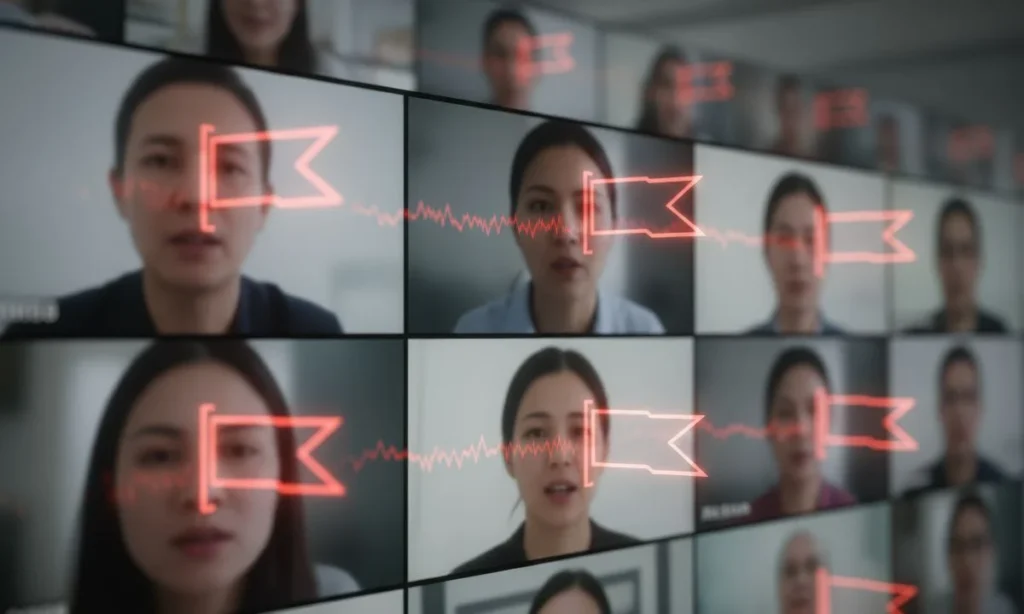
"I feel like I’m going blind," Farid admitted in the report. This sentiment of encroaching obsolescence is compounded by the sheer velocity of social media. Farid notes that the half-life of an average viral post is less than 90 seconds. By the time a forensic analysis is completed—a process that requires meticulous, granular scrutiny—the fake has already been consumed, shared, and internalized by millions as absolute truth.
"Within 20 minutes, the whole ballgame is basically over," Farid said. In the modern information ecosystem, speed is the primary currency. When detection takes hours and creation takes seconds, the advantage lies entirely with the bad actor. This existential exhaustion has led Farid and his family to plan a departure from the epicenter of technological innovation—Silicon Valley—in favor of a quiet, rural farm in Vermont, a move that serves as a powerful metaphor for a society retreating from the digital reality it helped create.
The Asymmetry of AI Warfare
During his classes, Farid often facilitates a stark realization among his students. One student’s observation perfectly crystallized the current state of play: "The creation of deepfakes is easy, cheap, fast and reliable. Detection is costly and difficult."
This asymmetry is the primary driver of the current crisis. Generative AI tools, now available as open-source software, require minimal technical expertise to operate. A criminal in a remote location can generate a photorealistic video, a cloned voice, or a sophisticated synthetic persona with the click of a button. Conversely, forensic detection requires expensive infrastructure, high-level expertise, and, crucially, time—a luxury that does not exist in the era of viral content.
Financial Fraud: The Rise of the Synthetic Borrower
While disinformation is a major concern, the financial implications of deepfakes are arguably more acute. As PYMNTS has consistently reported, the lending industry is currently grappling with a new, aggressive category of fraud that leverages AI to engineer "perfect" synthetic identities.
These are not merely stolen Social Security numbers or fabricated aliases. A "synthetic borrower" is a complex, algorithmically optimized persona. Criminals are now combining deepfake video verification, cloned audio for identity proofing, and fabricated long-term employment histories to create a digital footprint that appears entirely legitimate to traditional underwriting models.
How Synthetic Borrowers Bypass the Gatekeepers:
- AI-Generated Financial Behavior: Fraudsters use AI to simulate years of credit activity, creating a FICO-friendly history that satisfies automated underwriting software.
- Multimodal Forgery: By using deepfake technology to bypass video-based "Know Your Customer" (KYC) checks, criminals can satisfy remote onboarding requirements that previously acted as a significant barrier to entry.
- Engineered Personas: These identities are built to be "boring"—designed specifically to avoid triggering fraud detection algorithms that look for outliers or erratic behavior.
The fundamental premise of digital finance has always been that "more data equals more certainty." Lenders believed that by aggregating more information—transaction logs, credit history, biometric data—they could identify fraud. Synthetic borrowers invert this entire premise. In an AI-saturated environment, more data may simply create a more convincing, high-fidelity illusion.
The Data Security Arms Race: A Losing Battle?
The response from the financial sector has been rapid, but potentially insufficient. According to the PYMNTS Intelligence report, “The AI MonitorEdge Report: COOs Leverage GenAI to Reduce Data Security Losses,” approximately 55% of companies are now deploying AI-powered cybersecurity measures to combat these threats.
However, this is an expensive race. A financial institution may invest tens of millions of dollars into developing a robust anti-fraud infrastructure, only to have that system bypassed by an attacker using a $20 subscription to an open-source generative model. The cost of defense is linear and high; the cost of attack is exponential and dropping.
Key Implications for Financial Institutions:
- The Breakdown of Underwriting Assumptions: The industry can no longer rely on the belief that fraudsters will eventually trip themselves up through inconsistency. Synthetic personas are engineered for consistency.
- The "Zero Trust" Necessity: Financial institutions are being forced to adopt "Zero Trust" architectures for both customers and internal processes, assuming that every piece of data—even biometric data—could be a forgery.
- The Human-in-the-Loop Challenge: As automation fails to catch increasingly sophisticated fakes, banks are forced to bring human reviewers back into the loop. However, as Hany Farid’s experience demonstrates, even human experts are struggling to identify modern deepfakes.
Chronology of the Deepfake Crisis
- 2014-2017 (The Incubation): The invention of Generative Adversarial Networks (GANs) allows for the initial creation of synthetic images.
- 2018-2021 (The Awareness): Deepfakes enter the mainstream consciousness through viral videos of political figures. Governments begin funding detection research.
- 2022-2024 (The Democratization): Large Language Models (LLMs) and diffusion models become widely accessible. The barrier to entry for creating realistic media drops to near zero.
- 2025-2026 (The Industrialization of Fraud): Criminal syndicates shift from individual scams to large-scale, automated synthetic identity creation, targeting the lending and banking sectors with high-precision AI personas.
Official Responses and Future Outlook
While researchers like Hany Farid continue to push the boundaries of forensic science, there is a growing consensus that technological solutions alone will not solve the deepfake crisis. Policy experts are now calling for a multi-layered approach:
- Watermarking and Provenance: Industry efforts to standardize digital signatures for authentic content are gaining traction, though implementation remains fragmented.
- Regulatory Intervention: Discussions are ongoing regarding the liability of AI developers for the misuse of their tools, though such regulation faces significant legal and jurisdictional hurdles.
- Public Literacy: Much like the early days of phishing emails, the public must be educated on the inherent unreliability of digital media. Skepticism, once a tool for the paranoid, is becoming a necessary survival skill for the average consumer.
The outlook remains grim for those who prioritize traditional verification. As Farid’s experience at Berkeley underscores, the battle for truth is no longer being fought on a level playing field. It is a war of attrition where the defender must be right 100% of the time, while the attacker only needs to be convincing once.
As the industry looks toward the second half of 2026, the question is not just how to build better detectors, but how to maintain a functional society when the shared reality upon which it is built—the video, the voice, the photograph—can be rewritten in real-time. For now, the most effective defense remains a sobering, if uncomfortable, realization: if it looks too perfect, it probably isn’t real.