The Erasure and Reclamation of Gwynn’s Island: A Story of Resilience and Historical Justice
For decades, the oral histories of Black families in Mathews County, Virginia, carried a heavy, unspoken burden. Descendants whispered of a "situation" that forced their ancestors to abandon their homes, their businesses, and their land on Gwynn’s Island in the early 20th century. For many, the narrative imposed by local lore was one of shame: a story of a drunken, violent patriarch whose reckless actions led to the exile of an entire community.
However, recent genealogical breakthroughs and the persistent activism of descendants have shattered that false narrative. What was once dismissed as a localized dispute has been revealed as a calculated act of racial cleansing—a systemic effort to reclaim a "White Man’s Paradise" from a prosperous and thriving Black middle class.
The Foundations of Prosperity
Following the Civil War, the Black residents of Gwynn’s Island did not merely survive; they built a robust, self-sustaining economy. Among them was Captain William Smith, a formerly enslaved man who served in the Union Army. After the war, Smith returned to the island, using his mustering-out pay to purchase five acres of land.
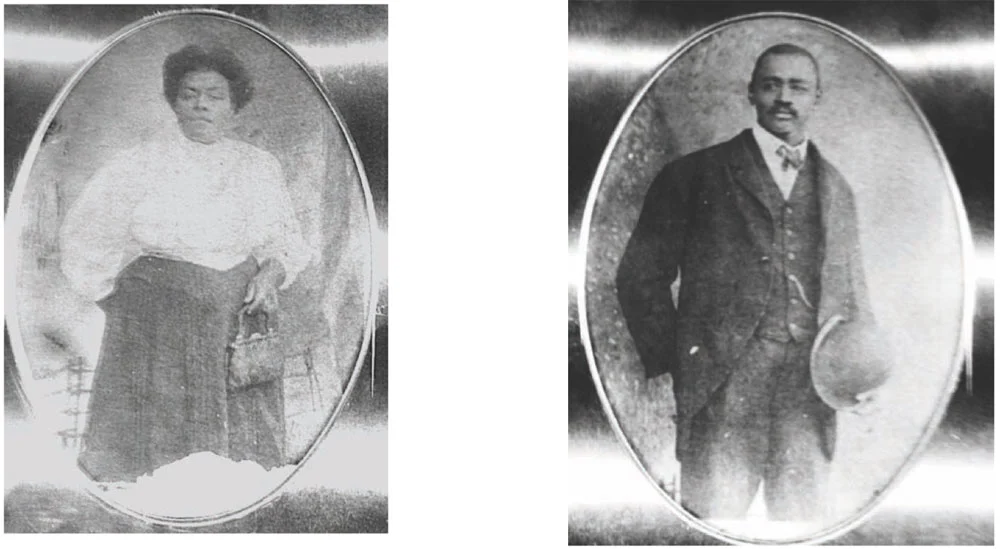
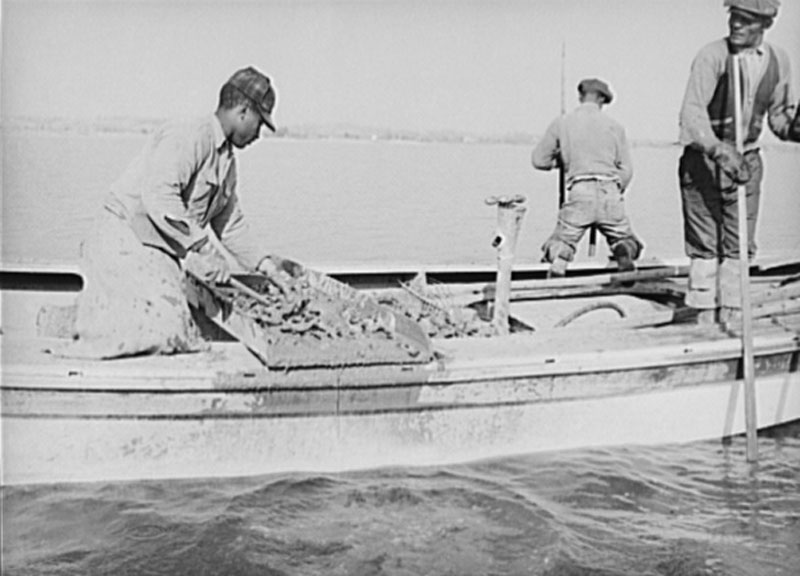
By the turn of the 20th century, the Smith family—and others like them—had become pillars of the local economy. Census records from 1900 and 1910 paint a picture of upward mobility. The Smiths were watermen, oystermen, and crabbers who owned their own boats and employed others. They were literate, politically active, and property owners. Ida Baker Smith, a schoolteacher, raised four children who were all enrolled in school. Photographs from the era show a family that was far from "shabbily dressed," reflecting a middle-class status that challenged the prevailing Jim Crow hierarchy of the era.
Chronology of a Forced Exodus
The systematic dismantling of this Black community did not happen in a vacuum; it occurred alongside the rising tide of Jim Crow-era racial hostility in Virginia.
- 1912–1915: The island began to shift toward an exclusionary white identity. A Confederate memorial was erected in 1912, and the local high school was renamed "Lee-Jackson" in honor of Confederate generals.
- December 24, 1915: A confrontation occurred at a local establishment involving James Henry Smith. While local white amateur historians later labeled Smith a "drunk" and a "troublemaker," archival evidence suggests a different reality: Smith intervened to protect his brother-in-law from an assault by white fishermen.
- 1916: Despite a judge’s instructions suggesting self-defense, an all-white, all-male jury convicted Smith. He served 30 days and paid a fine, which his father promptly settled.
- 1916–1920: Following the trial, threats of lynching became rampant. The Smith family, along with dozens of other Black families, was forced into an overnight exodus, abandoning their property and businesses under extreme duress.
- 1920–1922: During this window, the land once held by these Black families was sold off, often to white neighbors who had been involved in the legal and social efforts to drive them out.
- 1924: The Richmond Times-Dispatch published a feature article titled "White Man’s Paradise Nestles in Virginia Bay," cementing the erasure of the island’s Black history.
- May 23, 2026: After five years of rigorous research and intense negotiation, a Commonwealth of Virginia highway marker was unveiled, officially acknowledging the history of the Black community of Gwynn’s Island.
Unearthing the Evidence
The reclamation of this history began with the work of Maria Sharp Montgomery, a descendant, and E. Allison Thomas. Montgomery’s discovery of the Special Grand Jury summaries and the judge’s handwritten notes was a turning point. These documents, long hidden in the "dead papers" files of the clerk’s office, provided the objective truth that oral traditions had been suppressed for a century.
The judge’s personal notes confirmed that Smith was not the aggressor; rather, he had acted in defense of his family. The records also exposed the names of the complainants—young fishermen—and the courageous, though outnumbered, witnesses who testified on Smith’s behalf.
The economic fallout was equally documented. The rapid, forced sales of land were not transactions of choice. They were acts of dispossession. Families that had once owned their homes outright were suddenly reduced to renting in Norfolk, where they were forced into low-wage, menial labor. The generational trauma was immediate: the Smith family saw a "cascading trauma" of early deaths and economic instability that stood in stark contrast to the longevity of the white families who remained on the island.
Official Responses and Resistance
The road to the 2026 highway marker was paved with significant institutional resistance. The efforts to achieve public recognition were met with opposition from Sons of Confederate Veterans-aligned County Supervisors, who sought to sanitize or block the historical acknowledgment.
According to the Chair of the Department of Historic Resources Board, the Gwynn’s Island marker faced more opposition than any other in the history of the board. The final language on the marker was, by the admission of the descendants, "watered down" to secure approval from a board navigating a politically fraught environment.
Despite this, the unveiling ceremony marked a monumental shift. For descendants, the marker serves as "proof that our history matters." It is a physical, public rejection of the "White Man’s Paradise" narrative that had been allowed to stand unchallenged for over a century.
The Broader Implications: Why Truth Matters
The story of Gwynn’s Island is not an isolated incident but a microcosm of the systemic dispossession of Black property owners across the American South. The implication of this research is profound: it challenges the notion that "the past is the past."
1. The Cost of Erasure
When a community’s history is erased—when their businesses, schools, and homes are scrubbed from the record—it impacts the identity of the descendants. As one descendant noted, discovering the truth changed his entire outlook: "I thought that all I inherited from my ancestors was anger. Now I know they tried their best." By replacing the lie of the "troublemaker" with the reality of the "prosperous citizen," descendants are reclaiming their agency.
2. The Responsibility of Institutions
The initial reluctance of local libraries and the obstruction by county officials highlight a recurring issue in American historical memory: the refusal to confront local complicity in racial violence. The fact that researchers had to dig through "battered" and "folded" papers in a dusty clerk’s office proves that the truth is often hiding in plain sight—it is merely buried under layers of apathy and intentional suppression.
3. A Catalyst for Future Justice
The Gwynn’s Island Project serves as a model for other communities seeking to rectify historical injustices. It demonstrates that genealogical research, when paired with a commitment to archival integrity, can serve as a powerful tool for truth-telling. As Elsie Williams noted at the unveiling, the plaque is not the end of the work; it is a catalyst.
The legacy of the Black families of Gwynn’s Island is no longer just a memory; it is now "written in stone." By acknowledging the reality of racial intimidation, the community is moving toward a more complete and honest understanding of the American past. This history, while painful, provides a foundation upon which future generations can build—not on the anger of an inherited myth, but on the strength and resilience of a documented, authentic legacy.
The work of Montgomery and Thomas ensures that while the families were forced from their homes, they have now returned to the historical narrative, asserting their rightful place in the story of Virginia.