The Dismantling of the CFPB: Russell Vought’s Contentious Tenure Under Scrutiny
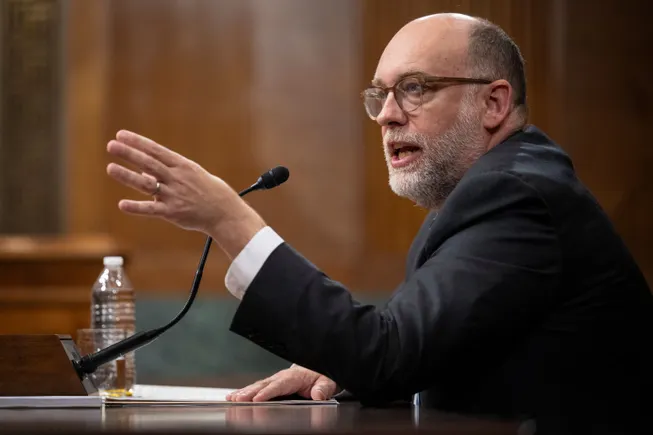
The Consumer Financial Protection Bureau (CFPB), once a cornerstone of the post-2008 financial regulatory framework, finds itself at a pivotal crossroads. Following months of aggressive restructuring, budget slashing, and a systematic rollback of enforcement actions, the agency’s acting director, Russell Vought, has faced a grueling week of congressional testimony. As Vought prepares to step down on August 1, his tenure has become a flashpoint in the broader ideological battle over the role of federal oversight in the American economy.
The Core Conflict: A Philosophy of "Humility" vs. Regulatory Reach
Russell Vought, who concurrently serves as the director of the Office of Management and Budget (OMB), assumed control of the CFPB in February 2025 with a clear mandate: to fundamentally reshape, if not outright dismantle, the agency’s influence. Throughout his appearances before the House Financial Services Committee and the Senate Banking Committee this week, Vought framed his actions as a necessary correction to an "out of control" bureaucracy.
Vought’s rhetoric centered on the concept of "humility and fiscal responsibility." He argued that under previous administrations, the CFPB had morphed into a "weaponized" entity that stifled economic innovation by imposing excessive compliance costs on financial institutions. His tenure has been marked by a transition away from what Republican allies describe as a "sue and settle" approach to regulation, favoring instead a model where the agency defers to state regulators and focuses only on instances of "material and measurable" consumer harm.
Chronology of an Agency Transformation
The transformation of the CFPB under Vought’s leadership has been rapid and exhaustive. Since taking the helm in early 2025, his tenure has been defined by several distinct phases of deconstruction:
- Initial Intentions (October 2024): Months before officially taking the lead, Vought signaled his intent to shutter the bureau entirely, suggesting it could be effectively dismantled within a two-to-three-month window.
- The February 2025 Transition: Upon assuming the role of acting director, Vought initiated a comprehensive review of the agency’s operations. This led to the immediate halting of numerous ongoing investigations and the cancellation of enforcement actions against major financial players, including Capital One.
- The Policy Purge (Mid-2025): Vought oversaw the rescission of 67 pieces of regulatory guidance and the systematic deletion of historical records—including press releases and speeches—that predated the current administration.
- Workforce Reductions (Late 2025–2026): The agency underwent significant downsizing. According to testimony provided by Vought, the bureau’s staff count currently stands at 1,071, a notable decrease from the agency’s peak levels.
- The Sunset Period (Mid-2026): With his departure date set for August 1, the White House has moved to nominate Brian Johnson, a former CFPB deputy director and current Capital One executive, to permanently lead the agency, signaling a continuation of the current deregulatory trajectory.
Supporting Data: The Cost of Deregulation
The ideological divide over Vought’s actions is perhaps most clearly articulated through the lens of economic data. A report released this week by Senate Banking Committee Democrats presents a stark warning regarding the long-term impact of Vought’s policies.
The report estimates that the administration’s "attack" on the CFPB has cost American consumers approximately $26.5 billion. This figure is derived from several key policy reversals:
- Fee Rule Rescissions: The cancellation of rules concerning credit card late fees and overdraft charges is estimated to have cost consumers $19 billion in 2025 alone.
- Ongoing Financial Impact: An additional $7.5 billion in consumer losses is attributed to the first half of 2026, as the absence of federal oversight allowed financial institutions to recalibrate their fee structures without the threat of agency intervention.
- Historical Context: Democrats noted that from its founding in 2011 through early 2025, the CFPB had successfully secured $21 billion in direct relief for consumers, a figure that the report suggests has now been eclipsed by the costs incurred during Vought’s tenure.
Official Responses and Congressional Firestorms
The testimony provided this week was characterized by intense partisan theater, reflecting the deep polarization surrounding the future of financial consumer protection.
The Democratic Critique
Democratic lawmakers, led by Rep. Maxine Waters (D-CA), utilized the hearings to document what they view as a dereliction of duty. Waters explicitly warned Vought to preserve all internal communications, stating, "While your work may be done and a new director may be confirmed, let me be clear: we are not done with you."
Critics specifically pointed to the handling of the Navy Federal Credit Union case. The CFPB reversed an order that would have required the institution to pay $80.6 million in consumer redress. Vought defended the move, noting that the credit union still paid a $15 million civil penalty, but argued that the redress order lacked sufficient legal basis. Furthermore, Sens. Mark Warner and Lisa Blunt Rochester challenged Vought on his characterization of Community Development Financial Institutions (CDFIs), which Vought had dismissed as being "incredibly woke" during the previous administration.
The Republican Defense
Conversely, Republican members of the committee largely praised Vought’s efforts to rein in what they consider an unaccountable agency. Senator Tim Scott emphasized that consumer protection is better served by "competition, choice, and clear rules" rather than heavy-handed federal oversight. Senator Pete Ricketts echoed this sentiment, arguing that the CFPB serves as a redundant layer of bureaucracy that complicates the regulatory landscape without providing unique value.
Vought himself argued that the structural design of the CFPB—specifically its exemption from the traditional congressional appropriations process—was its primary defect. By insulating the agency from the power of the purse, he argued, the bureau lacked the necessary accountability to elected representatives.
Implications for the Future of Financial Regulation
The impending transition from Vought to a permanent director, Brian Johnson, suggests that the current era of deregulation is likely to persist. The nomination hearing for Johnson, scheduled for July 23, will serve as a bellwether for the future of the agency. If confirmed, Johnson is expected to solidify the shift toward a more passive, deferential regulatory posture.
Market Impact
Financial institutions have largely reacted positively to the reduction in enforcement, viewing the shift as a decrease in regulatory risk and operational cost. However, consumer advocacy groups warn that the lack of a "cop on the beat" will inevitably lead to an increase in predatory lending practices and a degradation of consumer rights in the credit and banking markets.
Legal and Institutional Fallout
The decision to purge internal guidance and historical documentation has raised concerns among administrative law experts. The removal of records that detail the reasoning behind previous enforcement actions creates a "regulatory vacuum," potentially complicating the efforts of future administrations should they attempt to reinstate a more robust oversight framework.
Furthermore, the treatment of federal employees during the Vought era—including his public comments about putting workers "in trauma"—has left the agency’s internal culture in tatters. The loss of institutional memory, coupled with a depleted workforce, suggests that even if a future administration seeks to restore the CFPB to its original intent, the process of rebuilding the agency’s capacity and morale will be a multi-year endeavor.
Conclusion
As Russell Vought concludes his tenure, the legacy of the CFPB under his leadership remains a subject of intense debate. To his supporters, he has successfully liberated the financial sector from a bloated, ideological bureaucracy. To his detractors, he has systematically dismantled a vital consumer safeguard, trading the financial security of millions of Americans for the benefit of the very institutions the agency was created to oversee. The coming months, with the Senate nomination hearing for Brian Johnson, will determine whether this transformation is a permanent feature of the American regulatory landscape or a temporary interregnum in the history of the CFPB.