The Crisis of Representation: Colombia’s Political Crossroads Following the 2026 Presidential Election
By Luis Carlos Reyes
July 20, 2026
The recent presidential election in Colombia has sent shockwaves through the nation’s social and political landscape, signaling a profound divergence between the public’s aspiration for a robust welfare state and the cold reality of a political system deeply entrenched in, and often beholden to, compromised interests. The victory of Abelardo de la Espriella, a high-profile criminal defense lawyer, over human-rights advocate and senator Iván Cepeda, marks a pivotal, if unsettling, transition in Colombian history—a moment where the country appears to have turned its back on systemic reform in favor of a status quo defined by transactional power.
The Main Facts: A Victory for the Legal Establishment
The election outcome in June 2026 was more than a mere change in administration; it was a referendum on the nature of justice and state integrity in Colombia. Iván Cepeda, a figure synonymous with the struggle for historical memory and the pursuit of justice for victims of the country’s decades-long armed conflict, represented a platform centered on social equity, transitional justice, and the strengthening of public institutions. His candidacy was buoyed by a broad coalition of civil society organizations, labor unions, and citizens exhausted by decades of inequality.
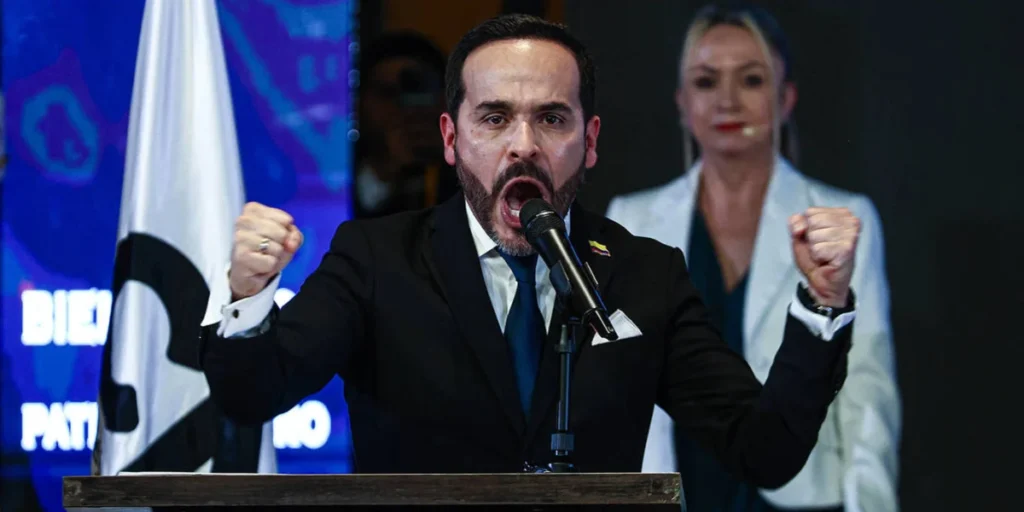
Conversely, Abelardo de la Espriella, a figure who has built his career navigating the most controversial corridors of the Colombian legal system, ran on a platform that prioritized legal pragmatism and a fierce defense of the private sector. De la Espriella’s rise to the presidency is characterized by his extensive track record representing paramilitary leaders, corrupt state officials, and figures involved in international money laundering schemes. His ascent to the Casa de Nariño brings into sharp relief the tension between the rule of law and the influence of powerful, often opaque, legal and economic networks.
A Chronology of the 2026 Election Cycle
The trajectory of this election was marked by increasing polarization and a series of events that underscored the fragility of Colombia’s democracy.
- January 2026: The electoral season began with high hopes for a progressive agenda, as Iván Cepeda officially launched his campaign, promising to dismantle the structures that have historically allowed paramilitary influence to permeate state affairs.
- March 2026: Initial polling suggested a competitive race, but the narrative shifted rapidly as the de la Espriella campaign leveraged massive media visibility and a robust financial war chest, framing the election as a choice between "order" and "radical instability."
- April 2026: A series of investigative reports surfaced detailing the historical client base of de la Espriella’s law firm, linking him to figures involved in the Venezuelan regime’s financial networks and various domestic corruption scandals. Despite these revelations, his support remained firm among traditional conservative voting blocs.
- May 2026: As the debate intensified, the gap between the two candidates narrowed, but the discourse descended into character assassination, with the incoming administration’s allies successfully painting Cepeda as a threat to national economic stability.
- June 2026: Election Day saw significant voter turnout. The results were confirmed late that evening: de la Espriella secured a decisive victory, reflecting a fragmented opposition unable to consolidate a unified message in the face of a highly resourced campaign.
Supporting Data: The Cost of Inequality
Colombia remains one of the most unequal countries in the world. According to data from the National Administrative Department of Statistics (DANE), the poverty rate hovers near 39%, with a Gini coefficient that underscores the stark divide between the urban elite and the rural poor.
The public’s desire for a strong welfare state is not abstract; it is driven by the collapse of healthcare access in peripheral provinces, the scarcity of quality public education, and the lingering effects of the post-pandemic economic contraction. However, the data also reveals a paradox: while citizens demand more state intervention, the fiscal reality of the Colombian state is constrained by a tax system that frequently favors capital accumulation over redistribution.
De la Espriella’s campaign successfully tapped into the anxiety of the middle class, promising to protect their assets from "socialist" reforms, even as those same citizens struggle to meet the rising costs of living. The disconnect is clear: the political system is currently incapable of delivering the welfare state the people crave because the incoming administration is ideologically and structurally aligned with the very interests that benefit from the current, regressive economic order.
Official Responses and Public Sentiment
The international community has reacted with cautious silence, while domestic reaction has been one of polarized resignation.
"The election results demonstrate that Colombian democracy is entering a phase of deep institutional capture," noted a coalition of human rights NGOs in a post-election briefing. They argue that the victory of a lawyer whose career has been built on defending the architects of the conflict sets a dangerous precedent for the legitimacy of the justice system.
On the other hand, the business sector and several regional political power brokers have welcomed the result, describing it as a "return to sanity" and a necessary safeguard for private property. De la Espriella, in his victory speech, promised to "professionalize" the government and focus on security, effectively sidelining the social justice platform that defined the electoral debate.
Implications for the Future of Colombia
The election of Abelardo de la Espriella poses fundamental questions for the future of the Colombian state.
1. The Erosion of Transitional Justice
With a president who has historically sought to mitigate the legal consequences for paramilitary figures, the institutions created by the 2016 Peace Agreement—specifically the Special Jurisdiction for Peace (JEP)—face an existential threat. The incoming administration is likely to use its executive powers to defund or discredit these mechanisms, effectively stalling the quest for truth and reparations for victims like the family of Iván Cepeda.
2. Economic Policy and the "Welfare Gap"
Colombia’s citizens will continue to face disappointment. The promises of a stronger welfare state require a social contract that the current administration is unlikely to forge. Instead of addressing structural inequality, the focus will likely remain on fiscal austerity measures that protect corporate interests, potentially leading to further social unrest as the gap between state capacity and public expectation widens.
3. The Shadow of International Alliances
De la Espriella’s history of representing figures linked to international money laundering and foreign regimes (such as the Venezuelan regime’s associates) invites increased scrutiny from global financial monitors and international intelligence agencies. This could lead to a diplomatic cooling period with key Western allies, particularly the United States, if the new administration’s ties to illicit financial flows become a point of friction.
4. The Crisis of Political Representation
The most long-term implication is the alienation of the electorate. When the political system consistently produces leaders who represent the interests of those who have historically harmed the public, trust in democratic institutions reaches a breaking point. Colombia risks a cycle of disillusionment where voters, feeling their voice carries no weight, may either withdraw entirely from the political process or turn toward more radical, populist alternatives in future cycles.
Conclusion: A Nation at a Crossroads
The election of 2026 will be remembered as the moment Colombia chose to pause its attempt at social transformation. The victory of the legal establishment over the voice of the victims is not just a political defeat for Iván Cepeda; it is a manifestation of the "malign influences" that continue to dictate the terms of Colombian governance.
As the new administration takes office, the path forward is fraught with systemic contradictions. If the government fails to address the underlying hunger for social dignity, the tension currently simmering beneath the surface of the Colombian electorate will only intensify. The welfare state remains an unfulfilled promise, trapped in a political architecture that, for the moment, seems designed to prevent its realization. The challenge for the opposition, and for the country at large, will be to maintain its commitment to democracy while navigating an era where the law itself has been weaponized against the public good.