The Collapse of Small Business Bank: A Case Study in Regulatory Scrutiny and Financial Instability
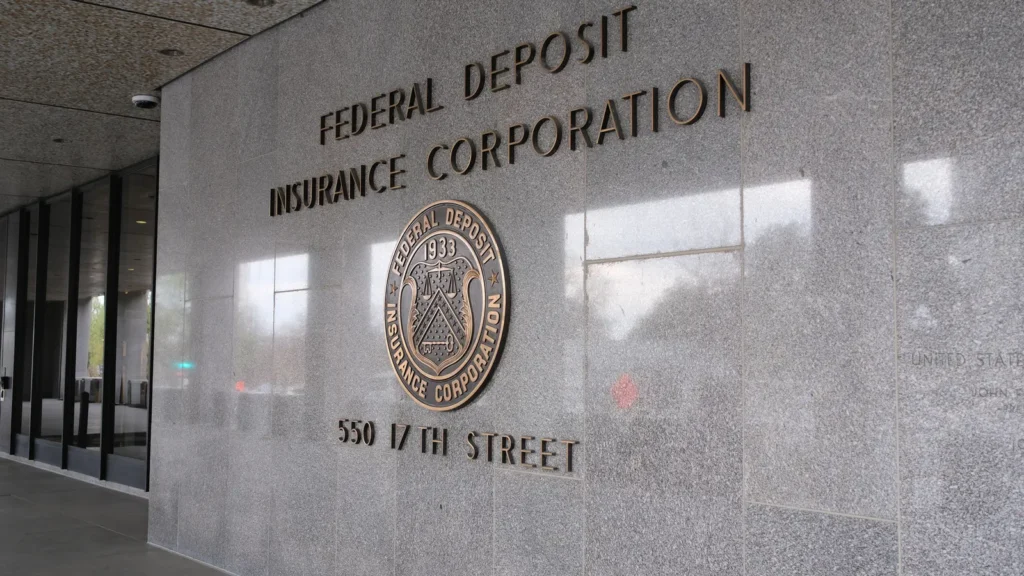
The U.S. banking sector witnessed another chapter of consolidation this past Friday as Kansas regulators shuttered the Lenexa-based Small Business Bank. The move, executed by the Federal Deposit Insurance Corp. (FDIC) acting as receiver, marks the fourth bank failure in the United States this year. In a swift transition designed to mitigate customer disruption, The Farmers State Bank of Oakley—a lender based on the opposite side of the state—has agreed to assume all deposits and purchase a significant portion of the failed institution’s assets.
For customers of the Lenexa lender, the transition is intended to be seamless. The bank’s sole office is scheduled to reopen Monday morning as a branch of The Farmers State Bank, ensuring that depositors maintain uninterrupted access to their funds. This development serves as a sobering reminder of the volatility inherent in smaller financial institutions when faced with prolonged regulatory pressure and failing capital structures.
A Chronology of Decline: Three Years of Warnings
The failure of Small Business Bank was not a sudden catastrophe but rather the culmination of a three-year downward trajectory characterized by repeated clashes with federal regulators. The institution had been under the microscope of the Federal Reserve since 2023, failing to rectify persistent operational and financial shortcomings despite multiple enforcement actions.
2023: The Initial Cease-and-Desist
The regulatory trouble began in earnest in 2023, when the Federal Reserve issued a formal cease-and-desist order against the bank. At that time, federal examiners identified a laundry list of systemic failures. The deficiencies were broad in scope, touching upon nearly every critical function of a financial institution: staffing levels, internal control mechanisms, credit risk management, and lending administration. Furthermore, the bank’s IT infrastructure and its oversight of third-party vendors were flagged as inadequate, signaling a breakdown in the institution’s ability to manage modern operational risks.
2024: Continued Deficiencies
Rather than course-correcting, the bank struggled to implement the structural changes demanded by the Federal Reserve and the Kansas Office of the State Bank Commissioner. During a follow-up examination in 2024, regulators discovered that many of the previous issues remained unaddressed. Of particular concern were failures in anti-money laundering (AML) compliance—a critical area of regulatory scrutiny—and a general inability to strengthen risk management protocols. This lack of progress signaled to regulators that the bank’s management team was either unable or unwilling to pivot toward stability.
2025-2026: The Final Countdown
The terminal phase of the bank’s existence began in June 2026, when the Federal Reserve formally labeled Small Business Bank as "significantly undercapitalized." This classification triggered a "prompt corrective action directive," providing the bank with a narrow 30-day window to raise new equity capital, find an acquirer, or implement other "necessary measures" to restore its balance sheet. Unable to secure the necessary funding or interest from a viable partner, the bank’s capital position continued to deteriorate, leaving regulators with no choice but to initiate closure proceedings.
Supporting Data: The Financial Snapshot
The financial profile of Small Business Bank at the time of its closure paints a picture of an institution that had simply run out of runway. According to FDIC data, the bank held approximately $73 million in assets and roughly $69 million in deposits.
The cost of this failure to the broader financial system—specifically the FDIC’s Deposit Insurance Fund (DIF)—is currently estimated at $5.7 million. While the FDIC expects this figure to fluctuate as the remaining, non-purchased assets are liquidated or sold off in the coming months, the impact is relatively contained given the bank’s small footprint.
In contrast, the acquiring institution, The Farmers State Bank of Oakley, is positioning itself for a period of robust growth. As of March 31, the bank reported $389 million in assets, supported by branches in Oakley and Eudora. The acquisition of Small Business Bank follows closely on the heels of The Farmers State Bank’s recent integration of Kaw Valley State Bank, an expansionary move that underscores the bank’s appetite for market share in the Kansas region.
Official Responses and Regulatory Oversight
The FDIC, acting as the receiver, moved quickly to protect the depositors of Small Business Bank. By arranging a purchase and assumption agreement with The Farmers State Bank, the regulator avoided the more disruptive outcome of a direct payout to depositors.
The Federal Reserve has remained largely silent following the closure, though its prior public directives speak to the severity of the bank’s non-compliance. In the broader context of the U.S. banking system, the Fed’s persistent enforcement actions against Small Business Bank underscore a "zero-tolerance" policy regarding operational deficiencies. Regulators have increasingly prioritized AML compliance and IT security, viewing these as foundational elements of a safe and sound banking system.
For the Kansas Office of the State Bank Commissioner, this failure represents a significant challenge in oversight, as the state works to ensure that smaller community banks—often the lifeblood of local economies—can survive in an environment of rising interest rates and tightening credit conditions.
Broader Implications: A Trend of Small-Bank Instability?
The closure of Small Business Bank is the fourth such event in the U.S. this year, a statistic that has drawn attention from industry analysts. While it is tempting to compare current events to the systemic shocks of 2023—when institutions like Silicon Valley Bank and First Republic collapsed—the current wave of failures is fundamentally different in nature and scale.
2026: A Year of Micro-Failures
- Kentland Federal Savings and Loan Association (Indiana): Closed July 10 following reports of "substantial dissipation of assets" due to unsound business practices.
- Community Bank & Trust – West Georgia: Failed in May after an Atlanta Fed inspection revealed critical gaps in board oversight and growth strategies.
- Metropolitan Capital Bank & Trust (Chicago): Failed in January, plagued by unsafe conditions and a severely impaired capital position.
These failures, when taken alongside the collapse of Small Business Bank, suggest that the U.S. banking system is undergoing a "weeding out" process. Smaller, community-focused institutions that failed to modernize their risk management, compliance, or capital structures during the era of low interest rates are now finding themselves unable to survive in a more complex, high-pressure financial environment.
The Macro View: Comparing 2023, 2024, and 2025
The total number of bank failures in 2026 has already reached the combined total of the previous two years. In 2024, only two banks failed; in 2025, that number also stood at two. This indicates a slight, albeit steady, uptick in bank closures compared to the immediate post-pandemic period.
However, it is vital to distinguish these small-bank failures from the "high-profile" collapses of 2023. The 2023 crisis involved multi-billion-dollar institutions whose instability threatened to trigger contagion across the global financial system. The current cohort of failed banks, including Small Business Bank, are small-cap lenders whose closures have localized impacts but do not threaten the stability of the U.S. dollar or the solvency of the national banking sector.
Conclusion: The Road Ahead for Community Banking
The story of Small Business Bank is a cautionary tale regarding the necessity of proactive management. The bank’s inability to address fundamental deficiencies—ranging from internal controls to IT security—eventually rendered it an outlier in an industry that demands constant evolution.
As The Farmers State Bank integrates the former Lenexa location into its growing portfolio, the banking industry will continue to watch for signs of further consolidation. With regulatory scrutiny at an all-time high, smaller banks are increasingly finding that the price of non-compliance is not just a fine, but the potential loss of their charter. For now, the depositors in Lenexa are safe, but the failure serves as a stark reminder that in the world of finance, survival is never guaranteed.