The Cognitive Paradox: How AI is Rewriting the Limits of Human Intelligence
By Sami Mahroum
June 12, 2026
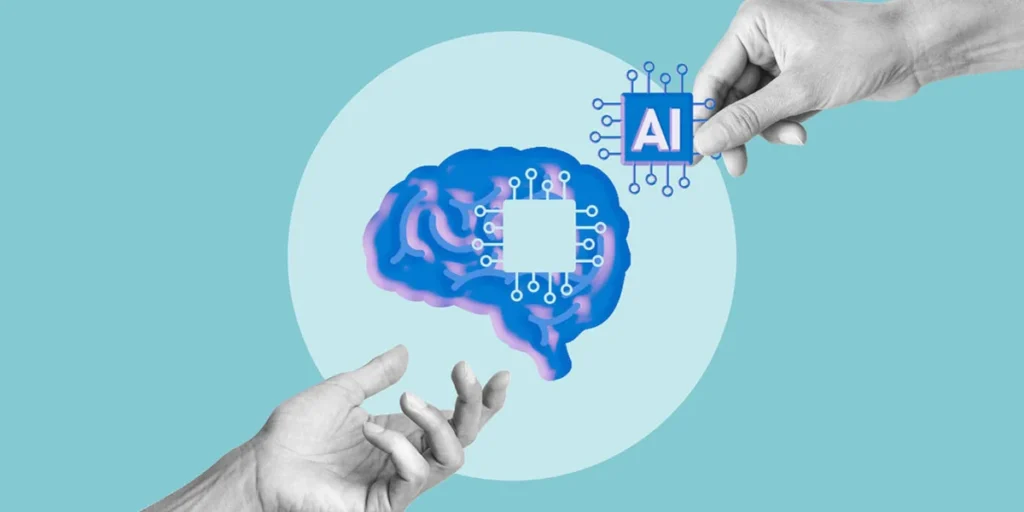
In the annals of cognitive science, few milestones are as foundational as George Miller’s 1956 paper, "The Magical Number Seven, Plus or Minus Two." In this seminal work, the American psychologist identified a biological "bottleneck": the human working memory, he argued, is constrained to holding only about seven chunks of information at any given moment. For seven decades, this insight served as a bedrock for understanding human limitations. Today, however, we stand at a precipice where artificial intelligence is effectively bypassing these constraints, turning tacit human knowledge into a liquid, scalable commodity. Yet, as we embrace this technological leap, we must confront a sobering question: by outsourcing our cognitive heavy lifting to silicon, are we inadvertently eroding the very human capacities that underpin complex civilization?
The Main Facts: The Great Unbundling of Cognition
Artificial Intelligence has moved beyond mere automation of manual labor; it is now the industrialization of thought. The core mechanism at play is the transformation of "tacit knowledge"—the intuitive, experience-based expertise that resides in the human brain—into explicit, machine-readable data.
Historically, knowledge was tied to the individual. If a master craftsman possessed a specific skill, that knowledge was trapped within their neural architecture. To pass it on, one required years of apprenticeship. AI changes this fundamental equation. By mapping patterns from vast datasets, large language models and cognitive architectures can now emulate, codify, and replicate expertise.
This process, often called the "unbundling of cognition," means that knowledge is no longer a static asset held by a person. It is now a product that can be extracted, priced, and distributed at global scale. While this promises a democratization of intelligence—where a student in a remote village has access to the same diagnostic prowess as a top-tier surgeon—it creates a dependency loop. As AI tools become more sophisticated, the human incentive to cultivate deep, internal cognitive skills diminishes, potentially leading to a "cognitive atrophy" that could leave society ill-equipped to handle systemic failures.
A Chronology of Cognitive Offloading
To understand where we are, we must look at the trajectory of how humans have externalized their mental processes over the last century.
- 1956: The Miller Threshold. George Miller establishes the "seven plus or minus two" rule, defining the boundaries of human short-term cognition.
- 1970s–1990s: The Information Age. The advent of personal computing begins the process of externalizing data storage. We stopped memorizing phone numbers and encyclopedic facts, relying instead on databases and digital indices.
- 2007–2015: The Mobile Revolution. The smartphone becomes a literal extension of the brain. Navigation, calculation, and information retrieval are offloaded to external devices.
- 2022–2024: The Generative Leap. With the release of advanced LLMs, the offloading shifts from data retrieval to reasoning and synthesis. AI begins to write, code, analyze, and strategize.
- 2026: The Current State. We have entered the era of "Cognitive Synthesis." AI models are no longer just tools; they are autonomous agents capable of managing complex workflows, effectively serving as an external working memory that far exceeds Miller’s "magical number."
Supporting Data: The Efficiency-Versus-Resilience Tradeoff
The shift toward AI-integrated cognitive labor is backed by significant metrics. According to recent longitudinal studies on workforce productivity, the integration of generative AI in professional settings has yielded a 35% to 50% increase in output for repetitive analytical tasks.
However, the "cost" of this efficiency is rarely tracked in traditional balance sheets. Data from recent pilot studies on skill retention suggest that professionals who rely heavily on AI-assisted decision-making exhibit a measurable decline in "first-principles thinking."
- Task Mastery: Participants using AI for complex problem-solving reached "correct" solutions 40% faster than their counterparts, but when the AI tools were withdrawn, the AI-dependent group showed a 25% lower success rate in solving problems from scratch.
- Information Density: While AI allows us to process thousands of inputs—far exceeding the seven-piece limit of the human brain—it often obscures the process of deduction. Users see the answer, but the "mental muscle" required to arrive at that answer remains unexercised.
This creates a paradox: we are becoming more productive in the short term, but we are sacrificing the foundational "cognitive stamina" required to innovate when the machines are unavailable or when novel, non-patterned problems arise.
Official Responses and Ethical Debates
The rapid adoption of AI has triggered a global debate among policymakers and academic institutions.
In the European Union, the recent "Cognitive Sovereignty Act" (2026) mandates that educational curricula must maintain a focus on "foundational human reasoning" alongside AI literacy. The intent is to prevent a generational skills gap where students become proficient at prompting machines but lose the ability to perform critical analysis independently.
Conversely, Silicon Valley stakeholders argue that the "atrophy" argument is a form of technological Luddism. "We didn’t lose the ability to calculate when the calculator was invented; we simply moved to higher-order mathematics," says Dr. Aris Thorne, a leading researcher in cognitive computing. "AI is an amplifier, not a replacement. The goal is to offload the mundane to focus on the truly creative and strategic."
However, critics, including various human-centric policy think tanks, argue that the comparison to the calculator is flawed. A calculator assists with arithmetic, but it does not reason. Modern AI simulates reasoning, which risks creating a "black box" society where the foundational logic of our systems is understood by no one, not even the experts.
Implications: The Future of the Human Mind
The implications of this transition are profound and multi-faceted:
1. The Risk of Systemic Fragility
If we outsource our critical thinking to AI, we are essentially building a complex society on top of a system whose "internal workings" are opaque. If the AI systems fail—due to energy crises, cyber-attacks, or algorithmic bias—the human population may find itself lacking the basic cognitive skills to revert to manual systems.
2. The Stratification of Intelligence
We may see a widening divide between "AI-augmented" workers who understand the underlying logic of the systems they use, and "AI-dependent" workers who are merely passive recipients of machine-generated answers. This could lead to a new form of social stratification, where the ability to "think without the machine" becomes a luxury skill held by a small elite.
3. The Redefinition of Human Value
If AI can extract and scale tacit knowledge, what remains unique to humans? The answer likely lies in the human capacity for contextual nuance, moral judgment, and emotional resonance—qualities that do not easily translate into data points. Our future value will depend not on our ability to compete with machines on processing power, but on our ability to govern the machines and provide the human-centric values that guide their outputs.
4. The Biological Constraint
Miller’s "Magical Number Seven" is a reminder of our biological heritage. We are not designed to process global-scale information flows. By forcing our brains to operate at the speed of silicon, we risk high levels of psychological burnout. The future of work may require a "human-in-the-loop" design that respects our biological constraints while leveraging the power of AI.
Conclusion
The transition we are witnessing is perhaps the most significant in human history. We are no longer just building tools to extend our physical reach; we are building systems that extend—and potentially replace—our cognitive reach.
The challenge for the next decade is not merely technical; it is philosophical and educational. We must ensure that while we climb the ladder of artificial intelligence, we do not kick away the rungs of human capability that got us here. If we are to survive and thrive in this new era, we must view AI as a partner in our cognitive development rather than a crutch. We must prioritize deep learning, critical thinking, and the cultivation of human intuition. For while the "Magical Number Seven" may feel like a limitation in an age of infinite data, it is that very limitation—our narrow focus, our bias, and our deep, embodied experience—that defines the essence of human intelligence.