The Civic Architecture of Care: How nae vallejo’s Flowers in the Bones Reimagines Mutual Aid
In an era defined by institutional skepticism and the fraying of traditional social safety nets, a profound question has begun to circulate through the corridors of community organizing and the arts: What remains when systems, credentials, and promises fail to hold us?
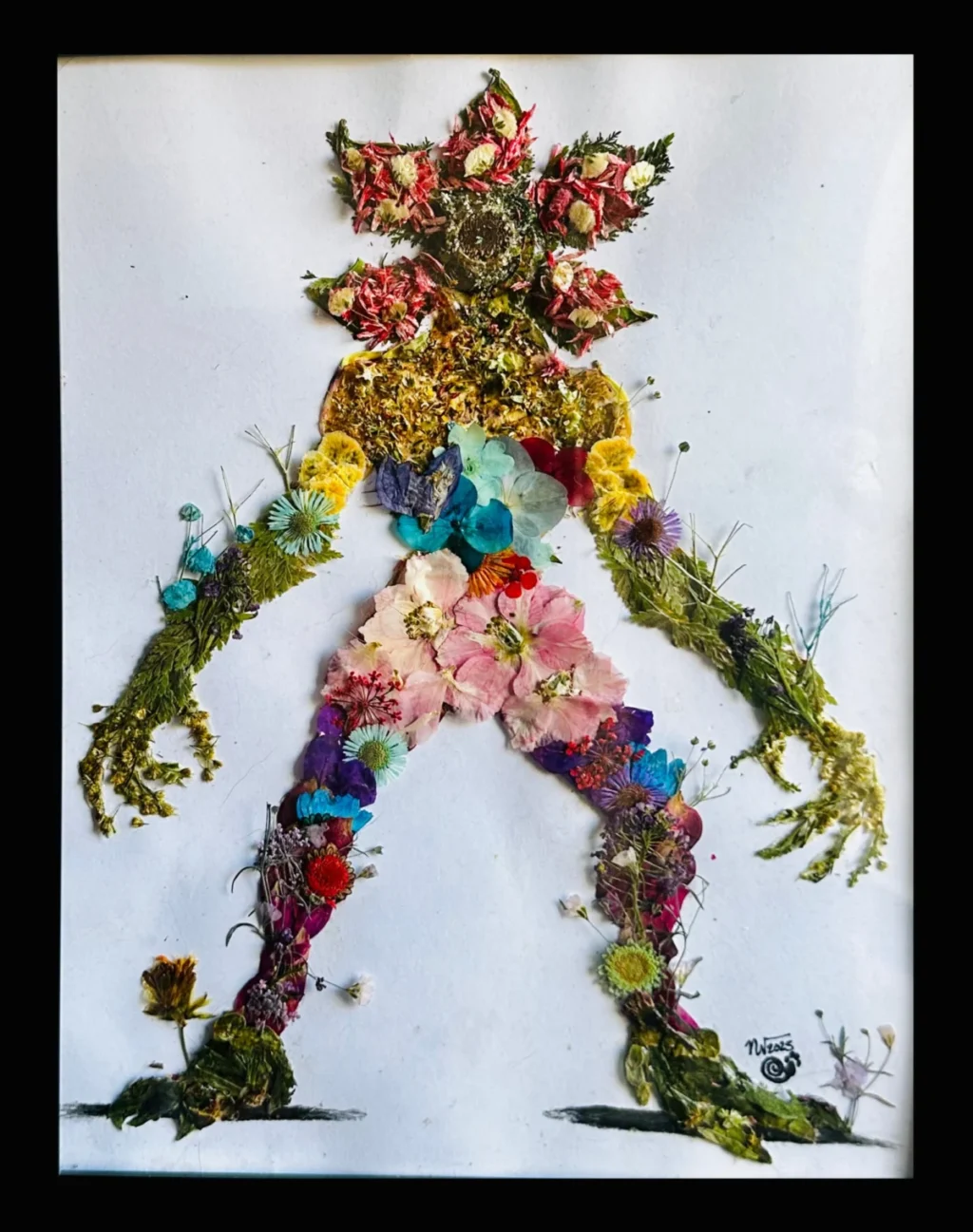
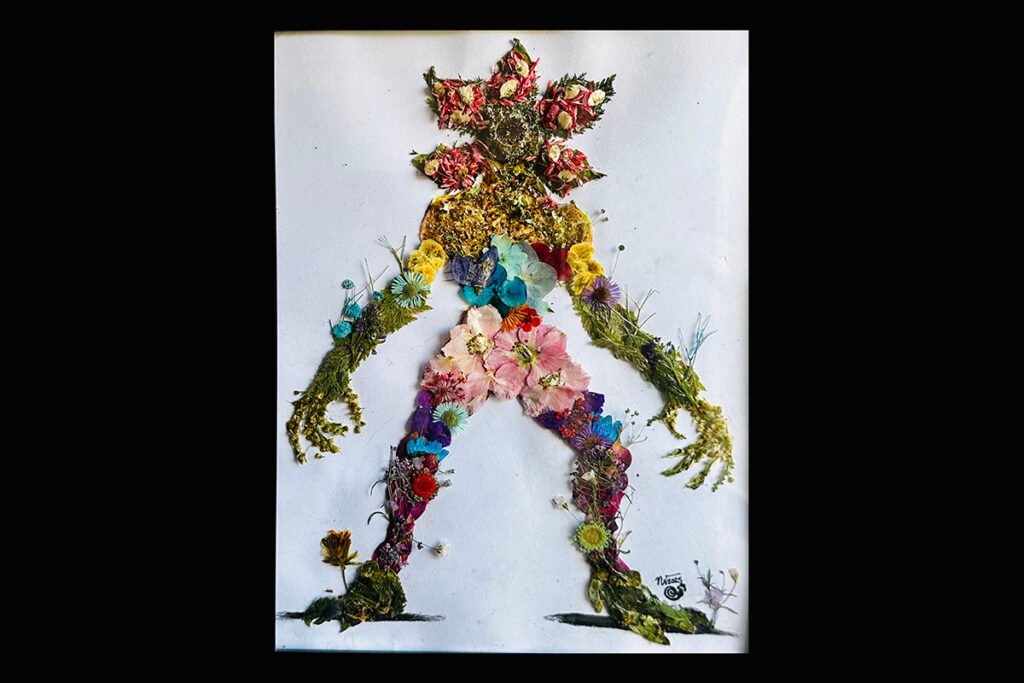
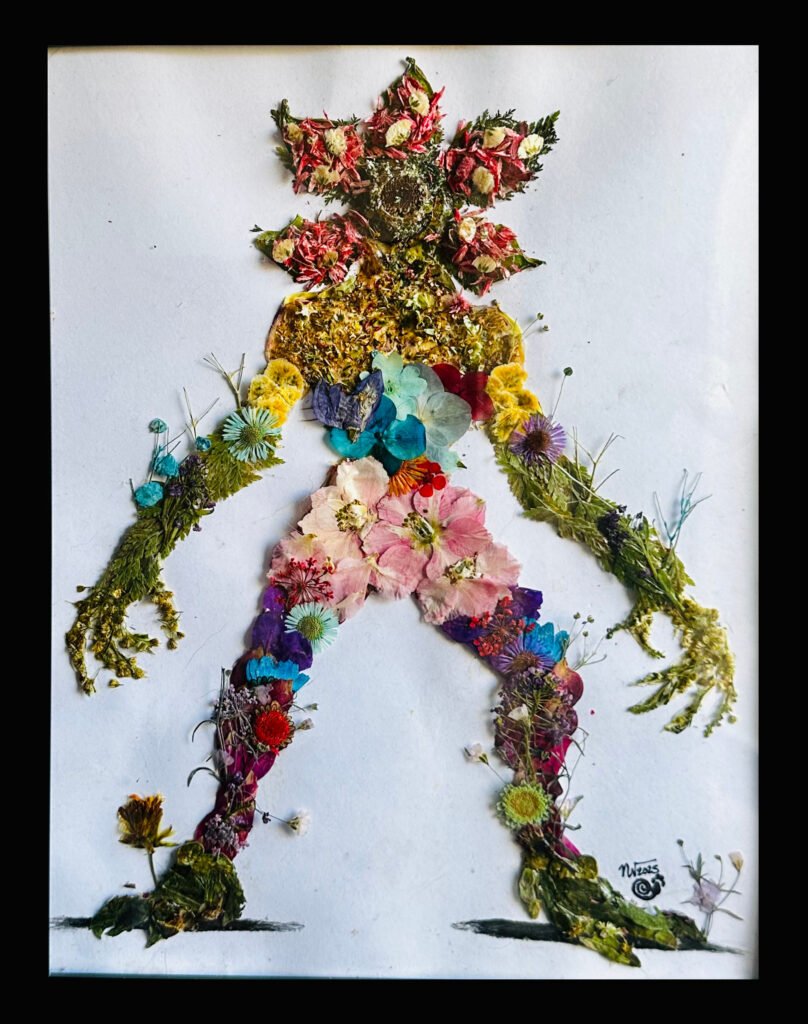
For artist and experiential archivist nae vallejo, the answer is not found in policy white papers or legislative reform, but in the quiet, radical architecture of human connection. Through their latest project, Flowers in the Bones, vallejo explores the intersection of disability justice, collective survival, and the art of "rememory." Utilizing oshibana—the intricate Japanese craft of pressed-flower artistry—vallejo has transformed physical fragility into a visual manifesto for mutual aid.
The Genesis of a Visual Archive
Flowers in the Bones did not begin as a gallery piece; it emerged from a period of profound personal and collective transition. Vallejo, a Black, Caddo, Mexican, queer, trans, and disabled artist, describes the work as an ongoing meditation on grief, illness, and the sustaining power of chosen family.
The process of oshibana serves as a deliberate metaphor for the human condition. By preserving ephemeral blooms, the artist creates a permanent record of moments that would otherwise vanish. "The preserved flowers become a record of what has been carried, lost, and loved," vallejo notes. In the hands of the artist, the botanical elements are not merely aesthetic; they are archival, holding the tension between the fragility of the body and the endurance of the spirit.
Chronology of the Project
- Initial Conception: Rooted in the artist’s own experiences with disability and the necessity of interdependent care, the project began as a personal ritual of grounding.
- Development of Methodology: Vallejo integrated the sensory attunement practices of naeborhood projects—their independent studio—to synthesize botanical art with archival storytelling.
- Public Integration: The project moved from private meditation to public discourse as vallejo began using these visual artifacts to anchor workshops and community-centered dialogues regarding collective care.
- Current Iteration: The work now serves as a central theme in vallejo’s broader advocacy, positioning "care" not as a charitable afterthought, but as a primary civic duty.
Data and the Reality of Mutual Aid
While Flowers in the Bones is deeply personal, it speaks to a growing statistical reality regarding the efficacy of mutual aid networks in the United States. According to research on community-led disaster response and social resilience, informal support networks—often termed "mutual aid"—consistently outperform institutional responses in marginalized and disabled communities.
Vallejo’s work highlights a version of America that is frequently overlooked by traditional socio-economic metrics. This is the story of "interdependence"—a framework that posits that individual autonomy is a myth, and that true safety is found in the collective.
Data from recent sociological studies on disability justice suggest that "care webs"—the informal, decentralized systems of support developed by disabled people—are the most reliable form of crisis management during periods of systemic failure. By visualizing these relationships through botanical preservation, vallejo provides a tangible anchor for these abstract social dynamics. The flowers are, quite literally, the data points of survival.
Implications for Civic Practice: Love as Resistance
The central thesis of Flowers in the Bones is that love, when practiced intentionally, is a civic activity. In the current political climate, where the nonprofit industrial complex often struggles to reach the most vulnerable, vallejo’s work suggests a shift in focus.
Redefining the "Village"
Vallejo argues that the "village" is not a static location, but an active, daily practice. For many in the disability community, this looks like sensory-aware meeting spaces, digital check-in rituals, and the shared distribution of resources. These are not merely survival strategies; they are forms of resistance against a system that prioritizes productivity over existence.
The Failure of Traditional Systems
The artist’s work poses a difficult question to institutions: If systems, credentials, and government promises are insufficient to meet human needs, what responsibility do we have to one another? Vallejo’s answer is found in the "quiet acts of devotion" that keep communities intact. By centering these acts, the artist challenges the assumption that survival is an individual achievement. Instead, they propose a paradigm shift: "We bloom because others help keep us alive."
The Role of the Artist as Archivist
As an "experiential archivist," vallejo’s role extends beyond the creation of beautiful objects. They are documenting the ephemeral history of care. In a society that is often quick to erase the stories of the marginalized—particularly those who are queer, trans, and disabled—vallejo’s work serves as a vital record.
"My practice moves through memory and rememory," vallejo explains. By weaving disability justice and sensory attunement into their work, they are ensuring that the history of these communities is not lost to time. Through the lens of naeborhood projects, the artist utilizes drawing, writing, and botanical art to create a space where these histories can be held, examined, and honored.
Official Perspectives and Community Response
While the work is primarily artistic, it has gained traction among nonprofit leaders and community organizers who are grappling with the limitations of current service-delivery models. Many in the sector see Flowers in the Bones as a call to re-humanize social services.
"There is a growing recognition that our current structures are failing to provide the psychological and emotional safety required for a truly democratic society," says a community organizer familiar with vallejo’s work. "By framing care as a civic practice, nae is providing a framework for nonprofits to move beyond transactional relationships and toward transformative, long-term community building."
Looking Toward an Accessible Future
The ultimate goal of Flowers in the Bones is to imagine—and build—more accessible futures. For vallejo, this begins with the recognition of one’s own limits and the intentional invitation of others into one’s care circle.
As a neurodivergent, hard-of-hearing service dog guardian, vallejo’s life is a constant navigation of accessibility and interdependence. Their art reflects this lived reality. It is a reminder that we are all, at different points in our lives, both the carried and the carriers.
Key Takeaways for the Future
- Interdependence is Strength: Moving away from the neoliberal myth of the "self-made person" toward a model of collective resilience.
- Accessibility as Foundation: Ensuring that all civic engagement is rooted in the needs of the most vulnerable members of society.
- Ritual as Resistance: Recognizing that small, intentional acts of care are powerful political statements in an increasingly atomized world.
Conclusion: The Persistence of the Bloom
Flowers in the Bones is more than an exhibition of pressed flora; it is an invitation to witness the tenacity of human connection. In a world that often demands we be invulnerable, vallejo’s work asks us to lean into our fragility and to recognize it as a site of potential rather than weakness.
The flowers, tender and imperfect, serve as a mirror to our own lives. They remind us that while grief and isolation are inevitable parts of the human experience, they do not have to be the end of the story. Through the practice of mutual aid and the intentional cultivation of care, we create a landscape where everyone can bloom.
As we look toward the future of our democracy, we would do well to listen to the lessons found in vallejo’s archive. We are tasked with building systems that do not just provide services, but that honor the dignity and the necessity of every human life. We are, in every sense, the people we have been waiting for. We are the flowers in the bones of the world, held together by the quiet, revolutionary act of caring for one another.