The Blue Crisis: Why Water Has Become the World’s Most Undervalued Strategic Asset
For two centuries, the global economic engine has been fueled by the assumption that water is an infinite, low-cost utility. From the Industrial Revolution to the modern era of globalized supply chains, fresh water has been the silent partner of progress. However, as the 21st century matures, this fundamental assumption is collapsing. Water is no longer just a biological necessity; it has emerged as a primary geopolitical friction point, a risk factor for global markets, and a defining variable in international security.
The Reality of Water Insecurity: Main Facts
Water is currently facing a dual-pronged crisis: systemic physical scarcity exacerbated by climate change and a profound failure in global governance. While 90% of global freshwater withdrawals are consumed by industrial and agricultural sectors, the mechanisms to price, protect, and manage this resource remain primitive.
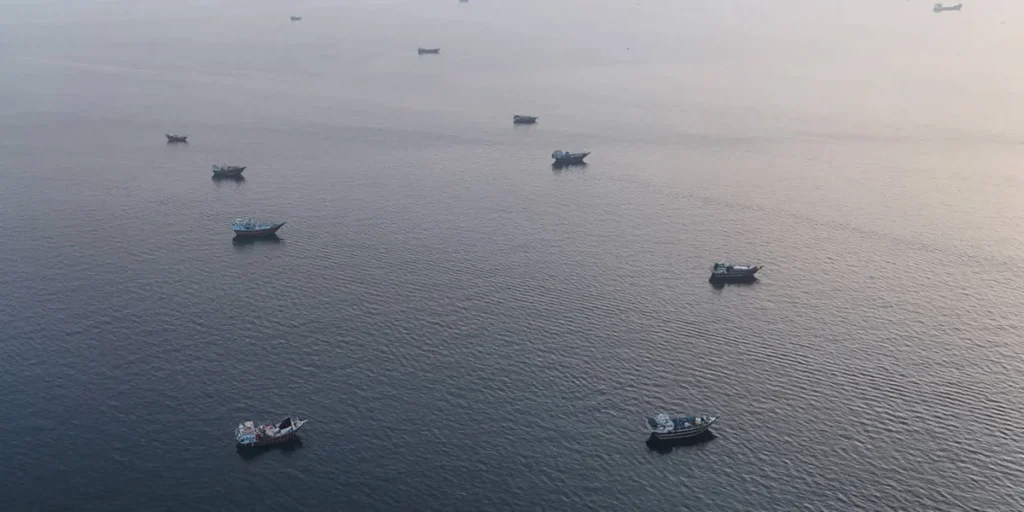
The crisis is not localized; it is systemic. In the Gulf Cooperation Council (GCC) nations, where populations rely almost entirely on desalination, infrastructure is now vulnerable to the spillover effects of regional geopolitical instability. In the Western Hemisphere, the Panama Canal—a critical artery for global maritime trade—has been throttled by prolonged drought, forcing authorities to ration transit slots. These disparate events share a common denominator: water is now a strategic, and highly vulnerable, chokepoint.
A Chronology of Neglect and Emerging Awareness
The trajectory of water policy over the last two decades reveals a pattern of missed opportunities and mounting alarm.
- 2003 (The Evian Summit): G8 leaders formally acknowledged the impending threat of water insecurity, warning of the looming economic and geopolitical consequences. Despite this early recognition, a global institutional framework failed to materialize.
- 2016 (The World Bank Warning): A landmark study from the World Bank projected that regions facing severe water stress could see their growth rates decline by as much as 6% of GDP by 2050 due to water-related losses.
- 2023–2024 (The Panama Crisis): The Panama Canal Authority was forced to slash daily transit capacity by roughly one-third due to historic rainfall deficits. This triggered a spike in global shipping rates, highlighting the fragile link between hydrologic stability and international commerce.
- Present Day: The world is now entering what UN researchers describe as an era of "water bankruptcy"—a point where systemic depletion, pollution, and the degradation of wetlands render historical water baselines irrelevant.
Supporting Data: The Economic and Human Toll
The numbers underscore a staggering reality: water is currently managed with the inefficiency of a commodity that is deemed "abundant," despite being dangerously scarce.
The Financial Burden
- Drought and Disaster: Droughts currently cost the global economy an estimated $307 billion annually, accounting for 15% of all disaster-related economic losses. Meanwhile, between 2000 and 2019, floods inflicted $651 billion in damages.
- The Investment Multiplier: The economic case for water infrastructure is arguably the strongest of any public works sector. Every dollar invested in water and sanitation systems generates between $4 and $12 in economic returns, driven by reduced healthcare expenditures and increased labor productivity.
- The Valuation Gap: Pricing remains erratic. In France, for example, the cost of a cubic meter of water ranges from €0.02 for agricultural irrigation to €4.00 for household use—a 200-fold discrepancy that ignores the true scarcity value of the resource.
The Human and Industrial Cost
Beyond the balance sheets, the human cost is catastrophic. Unsafe water remains a leading cause of mortality for children under five. Simultaneously, 80% of global merchandise trade travels by sea, making the water levels of canals and the security of maritime transit corridors essential to the stability of the global supply chain.
Official Perspectives and the Governance Gap
Why has the world failed to create a "Bretton Woods" for water? Currently, water governance is a disjointed patchwork of regional agreements. Unlike carbon emissions, which are increasingly subject to international monitoring and disclosure standards, water usage is only beginning to appear on corporate and governmental ledgers.
Experts argue that the absence of a global regulatory body has led to a "blind spot" in international trade. Because roughly one-fifth of global water consumption is "embedded" in goods produced in one country and exported to another, water-scarce nations are essentially exporting their most precious resource to water-abundant ones, often via agricultural products. This creates a hidden, unsustainable subsidy that distorts global trade patterns.
The World Trade Organization (WTO) has begun adapting its rules to account for the carbon intensity of goods. Proponents of water security are now calling for a similar integration of "water intensity" into trade policies. Without such a mechanism, the classical comparative advantages that define global trade will continue to rely on the exploitation of an unpriced, dwindling input.
The Strategic Implications
The transition from water-as-a-utility to water-as-a-strategic-asset has profound implications for every major stakeholder in the global economy.
For Governments
Policy must shift from reactive crisis management to proactive resilience. This involves upgrading aging infrastructure and, more importantly, establishing transparent pricing mechanisms that reflect scarcity. Political decision-making must now treat water as a core component of national security, equivalent to energy or food security.
For the Private Sector
The Carbon Disclosure Project (CDP) has estimated that the private sector faces hundreds of billions of dollars in water-related risks. However, the majority of these risks are manageable through improved water-use efficiency and supply-chain oversight. Companies that fail to incorporate water risk into their investment assessments will find themselves increasingly vulnerable to operational shutdowns and supply-chain volatility.
For Investors
Water-resilience is becoming a key indicator of long-term corporate health. As institutional investors begin to demand better disclosure on water usage, companies will be forced to move beyond sustainability "lip service" and adopt rigorous water-accounting frameworks.
Conclusion: A New Era of Resource Management
The era where water could be taken for granted has ended. The solutions to the current crisis are not technological mysteries—they exist in the form of better planning, modern infrastructure, and robust governance. The challenge is one of strategic will and visibility.
To ensure future prosperity, the international community must move toward a unified approach that treats water with the same level of gravity afforded to finance and geopolitics. The nations and corporations that thrive in the coming decades will be those that recognize water for what it is: the foundational, finite, and invaluable capital of the global economy. As we look toward 2050, the integration of water security into our daily economic decisions will be the ultimate test of our collective resilience.