The Battle for Hollywood: DOJ Intervenes in Paramount-Warner Bros. Merger Dispute
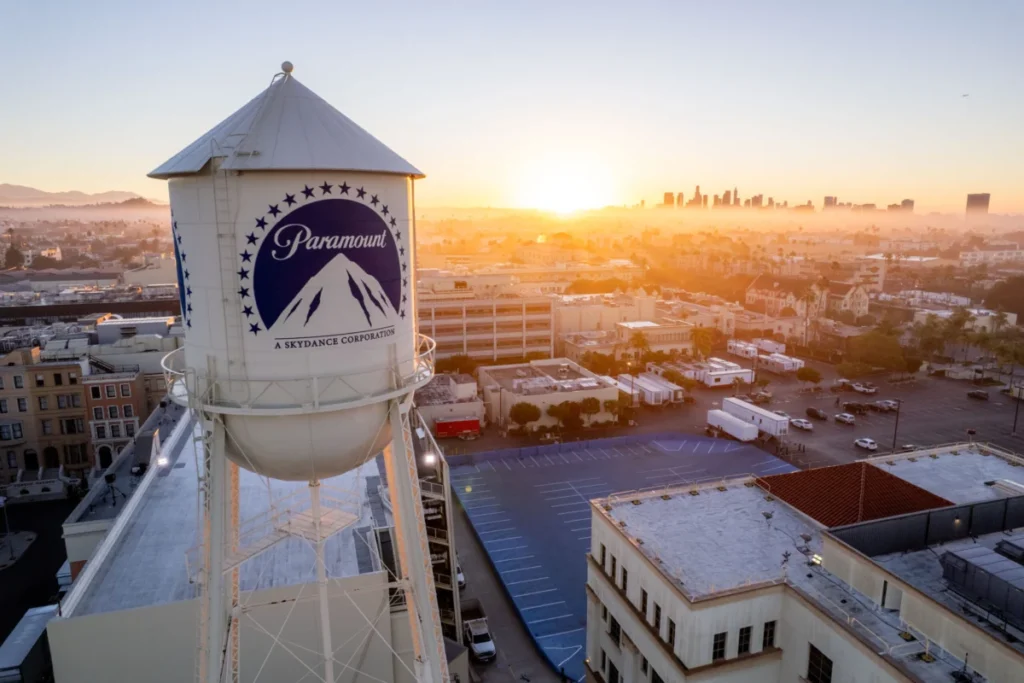
The landscape of American media is currently the stage for a high-stakes legal drama that pits the federal government against a coalition of state attorneys general and labor unions. At the center of the dispute is the $110 billion mega-merger between Paramount Skydance Corp. and Warner Bros. Discovery Inc., a deal that would consolidate two of Hollywood’s most storied studios and their respective streaming giants, Paramount+ and HBO Max.
In a move that has sent ripples through the legal and regulatory community, the U.S. Department of Justice (DOJ) has formally urged a federal judge to mandate that the states—led by California—and the Writers Guild of America (WGA) post a staggering $1.9 billion bond. This financial safeguard is intended to cover potential late fees Paramount faces should the ongoing lawsuits delay the deal’s closing. This intervention highlights a growing, and increasingly public, rift between federal antitrust enforcers and their state-level counterparts.
The Core Conflict: A Billion-Dollar Bond
Paramount Skydance, eager to finalize its acquisition, has argued that it is entitled to a bond to mitigate the financial hemorrhaging caused by litigation. Specifically, the company faces a daily late fee of approximately $7 million if the acquisition is not finalized by the end of the month—a penalty structure Paramount agreed to in order to outbid Netflix Inc. during a frantic bidding war.
The DOJ’s recent court filing does not explicitly endorse the $1.9 billion figure proposed by Paramount, but it does take a firm stance on the principle: federal law, the department argues, does not exempt states or private guilds from the requirement to post security when seeking to enjoin a corporate merger.
"In particular, Congress provided for complementary antitrust enforcement by the federal government and private parties—but made clear that it was not a system of equals," the DOJ stated in its filing. The federal government’s argument effectively categorizes states as private litigants rather than sovereign enforcers, a characterization that has drawn sharp criticism from state officials who view their role as essential to protecting public interest and local competition.
A Timeline of Contention
The friction surrounding the Paramount-Warner Bros. deal is not an isolated incident but the culmination of a shifting regulatory environment.
- Initial Bidding War: Paramount agreed to strict, high-stakes financial penalties to secure the Warner Bros. acquisition, aiming to fend off interest from streaming behemoth Netflix.
- The Federal Greenlight: The DOJ conducted its own review of the merger and concluded that the deal would not significantly harm competition, effectively clearing the path for closure at the federal level.
- State and Union Pushback: Led by California, a group of states joined by the Writers Guild of America filed twin lawsuits to block the merger. Their core argument is that the consolidation would stifle film and television distribution and unfairly diminish competition for the services of screenwriters.
- July 2024: U.S. District Judge Araceli Martínez-Olguín, overseeing the case in Oakland, California, initially denied a request to force the plaintiffs to post a bond. She noted that the states had demonstrated they were bringing the suit to "enforce important public interests."
- Present Day: The DOJ has intervened, arguing that federal merger enforcement policy is being undermined.
- Upcoming Milestones: The court has scheduled a hearing for September 24th, followed by a court-ordered settlement conference on October 14th and 15th. The trial itself is currently slated for March 2025.
Supporting Data: The Stakes for the Industry
The $110 billion merger represents one of the largest media consolidations in history. If completed, the combined entity would control an unparalleled library of intellectual property, two major cable television networks, and the dominant streaming platforms Paramount+ and HBO Max.
Paramount maintains that the legal delay is costing the company millions daily. The $1.9 billion bond figure was calculated based on the maximum potential late fees the company might incur if the lawsuits drag on past the anticipated deadlines. Meanwhile, the plaintiffs—the states and the WGA—contend that Paramount forfeited its right to such a bond when it voluntarily agreed to delay the deal’s closing until June 2025 to accommodate the court’s schedule.
The Widening Chasm: Federal vs. State Antitrust Policy
The DOJ’s intervention has brought long-simmering tensions into the spotlight. By labeling the states as "second-class enforcers," the DOJ risks damaging a historically cooperative relationship between state attorneys general and the federal government.
Colorado Attorney General Phil Weiser has been a vocal critic of this shift. Before the DOJ’s filing, Weiser publicly accused the current administration of "politically motivated" antitrust enforcement. He pointed to a series of recent events that have left states feeling isolated:
- The Live Nation Settlement: The DOJ reached a surprise settlement with Live Nation Entertainment Inc. earlier this year, effectively bypassing a bipartisan group of states that had successfully argued the company was monopolizing the live music industry.
- The Nexstar-Tegna Deal: The DOJ approved the takeover of Tegna Inc. by Nexstar Media Group, despite ongoing litigation from states seeking to block the merger.
In remarks at a Washington antitrust conference, Weiser noted that states now feel "pressure" to file lawsuits at breakneck speeds to prevent deals from closing before they can be challenged in court. He described the current federal antitrust posture as "inconsistent and unreliable," noting that the federal government’s decision to act as a "gatekeeper" rather than a partner is undermining the very system of antitrust enforcement designed to ensure market health.
Implications for Future Litigation
The implications of this case extend far beyond the fate of Paramount and Warner Bros. If the court sides with the DOJ and mandates the bond, it could set a chilling precedent for state-led antitrust actions. Attorneys general across the country rely on their ability to challenge mergers without the threat of massive financial liability. A ruling in favor of the bond requirement could effectively price states out of the litigation market, leaving them unable to challenge corporate consolidations that the federal government chooses to overlook.
Furthermore, the tension between the DOJ and states like California and Colorado suggests a fundamental disagreement over the "merits" of modern antitrust enforcement. While the DOJ maintains that federal review should be the final word to avoid "constitutional tensions," states argue that federal reviews have become overly deferential to corporate interests.
As the September 24th hearing approaches, all eyes remain on Judge Martínez-Olguín. Her decision will determine whether the plaintiffs must pay to play or if they will be permitted to continue their challenge to the largest media merger of the decade without the looming shadow of a $1.9 billion financial burden.
For now, Paramount, the WGA, and the state attorneys general remain locked in a stalemate, waiting for a court-ordered settlement conference in October that many observers believe is the only viable path to resolving the dispute before the March trial. Regardless of the outcome, the conflict has already cemented a new reality: the days of seamless cooperation between federal and state antitrust regulators appear to be a thing of the past.