The Architecture of Repair: Reclaiming Land and Dignity in the Black Belt
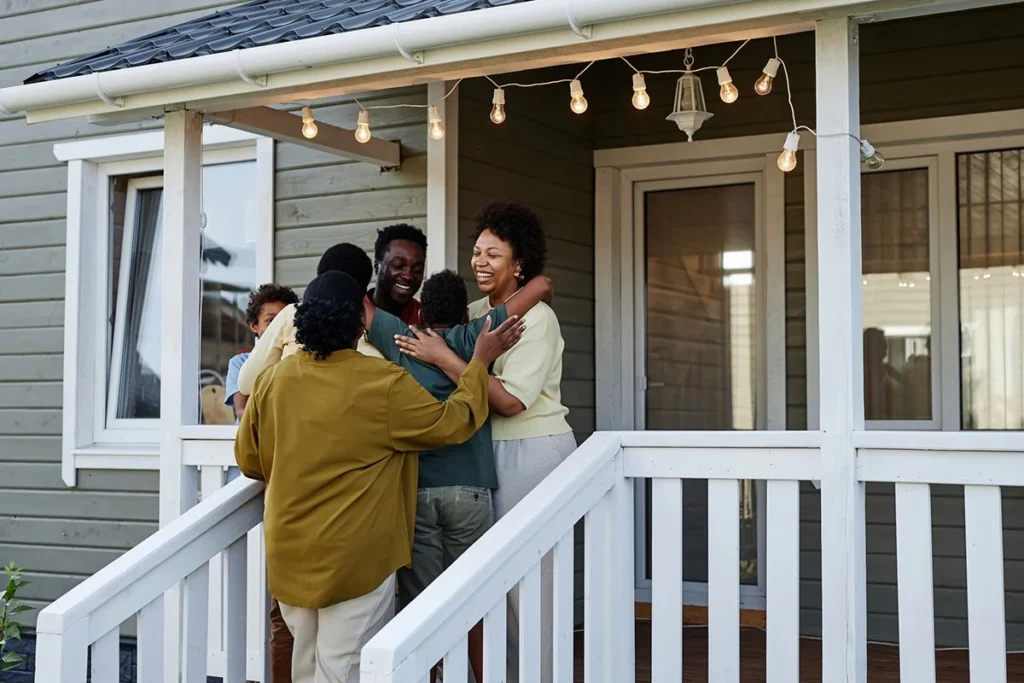
In March 2025, the quiet streets of Selma, Alabama, became the stage for a quiet revolution. Fourteen women, all previously classified as homeless by the federal Head Start program, stood on the porches of brand-new homes. These were not merely structures of wood and brick; they were the physical manifestation of a decades-long struggle to bridge the cavernous gap between the promise of American equality and the reality of Black land dispossession.
For these women, the keys in their hands represented more than shelter; they represented the end of a cycle of displacement. Their transition from precarious living situations to stable homeownership was not the result of a random lottery, but a targeted, intentional effort to provide land security to those the system had historically overlooked. This initiative, spearheaded by the Black Belt Community Foundation (BBCF), serves as a blueprint for a new form of reparations—one built on the bedrock of community control and collective ownership.
A Legacy of Loss: The Historical Context
To understand the significance of these 14 homes, one must look back at the systematic erosion of Black wealth in the American South. At the turn of the 20th century, Black Americans held title to approximately 15 million acres of land. By the century’s end, that number had plummeted by 90 percent.
This loss was not a natural economic occurrence; it was the result of a coordinated assault. Through "heirs’ property" laws—which allow for the forced partition of land if one co-owner wishes to sell—and outright acts of racial violence, Black families were systematically stripped of their generational wealth. When legal mechanisms failed, extralegal violence often succeeded. In many instances, the only record of this theft remains in the oral histories passed down through generations. Deeds were burned, records were falsified, and communities were erased.
Kavon Ward, founder of "Where Is My Land," notes that this erasure is a central component of the trauma. "The individuals who lived through these experiences, when their land was stolen through racially motivated means, they are the proof," Ward says. "They are sometimes the only proof left."
Chronology of Resistance: From New Communities to the Black Belt
The movement for land security finds its modern roots in the 1969 civil rights struggle in Lee County, Georgia. It was there that New Communities Inc. was founded by Shirley Sherrod and her colleagues. They recognized a fundamental truth: political freedom is hollow without the ability to control the land upon which one lives and works.
New Communities became the first community land trust (CLT) in the United States, designed to ensure that land could be owned collectively, preventing individuals from mortgaging away the group’s future. However, the path was fraught with institutional resistance. In 1985, after years of drought and federal discrimination, the U.S. Department of Agriculture denied New Communities’ requests for emergency loans, leading to the foreclosure of their 5,735-acre farm.
While the family eventually secured a $12.8 million settlement—the largest in a federal Black farmers discrimination case—the damage to the collective structure was done. Today, that spirit of resistance lives on through the Black Belt Community Foundation (BBCF) and its President and CEO, Christopher Spencer.
The Structural Strategy: How the BBCF Operates
Christopher Spencer approaches his work not as a typical non-profit executive, but as a "son of Sumter County" and a man of faith. Under his leadership, the BBCF has developed a sophisticated infrastructure to combat housing instability.
The strategy relies on a "Community Associates" network. Spanning 12 counties, these local leaders are the eyes and ears of the foundation. They facilitate fundraising, where the BBCF matches local donations, and serve on committees to decide how resources are allocated. In 2025 alone, the BBCF awarded 141 grants to 126 organizations, totaling over $344,000. Crucially, more than half of this funding was raised directly by the communities it serves.
This model was put to the test in 2023, when a devastating tornado tore through Selma. The BBCF mobilized quickly, partnering with the Selma Housing Authority and the Neighborhood Assistance Corporation of America (NACA) to secure land and construct new homes. By 2025, these homes were ready for the 14 families identified through the Head Start program.
Supporting Data and Institutional Logic
The efficacy of the CLT model lies in its ability to bypass the speculative market that often drives Black families out of their homes. In a standard market, a family in crisis is at the mercy of government officials or lenders who may decide—based on arbitrary metrics of "worthiness"—whether to offer a lifeline.
In contrast, the CLT model treats land as a shared resource. By removing land from the speculative market, it ensures that housing remains permanently affordable. The data supports this approach: since the implementation of these localized strategies, families within the BBCF network have seen a significant decrease in housing turnover and an increase in net asset accumulation.
Furthermore, the response to the federal government shutdown of November 2025 demonstrated the agility of this localized model. When food insecurity spiked, the BBCF and local church networks established distribution nodes within days. Pastors stepped out of their pulpits and onto forklifts, transforming church warehouses into essential logistics hubs. This is not mere charity; it is the construction of a self-sustaining infrastructure of survival.
Official Responses and Political Hurdles
The road to structural repair is rarely smooth. In California, the success of the Bruce’s Beach restitution—which returned land stolen from a Black family in the 1920s—sparked hope for legislative change. However, subsequent efforts to codify these returns, such as Senate Bill 1050, have faced stiff political opposition. Despite passing both chambers of the California legislature, the bill was vetoed by Governor Gavin Newsom in 2024.
Kavon Ward, who helped draft the legislation, remains undeterred. "If you go to the negotiation table with what is legally possible in mind, I think you fail," she argues. "But if you go with faith and the understanding that you are appealing to morality, then I think that gives you more to negotiate with."
This sentiment is echoed by Spencer in Alabama. He views the current legal system as a structure that is fundamentally behind the curve. "I feel like other people are 250 years ahead of us," he says. "Which means we have to run faster to catch up."
Implications: The Long-Term Vision for Reparations
The work being done in the Black Belt and by groups like "Where Is My Land" suggests that the conversation around reparations is shifting. For decades, the discourse was trapped in a debate over federal check-writing. Today, the conversation is pivoting toward the tangible, structural return of resources—specifically land.
The implications of this shift are profound:
- Economic Sovereignty: By securing land titles, Black families can build equity that survives across generations, breaking the cycle of dispossession.
- Community Resilience: The CLT model creates a decentralized safety net that can respond to local crises, such as natural disasters or economic shutdowns, faster than federal agencies.
- Restorative Justice: The focus on returning stolen land, or providing land to those historically denied it, addresses the root cause of the wealth gap rather than merely treating its symptoms.
"The check that was written to us 250 years ago bounced," Spencer famously remarked, referring to the hollow promises of equality made at the nation’s founding. He is not waiting for that check to clear. Instead, he and his colleagues are writing their own, one porch at a time.
Conclusion: A Blueprint for the Future
The 250th anniversary of the United States is a loud, nationalistic affair, but the work of repair is quiet, specific, and deeply personal. It is found in the smiles of 14 women on a porch in Selma. It is found in the ledgers of the Black Belt Community Foundation. It is found in the persistent advocacy of families fighting for the return of their ancestral soil.
The structure they are building is one that does not rely on the promises of institutions that have historically failed them. It is a structure built on faith, community, and the unyielding belief that land is the foundation of freedom. As the movement grows, it serves as a powerful reminder that while the past cannot be rewritten, the future can be constructed on a new, more equitable foundation. The "check" being written today is not a promise of future payment—it is the physical delivery of security, dignity, and a place to call home.