The Architect of Rebound: How a Real Estate Veteran Would Build a $1 Million Portfolio from Scratch Today
In the high-stakes world of real estate, experience is often purchased with the currency of failure. For many, the journey begins with youthful ambition and ends with a sobering lesson in market volatility. For one seasoned investor, whose career spans over two decades in the trenches of property finance, the realization came after a decade of active management that his early portfolio was a masterclass in mismanagement.
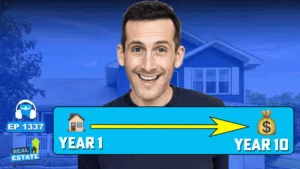
After liquidating his initial assets and effectively resetting his financial baseline in his late 30s, this investor managed a feat that many deem impossible: he went from zero to $1 million in net worth in less than seven years, all while maintaining a modest household income. Now, looking back across 23 years of market cycles, he outlines a blueprint for the modern investor—a strategy defined not by the "hustle" of the early 2000s, but by the strategic, passive, and community-driven methodologies of today.
A Chronology of Growth: From Hard Money to Passive Portfolios
The narrative of this investor’s career is a study in evolution. At 22, he entered the industry working for a hard money lender, specializing in the gritty, high-pressure world of purchase-rehab loans. By 24, he had purchased his first rental property. The following decade was marked by active, hands-on management—a period he now describes as a series of "bungled" investments.
By his late 30s, he had cleared his ledger. The gains and losses had essentially neutralized one another, providing a clean slate. This reset was the catalyst for his most successful chapter. He transitioned from being an active, day-to-day landlord to a sophisticated passive investor. This shift did not just improve his financial standing; it fundamentally altered his lifestyle, trading the midnight calls from contractors and tenants for a system of automated, high-yield wealth generation.
The Foundation: House Hacking as a Strategic Launchpad
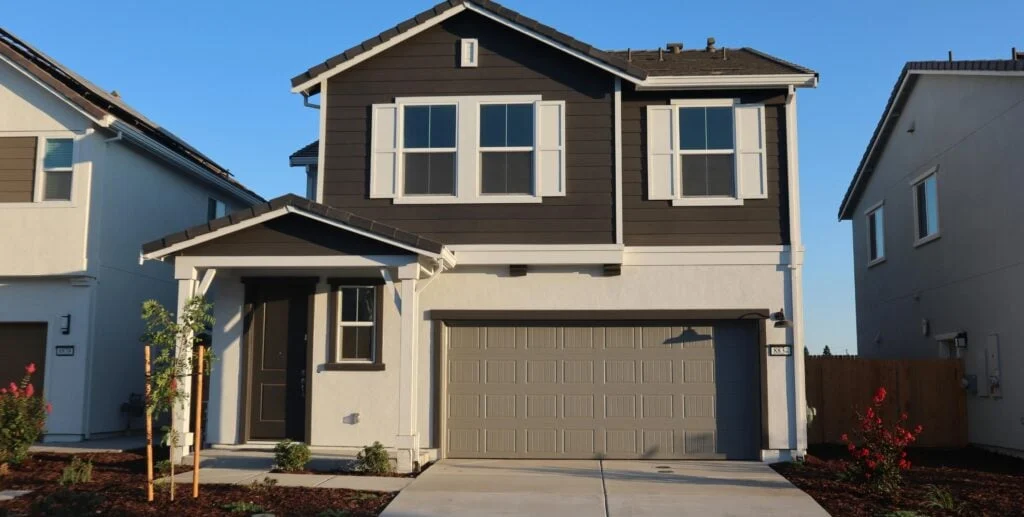
Before any passive strategy can take root, one must address the largest monthly liability: housing. The author advocates for "house hacking"—the practice of living in one unit of a multi-unit property while renting out the others.
His personal experience with this began in his early 30s, when he rented a bedroom in his first home to a Craigslist stranger. That relationship blossomed into a lifelong friendship, proving that house hacking is as much about community as it is about finance. Today, even with a family, he maintains that purchasing a two-unit property remains the single most effective way to "supercharge" a savings rate. By eliminating the housing payment, an investor can divert thousands of dollars monthly toward long-term assets, effectively using their primary residence as a wealth-building engine.
The Shift to Passive Investing: Mitigating Liability and Stress
For the novice, the allure of active real estate is strong. However, the author cautions against the "side hustle" trap. Active investing requires a vast array of micro-skills—from plumbing and electrical repairs to navigating permit offices and tax assessors.
More importantly, active investing introduces significant liability. The author recounts being sued twice as a landlord, a stressful and costly ordeal that underscored the risks of being the face of the operation. Beyond legal risks, there is the issue of debt liability and personal guarantees.
"Do you know what’s much easier?" he asks. "Evaluating passive real estate investments—and then wiring the money and calling it a day." This pivot removes the investor from the firing line, allowing them to benefit from real estate appreciation and cash flow without the constant friction of property management.
Community as a Competitive Advantage: The Team Sport Model
Investing is frequently perceived as a solitary pursuit, but the modern investor thrives on collaboration. The author participates in a co-investing club where members pool their capital to fund deals.
The process is rigorous: members meet regularly on video calls to grill operators on their projections, risk mitigation, and exit strategies. By vetting deals collectively, individual investors gain the wisdom of the group. Furthermore, platforms like BiggerPockets serve as an institutional memory, allowing investors to perform due diligence on operators by reviewing their track records in public forums. This communal approach transforms investing from a high-risk gamble into an informed, team-based strategy.
Dollar-Cost Averaging in Real Estate
A common error among new investors is the "all-in" mentality—parking $50,000 to $100,000 in a single deal and hoping for the best. This approach is not only risky; it is paralyzing.
Instead, the author proposes a dollar-cost averaging strategy. By investing smaller, consistent amounts—as low as $2,500—on a monthly basis, investors can build a diversified portfolio across dozens of cities, property types, and operators. This strategy removes the temptation to "time the market," a fool’s errand that often leads to hesitation and missed opportunities. By spreading capital over time, the investor smooths out the volatility of market cycles and ensures that they are always accumulating assets, regardless of the broader economic climate.
Strategic Tax Management: The "Lazy" 1031 Exchange
Taxes are the single greatest friction point for wealth accumulation. To combat this, the author employs sophisticated tax strategies. When an asset is sold, he utilizes a "lazy" 1031 exchange—an informal process of reinvesting capital gains into new equity positions within the same calendar year. This allows him to defer taxes indefinitely without the rigid, stressful timelines associated with formal 1031 exchanges.
Furthermore, he targets deals that utilize cost segregation studies, which front-load depreciation to provide massive tax write-offs in the first year. For investments that lack tax benefits, such as secured notes, he ensures the yield is high enough to compensate, or he offsets them with tax-advantaged passive investments.
Market Implications: Why Now is a Crucial Moment
The current economic landscape presents a unique opportunity for those with the discipline to act. Analysts, including Dave Meyer of BiggerPockets, have noted a definitive shift toward a buyer’s market. With multifamily property values having corrected significantly—dropping 25% to 30% between 2022 and 2023—the entry point for high-quality assets is more attractive than it has been in years.
Moreover, the current inflationary environment reinforces the case for real assets. Unlike paper currency, which loses purchasing power, real estate possesses intrinsic value. When inflation rises, real assets tend to outperform other asset classes because they are tangible, limited in supply, and capable of generating increasing rents.
Conclusion: Building the Machine
The author’s journey from a young, over-extended landlord to a strategic, passive investor provides a roadmap for the modern era. By prioritizing "free housing" via house hacking, embracing passive syndication, leveraging the power of community, and utilizing dollar-cost averaging, he has built an interest in over 5,000 units.
He does not claim to have predicted the market; rather, he claims to have built a machine that functions independently of his personal labor. For those looking to replicate this success, the message is clear: the era of the "active" amateur is fading, replaced by the era of the "passive" professional. By moving away from the stresses of daily property management and toward the collective intelligence of vetted partnerships, any investor can build a wealth-generating engine that works while they sleep.