Superpower Suicide: How Donald Trump’s Failed War on Iran Paved the Way for a Geopolitical Surrender to Russia
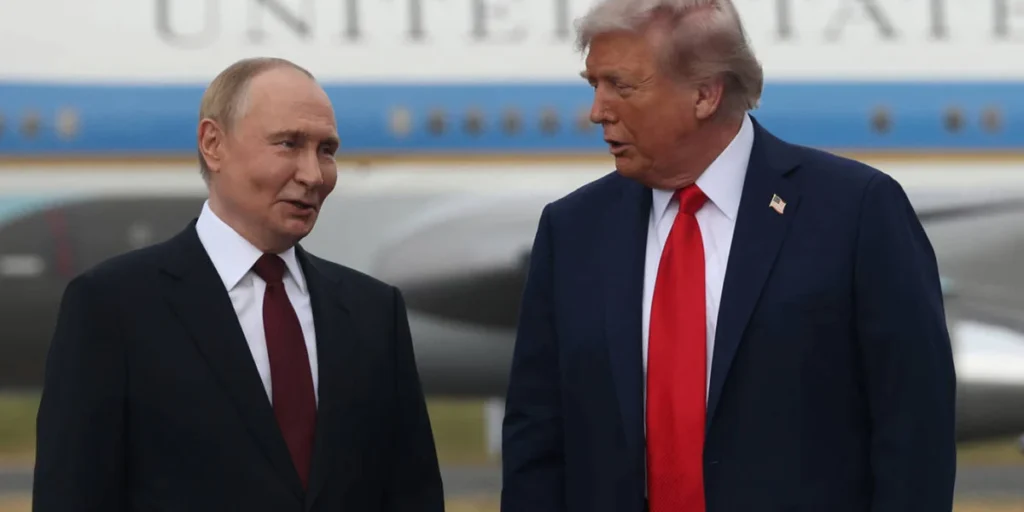
TORONTO — Five months after the phrase first echoed through foreign policy circles, the grim reality of Donald Trump’s guiding foreign-policy doctrine—what can only be described as "superpower suicide"—has crystallized into undeniable fact. What began as a reckless, unprovoked escalation against Iran has morphed into a multi-theater strategic disaster. Failing to achieve any of its stated objectives in the Middle East, the White House has pivoted from military folly to diplomatic capitulation, using the fallout of its own making to justify a sweeping rapprochement with Moscow.
The consequences are reshaping the global order in real time. By blaming the economic fallout of the Iran conflict on Ukraine, the administration has cleared the path to lift crippling sanctions on Russia. Under the guise of populist economic relief—specifically, a controversial diesel deal ostensibly meant to lower fuel prices for American consumers—Washington is no longer merely negotiating with the Kremlin; it is visibly submitting to it.
Main Facts
The current geopolitical crisis rests on a nexus of interconnected policy failures originating in Washington, stretching from the Persian Gulf to the steppes of Eastern Europe.
- The Iran Miscalculation: Earlier this year, the Trump administration launched what analysts have termed a "war of whimsy" against Iran—a campaign devoid of coherent strategic objectives, long-term planning, or regional consensus. Driven by political impulse rather than national security imperatives, the operation quickly bogged down, failing to secure American interests while plunging global energy markets into volatility.
- The Ukraine Scapegoat: Facing mounting domestic blowback from the economic fallout of the failed Iranian campaign, the White House shifted blame. Rather than acknowledging the self-inflicted nature of the energy shocks and inflation, administration officials have increasingly pointed the finger at Ukraine, weaponizing falsehoods about Kyiv’s defensive war as the root cause of Western economic pain.
- The Sanctions Pivot: Under this manufactured pretext, the administration has initiated a rollback of sanctions against the Russian Federation. By dismantling the economic architecture designed to punish Moscow for its ongoing aggression in Ukraine, Washington has effectively rewarded the Kremlin for a war it continues to wage.
- The Kremlin Diesel Deal: Central to this policy reversal is a bilateral energy arrangement involving Russian diesel. While marketed to the American public as a pragmatic measure to lower domestic gas prices, defense and energy experts view the transaction as a trojan horse—a thinly veiled mechanism of geopolitical submission to Russian President Vladimir Putin that simultaneously extends the war in Ukraine.
Chronology of a Strategic Collapse
To understand how Washington arrived at this juncture of compounding failures, one must trace the timeline of decisions that turned tactical blunders into systemic vulnerability.
Phase 1: The Escalation in the Middle East
- Early 2026: The Trump administration initiates aggressive postures and subsequent military actions against Iran. Ignoring warnings from intelligence agencies and military leadership regarding the lack of an endgame, the administration commits American prestige and resources to a campaign that quickly destabilizes the region.
- Spring 2026: The operation against Iran stalls. Rather than forcing Tehran to terms, the conflict triggers severe disruptions in global supply chains and spikes oil prices. Prominent analysts, including historian and author Timothy Snyder, begin warning of "superpower suicide"—a phenomenon where a global hegemon voluntarily dismantles its strategic leverage through incoherent, impulsive actions.
Phase 2: The Domestic Backlash and the Pivot
- Mid-2026: As inflation ticks upward and American motorists feel the pinch at the pump, the White House faces intense political pressure ahead of domestic legislative milestones. Recognizing the political toxicity of a failed foreign war, administration speechwriters and policy shops search for a scapegoat.
- Late Summer 2026: The narrative shifts. The administration begins systematically linking the domestic economic pain caused by the Iran misadventure to the ongoing financial commitments required to support Ukraine. Kyiv is falsely blamed for draining global resources and destabilizing energy markets—a inversion of cause and effect designed to soften public opinion for a dramatic policy reversal.
Phase 3: The Capitulation to Moscow
- October 2026: The culmination of this strategy manifests in the announcement of the diesel deal with the Kremlin and the simultaneous dismantling of key Russian sanctions packages. The administration frames the move as an economic victory for the working class, while international observers recognize it as a historic surrender of Western moral and geopolitical leadership.
Supporting Data and Economic Realities
The justifications provided by the White House for its pivot toward Moscow crumble under the weight of empirical economic and geopolitical data.
The Illusion of Relief at the Pump
Administration officials have repeatedly claimed that importing Russian diesel and normalizing trade channels will drastically reduce energy costs for American families. However, independent energy economists point out that global oil markets are fungible, and the structural deficit caused by the self-inflicted war on Iran cannot be patched by selective sanctions relief.
- Market Integration: Global crude benchmarks reacted to the Iran conflict with immediate volatility, adding an estimated 15 to 25 percent to baseline energy costs throughout the spring and summer of 2026.
- The Russian Dividend: Rather than lowering prices sustainably, the diesel deal primarily serves to funnel hard currency back into the Russian state apparatus, directly subsidizing Moscow’s military-industrial complex as it grinds through its illegal campaign in Ukraine.
The Cost of Sanctions Erosion
Since 2022, Western sanctions against Russia formed the bedrock of international efforts to constrain Vladimir Putin’s war machine. Data compiled by international financial monitoring groups indicates that while the sanctions did not completely cripple the Russian economy, they severely restricted its access to critical high-tech components, foreign reserves, and long-term energy revenue.
- By rolling back these measures without receiving any reciprocal concessions regarding Ukraine’s sovereignty or global security, the United States is voluntarily relinquishing its most potent non-military deterrent.
- The cost of this erosion is not measured merely in dollars, but in the degradation of international law and the credibility of American deterrence worldwide.
Official Responses and Diplomatic Fallout
The policy shift has triggered profound alarm among traditional U.S. allies, divided domestic lawmakers, and drawn sharp rebukes from international institutions.
Domestic Reaction
On Capitol Hill, the administration’s actions have exposed deep fractures. While loyalist lawmakers have rallied around the "America First" framing of the diesel deal, a bipartisan coalition of foreign policy traditionalists has condemned the strategy.
"We are witnessing a tragic inversion of American leadership," said a senior member of the Senate Foreign Relations Committee on condition of anonymity. "To cover up the undeniable failure of a foolish war in the Middle East, this administration is handing a geopolitical victory to Vladimir Putin on a silver platter. Abandoning Ukraine and dismantling sanctions does not make America safe—it invites aggression across every theater."
International and European Alarm
In European capitals, the reaction has ranged from disbelief to outright fury. European Union leaders, who spent years aligning their economies with heavy sanctions regimes at immense domestic cost, view the U.S. reversal as a profound betrayal of transatlantic unity.
- Brussels: European Commission spokespersons issued veiled warnings that unilateral sanctions relief by Washington undermines the collective security architecture of the West.
- Kyiv: Ukrainian officials expressed profound disappointment, noting that scapegoating Ukraine for the consequences of the Middle East war is both factually bankrupt and morally indefensible. "Ukraine is fighting for its survival against unprovoked Russian aggression," a high-ranking Ukrainian diplomat stated. "Using our defensive struggle as a political prop to justify a U.S. accommodation with Moscow is a betrayal of shared democratic values."
Implications for Global Security
The long-term implications of Donald Trump’s foreign policy trajectory extend far beyond the immediate horizon of the current administration. By demonstrating that a superpower can be maneuvered into self-sabotage through short-term political panic, Washington has signaled profound weakness to both adversaries and allies alike.
1. The Death of Deterrence
Deterrence relies on predictability, resolve, and credibility. When a nation initiates a war without a strategy, fails to achieve its goals, and then rewards a secondary adversary (Russia) to cover up its mistakes, the currency of superpower deterrence is devalued. Autocrats in Beijing, Moscow, and Tehran are taking meticulous notes.
2. The Fracture of the Transatlantic Alliance
The post-World War II security architecture rests on the credibility of American commitments. When Washington pivots from standing against authoritarian aggression to cutting energy deals with the Kremlin—at the expense of a democratic partner like Ukraine—the foundations of NATO and western solidarity are severely shaken. European nations are increasingly forced to contemplate a future where they can no longer rely on the United States as a steady, principled guarantor of international order.
3. The Perpetuation of Conflict
Far from bringing peace, the administration’s policies are guaranteeing more war. By lifting sanctions on Russia, the White House has given Moscow the economic oxygen it needs to sustain its campaign in Ukraine indefinitely. Simultaneously, the unresolved chaos in the Middle East continues to simmer, ensuring that the initial impulse of superpower suicide will yield a harvest of unending instability.
As Timothy Snyder observed from Toronto, weakness has begotten more weakness. Unless the architects of these policies are held accountable by domestic democratic institutions and international pressure, the descent from superpower status to self-inflicted irrelevance will only accelerate.