Starbucks Restructures Financial Leadership Amid Ongoing "Back to Starbucks" Turnaround
By Maura Webber Sadovi
Published June 15, 2026
In a strategic shift aimed at streamlining executive oversight, Starbucks Corporation has announced a realignment of its top financial leadership. Effective immediately, the coffee giant’s Chief Financial Officer, Cathy Smith, will transfer the responsibilities of Principal Accounting Officer (PAO) to Val Bauduin. Smith, who joined the company last year following a distinguished tenure as CFO at Nordstrom, will retain her primary designation as the company’s Principal Financial Officer (PFO), ensuring that while the accounting and financial reporting functions are bifurcated, they remain under her strategic umbrella.
The move marks a significant internal reorganization as the Seattle-based coffee powerhouse continues to navigate the complexities of its “Back to Starbucks” turnaround plan, spearheaded by CEO Brian Niccol.
Main Facts: A Shift in Financial Governance
The transition officially delegates the PAO role—a critical position responsible for the integrity of financial statements and adherence to regulatory accounting standards—to Bauduin, a veteran financial executive. By separating the PAO and PFO roles, Starbucks is signaling an effort to allow its CFO to focus more heavily on broader capital allocation, growth strategy, and the operational demands of the turnaround plan, while delegating the technical accounting governance to a specialist.
Val Bauduin, 50, brings a wealth of experience to the position. Before joining the Starbucks leadership team, he spent nearly a decade at Marriott International, where he held several pivotal roles, including controller, chief accounting officer, and CFO of consumer operations, technology, and emerging businesses. His background is bolstered by a 17-year tenure at Deloitte, where he rose through the ranks from a staff accountant to partner and U.S. hospitality leader. This deep-seated technical expertise makes Bauduin a natural fit to lead the company’s accounting department during a period of high scrutiny.

Chronology: The Evolution of Starbucks’ Financial Oversight
The structural split of the PAO and CFO roles is not unprecedented at Starbucks, reflecting a flexible approach to executive bandwidth.
- February 2022: Starbucks previously decoupled these roles when then-CFO Rachel Ruggeri assumed the Principal Accounting Officer designation. This followed the departure of Jill Walker, who stepped down from her role as Chief Accounting Officer just before an unpaid sabbatical.
- 2025: Cathy Smith joined Starbucks from Nordstrom, assuming both the Principal Financial Officer and Principal Accounting Officer titles upon her arrival, centralizing the finance function.
- June 2026: The company formalizes the split again by appointing Val Bauduin as PAO, allowing Smith to focus on the PFO role.
This pattern suggests that Starbucks’ leadership is highly sensitive to the administrative burden placed on its CFO. By isolating the accounting oversight, the company aims to ensure that its financial reporting remains robust even as the organization undergoes rapid operational changes.
Supporting Data: Sales Growth vs. Margin Pressure
The leadership change occurs against a backdrop of mixed financial signals. Despite persistent concerns regarding consumer spending and inflationary pressures, Starbucks has shown resilience.
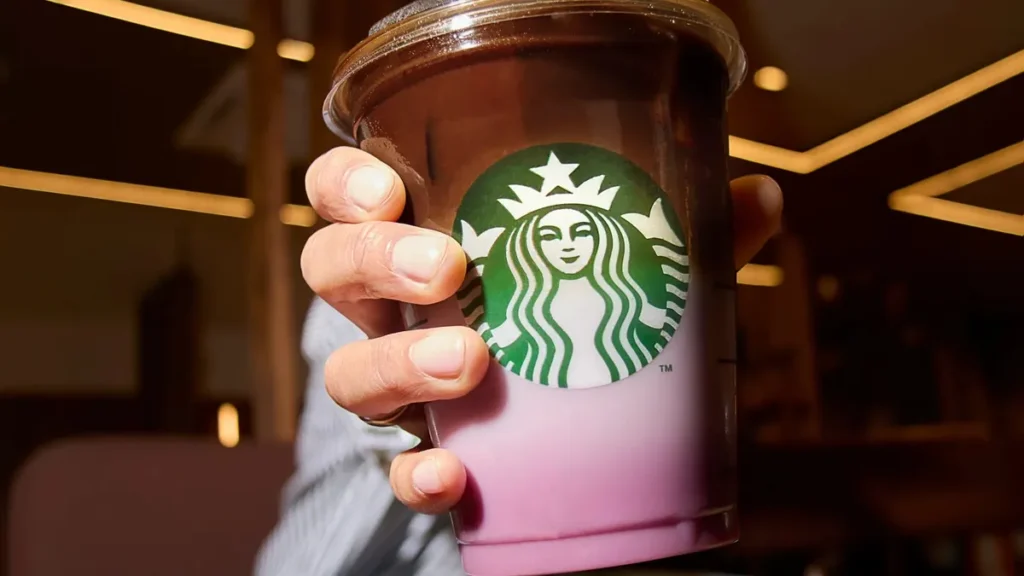
In April 2026, data reported by Restaurant Dive revealed that Starbucks’ same-store sales in North America climbed by 7.1% in the second quarter. This growth was largely attributed to the company’s aggressive efforts to revitalize the brand through store remodels and the introduction of highly customizable, trend-focused beverages, such as the Ube Vanilla Velvet Latte.
However, growth in top-line revenue has been tempered by margin compression. Morningstar equity analyst Ari Felhandler noted in an April research report that North America’s operating margin slipped 170 basis points to 9.9%. Felhandler identified two primary culprits:

- Inflationary Headwinds: Rising costs for raw materials and logistics continue to strain profitability.
- Labor Investments: To maintain quality and service levels, Starbucks has increased investments in its workforce, which, while necessary for the long-term health of the brand, puts short-term pressure on the bottom line.
"Encouragingly, Starbucks drove US spending growth across all income and age cohorts," Felhandler wrote. "This points to consumers’ appetite for on-trend innovation, even against a hazy macro backdrop. We think the firm’s revamped tiered loyalty program should continue to engage consumers and entice spending."
Implications: What This Means for the "Back to Starbucks" Plan
The “Back to Starbucks” turnaround plan is the most significant strategic undertaking by CEO Brian Niccol since he took the helm. The initiative aims to return the company to its roots as a premium "third-place" experience while modernizing its digital and supply chain infrastructure.
1. Operational Specialization
By tasking Bauduin with the PAO role, Smith is freed to act as a strategic partner to Niccol. This is vital as the company faces the challenge of balancing premium pricing with a consumer base that is increasingly price-sensitive. Smith’s ability to focus on long-term capital efficiency rather than day-to-day accounting compliance could accelerate decision-making regarding store footprints and international expansion.
2. Risk Mitigation
In a complex global retail environment, the role of the PAO is increasingly high-stakes. With the introduction of new financial reporting requirements and the volatility of global markets, having a dedicated professional like Bauduin—who has extensive experience with Big Four accounting standards—provides a layer of security. It ensures that the company’s internal controls remain ironclad, even as the company tests new business models, such as variable caffeine levels and experimental menu items.
3. Investor Sentiment
For shareholders, the appointment is likely to be viewed as a sign of organizational maturity. Investors often prefer to see a clear distinction between the CFO’s strategic, forward-looking role and the accounting team’s focus on historical accuracy and compliance. This move signals that Starbucks is building a leadership team capable of scaling its operations globally without sacrificing the rigor of its financial reporting.

Official Responses and Future Outlook
When reached for comment regarding the internal shift, a Starbucks spokesperson declined to elaborate further, noting that the details of the transition were fully disclosed in the company’s recent regulatory filings.
As the company looks toward the second half of 2026, the focus will remain on the efficacy of its "Back to Starbucks" plan. The combination of a revamped loyalty program, a refreshed menu, and a stabilized leadership structure appears to be the primary defense against the broader economic uncertainty facing the restaurant industry.
While the 170-basis-point dip in margins remains a point of concern for analysts, the positive trajectory of same-store sales suggests that the brand’s core appeal remains intact. The new leadership structure—with Smith overseeing the financial strategy and Bauduin ensuring the integrity of the books—is designed to provide the stability required to navigate these headwinds. Whether this management structure will be sufficient to restore operating margins to their historical highs remains the central question for the coming quarters.
For now, the message from the Starbucks corporate office is one of steady hands at the helm, balancing the need for creative innovation with the discipline of sound, specialized financial management. As the company continues to iterate on its operational model, the market will be watching closely to see if this realignment leads to the sustained growth the company’s leadership team has promised.