Klarna’s Bold Pivot: The Strategic Push for a U.S. Banking Charter
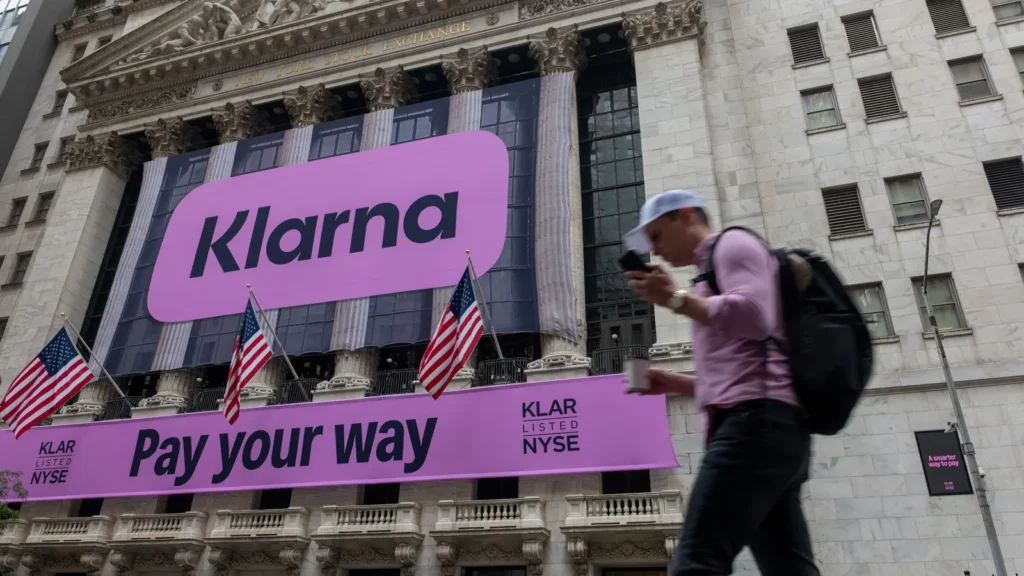
In a move that signals a seismic shift in the landscape of American consumer finance, the Swedish "buy now, pay later" (BNPL) giant Klarna has officially signaled its intent to become a formal banking institution in the United States. On Monday, the company submitted a formal application to both the Federal Deposit Insurance Corp. (FDIC) and the Utah Department of Financial Institutions, seeking a charter to operate an industrial bank.
For a company that has spent nearly two decades disrupting traditional retail credit through its frictionless, installment-based payment model, this application represents more than a regulatory formality; it is a fundamental transformation of its business model. By seeking to bring its banking operations in-house, Klarna is aiming to move away from its historical reliance on third-party banking intermediaries—such as WebBank—to exert greater control over its balance sheet, product offerings, and the overall customer experience.
The Strategic Rationale: Why Now?
Klarna’s CEO, Sebastian Siemiatkowski, framed the move as the "natural next step" in the company’s evolution. In an era where fintech companies are increasingly being held to the same standards as traditional financial institutions, the acquisition of a bank charter provides a level of legitimacy and operational autonomy that partnerships simply cannot match.
"Our own banking license is the natural next step, giving customers tools to borrow responsibly and build financial confidence, while bringing greater competition, innovation, and choice to consumers and merchants alike," Siemiatkowski said in a press release.
For Klarna, the stakes are existential. Since its 2005 founding in Stockholm as "Kreditor," the company has scaled into a global titan, boasting 119 million active consumers and a merchant network that includes retail giants like Sephora, H&M, and Adidas. However, the company’s transition to a public entity has been rocky. Since its initial public offering (IPO) last year, Klarna’s shares have faced significant downward pressure, losing approximately half their value amidst a broader market cooling for fintech stocks. Securing a U.S. banking license could serve as a vital catalyst for stabilizing the firm’s outlook by diversifying its revenue streams and reducing its cost of capital.
A Chronology of Growth and Regulatory Evolution
The trajectory of Klarna from a small Swedish payments startup to a global powerhouse has been defined by rapid expansion and aggressive market capture.
- 2005: Founded as Kreditor in Stockholm, Sweden, with a mission to simplify online payments.
- 2010: Rebranded as Klarna, signaling an expansion into broader financial services.
- 2017: The company secured its first formal banking license in Europe, allowing it to provide deposit accounts and other traditional banking services across the continent.
- 2019-2024: Klarna aggressively expanded its U.S. footprint, extending $91.3 billion in credit to millions of American consumers. Throughout this period, it relied on "bank partners" to facilitate these loans.
- 2025: Klarna pursued a high-profile IPO, listing on the New York Stock Exchange.
- July 2026: The company formally files for an Industrial Loan Company (ILC) charter in Utah, setting the stage for a new era of U.S. operations.
This timeline reveals a deliberate, long-term strategy of "geographic arbitrage," where the company used its European banking experience to build a massive U.S. user base before finally attempting to localize its regulatory infrastructure.
Supporting Data: The Scale of the Ambition
Klarna is not merely testing the waters; it is already a major player in the American credit ecosystem. The scale of its operations in the United States highlights why a banking license is the logical conclusion of its current trajectory.
According to company data:
- Credit Volume: Since 2019, Klarna has extended over $91 billion in credit to U.S. consumers.
- Merchant Reach: The company services approximately one million merchants globally, with hundreds of thousands based in the U.S.
- Operational Transition: If the charter is approved, the new bank will operate as a subsidiary. To lead this venture, Klarna has tapped Gary Harding, a veteran executive with prior experience as CEO of Milestone Bank and Prime Alliance Bank, underscoring the company’s intent to staff its operations with traditional banking pedigree.
The company’s decision to pursue this license in the U.S. is also driven by simple economics: the U.S. is now its largest market by revenue, and the vast majority of its investor base resides in North America. By internalizing its banking services, Klarna aims to reduce the "middleman fees" currently paid to partner banks, potentially improving its margins in a highly competitive interest rate environment.
The ILC Debate: A Political Minefield
Klarna’s application lands in a charged political climate. The "Industrial Loan Company" (ILC) charter—the specific vehicle Klarna is seeking—has become a flashpoint for debate in Washington.
The "Shadow Banking" Argument
Critics, including a bipartisan coalition of lawmakers such as Sen. John Kennedy (R-LA) and Sen. Andy Kim (D-NJ), argue that ILCs represent a "shadow banking" loophole. Under current law, companies with ILC charters can avoid oversight by the Federal Reserve—the central bank responsible for supervising the nation’s largest financial holding companies—provided they do not offer certain types of demand deposit accounts.
The Independent Community Bankers of America (ICBA) has been particularly vocal in its opposition. In May, the trade group warned that excluding the Fed from ILC supervision creates a "dangerous gap in safety and soundness oversight" and introduces "unnecessary systemic risk into the banking system."
The Regulatory Countercurrent
Despite this pushback, the tide within the FDIC has shifted toward a more permissive stance under recent leadership. Current FDIC Chair Travis Hill has publicly championed the ILC charter as a vital tool for fostering innovation and encouraging the creation of new, de novo banks in an industry that has seen a consolidation of traditional institutions.
This pro-innovation stance has already paved the way for several high-profile approvals. In the last 18 months, companies as diverse as Stellantis, Ford, General Motors, and the investment firm Edward Jones have all successfully secured ILC charters. For Klarna, these precedents provide a glimmer of hope that, despite the political noise, the technical requirements for an approval are well within reach.
Implications for the Future of Fintech
The implications of Klarna’s move extend far beyond its own boardroom. If successful, it will force a re-evaluation of how "fintech" is defined.
1. The Death of the "Partner-Dependent" Model
For years, the standard playbook for fintech startups was to partner with a chartered bank, essentially "renting" a license to conduct business. Klarna’s pivot suggests that the era of the rent-a-charter model may be reaching its limit. As companies mature, regulators are increasingly demanding that they hold the capital and oversight responsibilities themselves.
2. Heightened Competition for Traditional Banks
Traditional retail banks have long viewed BNPL services as a nuisance. However, if Klarna obtains a banking charter, it will be able to offer a full suite of products—likely including high-yield savings accounts and debit products—that could compete directly with the legacy deposit-taking institutions. By capturing a consumer’s credit needs through BNPL, Klarna is perfectly positioned to capture their everyday banking needs as well.
3. Increased Regulatory Scrutiny
The scrutiny Klarna faces during this application process will likely be intense. Regulators will be looking closely at the company’s risk management frameworks, its capital reserves, and its ability to handle a potential economic downturn. The outcome of this application will likely set a new benchmark for how other major players, such as PayPal and Affirm, are treated by the FDIC in their own pursuits of banking charters.
Conclusion: A High-Stakes Bet
Klarna is making a high-stakes bet on its own future. By moving to bring its banking operations in-house, the company is attempting to shed its image as a mere payments intermediary and establish itself as a pillar of the modern American financial system.
The path ahead is fraught with regulatory hurdles and political opposition, yet the company’s massive scale and established footprint provide a strong argument for its maturity. Whether Klarna succeeds or fails in obtaining its charter, its application marks a turning point in the fintech industry—a transition from the "disruptor" phase to the "incumbent" phase, where the rules of banking are no longer just a barrier to entry, but a destination to be reached. As the debate over the "shadow banking" loophole continues to rage in the halls of Congress, the world will be watching to see if Klarna can successfully navigate the transition from a tech startup to a chartered American bank.