Standard Chartered Expands Digital Asset Infrastructure with Ripple USD Custody and Innovative LMAX Collaboration in Dubai

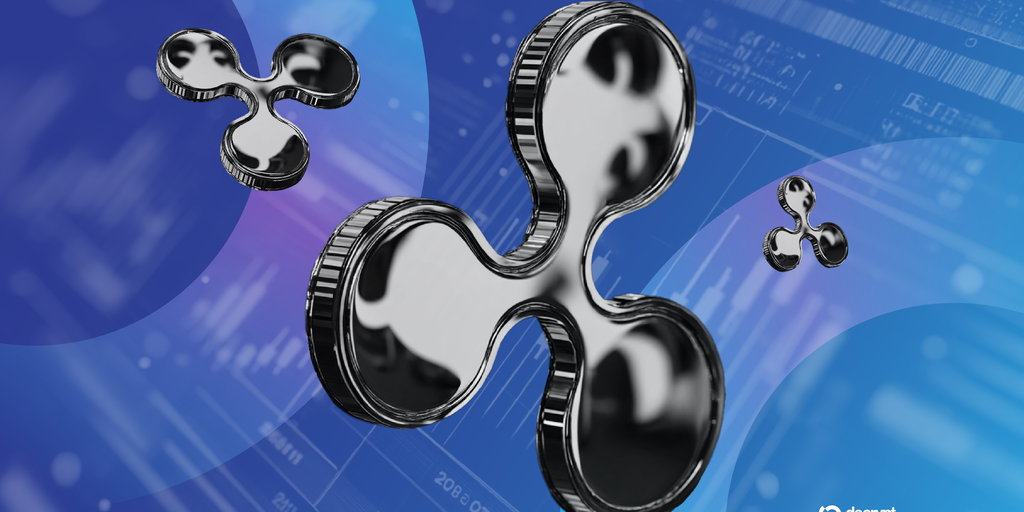
DUBAI — In a major development bridging traditional banking and the burgeoning digital asset economy, global banking giant Standard Chartered has announced the official launch of institutional custody services for Ripple USD (RLUSD). Rolled out through its Dubai International Financial Centre (DIFC) branch and regulated by the Dubai Financial Services Authority (DFSA), the new offering allows qualified institutional clients to securely store the dollar-pegged stablecoin issued on the XRP Ledger (XRPL).
Beyond secure custody, Standard Chartered has revealed plans to join a tripartite collateral integration initiative with Ripple and LMAX Group. This framework introduces a groundbreaking "collateral mirroring" model designed to allow traders to participate in crypto markets without ever transferring their underlying assets to a third-party exchange.
The move underscores Dubai’s growing reputation as a global hub for virtual asset innovation and marks another significant milestone in Standard Chartered’s aggressive expansion into institutional-grade digital finance.
Main Facts
The core of the announcement centers on institutional access, regulatory compliance, and a novel approach to risk mitigation in digital asset trading:
- Institutional Custody for RLUSD: Standard Chartered’s DIFC branch now supports institutional-grade custody of Ripple USD (RLUSD) issued on the XRP Ledger (XRPL), offering eligible clients integration into the bank’s robust digital asset custody infrastructure.
- The "Too Big to Fail" Advantage: As a designated Global Systemically Important Bank (G-SIB)—one of 29 financial institutions monitored by the Financial Stability Board under stringent capital requirements—Standard Chartered provides institutional clients with a fortress-like alternative to traditional crypto exchange wallets.
- Collateral Mirroring Partnership: The British multinational bank has joined a planned integration with London-based institutional marketplace LMAX Group. Under this framework, clients can use RLUSD as margin on LMAX products while the actual tokens remain securely locked in Standard Chartered’s vaults.
- Regulatory Backing: The service operates under the direct regulatory oversight of the Dubai Financial Services Authority (DFSA). Meanwhile, RLUSD itself received regulatory approval in Dubai in mid-2025, laying the groundwork for compliant deployment.
Chronology of Events
The integration of traditional banking systems with Ripple’s ecosystem and Dubai’s regulatory framework is the culmination of a multi-year strategic pivot by Standard Chartered toward digital assets:
- December 2024: Ripple officially launches its U.S. dollar-pegged stablecoin, RLUSD, across both the Ethereum network and the XRP Ledger (XRPL), setting the stage for institutional adoption.
- 2024 (Ongoing): Standard Chartered establishes its foundational crypto custody operations in Dubai, positioning the DIFC branch as a primary vehicle for regional digital asset services.
- June 2025: Ripple’s RLUSD secures official regulatory approval within the Dubai jurisdiction, clearing compliance hurdles for institutional use in the United Arab Emirates.
- July 2025: Standard Chartered breaks new ground by becoming the first Global Systemically Important Bank (G-SIB) to facilitate direct minting and redemption services for Circle’s USDC stablecoin.
- December 2025: Standard Chartered announces institutional custody support for RLUSD on the XRPL via its DIFC branch, alongside plans for the LMAX Group collateral integration framework.
Supporting Data and Technical Architecture
To understand the significance of Standard Chartered’s latest move, one must examine the operational mechanics of digital asset custody, stablecoins, and margin trading.
Understanding Custody and RLUSD
Custody serves as the foundational plumbing of institutional finance. In traditional markets, a regulated custodian safeguards securities, equities, and cash, assuming legal responsibility for their security. In the digital asset sphere, custody involves the complex management of cryptographic private keys.
Ripple USD (RLUSD) is a stablecoin engineered to maintain a strict 1:1 peg with the United States dollar. To maintain this parity, the token is backed by a conservative reserve portfolio comprising cash, short-term U.S. government Treasury bills, and other cash equivalents. While Ripple initially deployed RLUSD across multiple blockchains, Standard Chartered’s current institutional custody rollout specifically targets tokens issued natively on the XRP Ledger (XRPL).
The Mechanics of Collateral Mirroring
In traditional crypto derivatives and spot trading, participants must transfer their capital—often stablecoins or cryptocurrencies—directly onto an exchange’s hot or cold wallets to serve as margin or collateral. This practice exposes traders to counterparty risk; if the exchange experiences a liquidity crisis, insolvency, or a security breach (a "blowup"), client funds can be locked up, lost, or misappropriated.
Standard Chartered’s proposed integration with LMAX Group seeks to eliminate this vulnerability through collateral mirroring:
- Vault Storage: The client’s RLUSD tokens remain securely deposited in Standard Chartered’s regulated vault infrastructure in Dubai.
- Cryptographic or Data Attestation: LMAX Group receives a verified, real-time mirrored record of the collateral’s value.
- Trading Access: This mirrored value counts toward the client’s margin requirements and trading limits on LMAX platforms.
- Risk Elimination: Because the underlying stablecoins never leave the bank, an exchange failure does not compromise the principal asset. The trader’s capital remains safely parked within a G-SIB institution.
Note on Timeline: While announced in principle, the LMAX collateral leg of the service is not yet live. The bank noted that the deployment remains subject to final documentation, comprehensive technical testing, and subsequent regulatory approvals, with no definitive launch date provided.
Official Responses and Industry Perspectives
Leadership from Standard Chartered emphasized that the new service directly addresses the primary anxiety keeping institutional capital out of the cryptocurrency markets: counterparty risk and asset safety.
"Institutional clients want to participate in digital asset markets without compromising on how their assets are safeguarded," said Waqar Chaudry, Head of Digital Assets in Standard Chartered’s securities services unit. By merging the speed and utility of blockchain tokens with the risk management frameworks of traditional banking, the institution aims to unlock unprecedented capital inflows.
Industry analysts have similarly lauded the development, pointing out that solutions like collateral mirroring could fundamentally alter how institutional desks interact with digital asset exchanges. By removing the necessity of holding funds on centralized trading venues, banks can effectively act as trusted clearinghouses for the decentralized economy.
Implications for the Digital Asset Ecosystem
The partnership between Standard Chartered, Ripple, and LMAX Group carries profound implications for the future of institutional crypto adoption, market stability, and regional financial hubs.
1. Mitigation of Exchange Counterparty Risk
The collapse of major cryptocurrency exchanges over the past several years demonstrated the fatal flaw of centralized custody models. By keeping assets within a regulated G-SIB while trading externally, institutions can engage in high-frequency or leveraged trading without exposing their entire balance sheets to exchange-level insolvencies. This structural safeguard could convince conservative institutional players—such as pension funds, asset managers, and corporate treasuries—to enter the digital asset arena.
2. The Rise of Dubai as a Crypto Epicenter
Dubai continues to cement its status as a premier global jurisdiction for virtual assets. Through proactive regulatory bodies like the Dubai Financial Services Authority (DFSA) and the Virtual Assets Regulatory Authority (VARA), the emirate provides a clear legal framework that encourages Tier-1 financial institutions to innovate. Standard Chartered’s use of its DIFC branch as a launchpad for advanced digital asset services highlights how regulatory clarity attracts institutional capital.
3. Utility and Validation for the XRP Ledger
For Ripple and the XRP Ledger, securing support from a Global Systemically Important Bank is a monumental validation. While stablecoins like Tether (USDT) and Circle’s USDC dominate broad market share, institutional integrations of RLUSD—backed by top-tier custody and sophisticated margin mechanics—provide the stablecoin with elite financial utility. It positions the XRPL not merely as a retail-facing or remittance network, but as a robust ledger capable of supporting complex institutional financial engineering.
4. Evolution of Traditional Banking Models
Standard Chartered’s trajectory—moving from crypto custody in 2024, to direct USDC minting and redemption in 2025, and now to RLUSD custody and collateral mirroring—demonstrates that traditional banks are no longer ignoring blockchain technology. Instead, they are actively positioning themselves as indispensable intermediaries. By combining the immutability of public ledgers with the legal certainty of banking vaults, institutions like Standard Chartered are shaping the hybrid financial architecture of the future.