SoFi Technologies Expands into Small-Business Lending, Targeting the Digital-First Entrepreneur
By Gabrielle Saulsbery
Published July 1, 2026
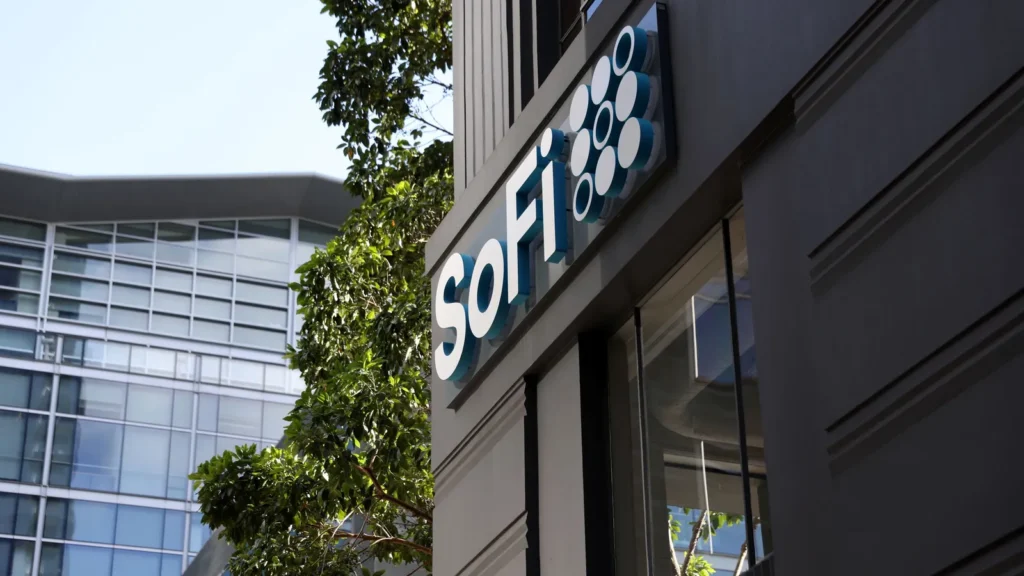
In a strategic move to solidify its position as a comprehensive financial hub, SoFi Technologies officially launched its small-business lending platform this week. The expansion marks a pivotal shift for the digital-first institution, which has historically focused on personal finance, student loan refinancing, and residential mortgages. By offering capital directly to the entrepreneurs within its existing ecosystem, SoFi is signaling an aggressive push to capture a larger share of the small-to-medium enterprise (SME) market.
The Core Offering: Accessibility and Speed
SoFi’s new business loan product is designed with the speed and transparency that have become the hallmarks of the fintech giant’s brand. The program provides fixed-rate business loans ranging from $2,500 to $250,000. In a bid to differentiate itself from traditional commercial lenders, SoFi has stripped away many of the friction points that typically plague business owners.
The platform boasts a structure free of application fees and origination fees, and notably, it carries no prepayment penalties—a feature designed to appeal to fast-moving entrepreneurs who may want to pay off debt early as their cash flow improves. Perhaps most compelling for businesses in need of immediate liquidity is the company’s funding timeline: approved applicants can receive their funds in as little as 24 hours.
“For many of our members, their financial lives do not stop at personal goals; they also include the businesses they are building,” said SoFi CEO Anthony Noto in a statement regarding the launch. “With SoFi Small Business Loans, we are expanding our ability to serve members in more of the moments that matter, giving them access to business financing through the same digital-first platform they already use to manage their personal finances.”
A Chronology of Strategic Diversification
The launch of small-business lending does not exist in a vacuum; it is the latest chapter in a broader strategy to transform SoFi from a specialized lender into a diversified financial services powerhouse.
- Late 2025: SoFi signaled its intention to capture more institutional and high-growth retail market segments by relaunching its crypto-trading platform and unveiling new stablecoin infrastructure. These moves were widely interpreted as a pivot toward capturing the next generation of digital-asset-savvy business owners.
- Q1 2026: The company demonstrated significant momentum in its core lending verticals. According to quarterly results, total loan originations surged to $12.2 billion, an increase of $1.7 billion over the final quarter of 2025. This growth was bolstered by personal loan originations ($8.3 billion), a 2.2-times year-over-year increase in student loan volume ($2.6 billion), and a 2.4-times growth in home loan originations ($1.2 billion).
- July 2026: The formal introduction of the small-business loan vertical marks the culmination of this high-growth period, aiming to integrate the business owner’s professional life into the same app interface used for their personal banking.
Industry Context: The Appetite for Capital
SoFi enters the market at a time when the broader financial industry is navigating a complex landscape of supply and demand. Data from the Kansas City Fed, released in December 2025, indicated that small-business lending saw a 13.4% year-over-year increase from Q3 2024 to Q3 2025.
However, this growth is not evenly distributed. The Federal Reserve data highlighted a striking divergence: while loan demand and application approval rates have declined at large, systemic banking institutions, small banks and fintechs have seen an uptick in both metrics. This "flight to efficiency" suggests that small-business owners are increasingly abandoning traditional, legacy-heavy banking processes in favor of platforms that offer rapid digital underwriting.
Despite this increased lending activity, access to affordable capital remains a primary pain point for entrepreneurs. A Goldman Sachs survey from October 2025 revealed that 73% of small-business owners are significantly concerned about their ability to access capital. Even more telling, 75% of those who actively sought a business loan or line of credit in the past year described the process of finding "affordable" capital as a major challenge.
SoFi is positioning its product directly into this gap. By leveraging the data it already possesses on its members—their credit history, savings patterns, and payment reliability—SoFi claims it can underwrite business loans more efficiently than traditional lenders who require exhaustive manual documentation.

The "One-Stop-Shop" Ecosystem
SoFi’s strategy relies heavily on the "Financial Services Productivity Loop" (FSPL), a concept CEO Anthony Noto has touted since the company went public. The goal is to cross-sell products to members so that the cost of acquiring a new customer is offset by the lifetime value of that customer using multiple products—from checking and savings to mortgages and now, business capital.
The company has reported strong preliminary interest in the product across several high-growth sectors, including:
- Construction: Where cash-flow timing for materials and labor often necessitates short-term bridge financing.
- Healthcare: Where independent practices often require capital for equipment upgrades and staffing.
- Professional Services: Where marketing and operational scaling often rely on flexible lines of credit.
Implications for the Competitive Landscape
The entry of a major player like SoFi into the small-business lending space puts immediate pressure on both traditional community banks and incumbent fintech lenders.
For Traditional Banks
For regional and community banks, the threat is twofold. First, they risk losing their most tech-savvy customers to a superior user experience. Second, the "speed of funding" benchmark set by SoFi at 24 hours creates a new consumer expectation that legacy banks, often hindered by manual compliance checks and bureaucratic loan committees, may struggle to meet.
For Fintech Competitors
For other fintech lenders, the battle shifts from "who has the best tech" to "who has the best ecosystem." SoFi’s advantage lies in its existing, massive user base. If a customer is already using SoFi for their mortgage and their personal brokerage account, the "friction cost" of switching to a SoFi business loan is near zero. This is a significant moat that pure-play business lenders may find difficult to bridge.

Risks and Regulatory Considerations
While the growth trajectory is aggressive, it is not without risk. Small-business lending is notoriously more volatile than personal lending. Economic downturns, supply chain disruptions, and interest rate fluctuations often hit small businesses first.
As SoFi scales this vertical, market analysts will be watching the company’s "provision for credit losses" closely. If the default rate on these new business loans rises faster than the growth in loan originations, it could put pressure on the company’s net interest margin. Furthermore, as a bank, SoFi faces heightened regulatory scrutiny regarding its underwriting standards, particularly as it ventures into the riskier terrain of business lending compared to the relatively stable, high-FICO consumer base it has cultivated to date.
The Road Ahead
The success of this launch will likely be measured by the adoption rate among SoFi’s existing 8-million-plus member base. If Noto can successfully convince even a fraction of those members to use the platform for their business needs, SoFi will solidify its standing as a critical infrastructure provider for the modern American economy.
For now, the industry is waiting to see how the market responds. With the first loans already flowing into the hands of entrepreneurs, the next few quarters will provide the definitive data on whether SoFi’s digital-first, integrated approach is the future of small-business finance.
As of press time, a spokesperson for SoFi Technologies had not responded to requests for further comment regarding the long-term volume targets for the new business lending division. However, based on the company’s recent trajectory, it is clear that they view this segment not as a side venture, but as a core pillar of their future growth. The convergence of personal and professional finance under one digital roof is no longer a distant vision; for SoFi members, it is now an operational reality.