Small Businesses Squeeze Under Financial Constraints as CFO Optimism Defies Broader Economic Pressures
Published: September 23, 2026
Source: Financial Reporting & Economic Analysis Desk
Executive Summary: Main Facts
A striking dichotomy has emerged within the corporate landscape, as revealed by recent quarterly survey data. While chief financial officers (CFOs) at large corporations maintain a resiliently optimistic outlook regarding consumer demand, revenue growth, and broader macroeconomic conditions, a parallel reality confronts smaller enterprises.
According to recent findings, 20% of small companies are currently grappling with severe financial constraints that actively prevent them from covering fundamental operational costs or pursuing new business opportunities. This starkly contrasts with larger firms, where only about 10% report similar distress.
Despite an uptick in overall CFO confidence—spurred by expectations of rising demand, improved revenue projections, and stable gross domestic product (GDP) growth—smaller businesses are increasingly bearing the brunt of macroeconomic headwinds. Chief among these pressures are elevated borrowing costs, persistently stubborn inflation, ongoing labor market tightness, and escalating trade complexities.
Chronology: The Evolution of Economic Sentiment Leading Up to Q3 2026
To understand the current economic environment, it is necessary to trace the trajectory of financial decisions and sentiment shifts leading into the third quarter of 2026.
Early 2026: Navigating Uncertainty
As the fiscal year commenced, corporate leadership found themselves balancing cautious optimism against lingering uncertainties regarding inflation stabilization and central bank policy. During the first quarter, supply chain stabilization provided some relief, yet capital costs remained high. Smaller businesses, traditionally possessing thinner cash buffers, began to experience compression in their working capital as pandemic-era reserves dwindled.
Mid-2026 (Second Quarter): Shifting Projections
By the end of Q2, mean expectations for annual revenue growth hovered around 6.5%, while anticipated full-time employment growth sat at a modest 3.6%. CFOs across various sectors noted that while consumer demand had not plummeted, it was undergoing normalization. During this period, the divergence between large and small enterprises widened. While multinational corporations leveraged economies of scale and robust credit ratings to navigate high interest rates, local and regional firms found credit lines tightening.
Late September 2026: The Survey Window and the Fed’s Move
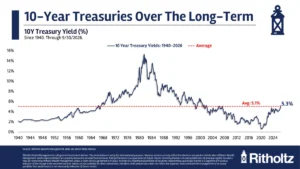
The most recent data encapsulates sentiment compiled immediately prior to a critical policy pivot by the Federal Reserve. Conducting the survey against a backdrop of sticky inflation, researchers captured financial decision-makers on the precipice of a major central bank announcement. Last week, the Federal Reserve elected to raise its benchmark interest rate by a quarter percentage point, citing persistent inflationary pressures. This decision directly validated the primary concerns of the surveyed financial leaders, 20% of whom had already cited current interest rate levels and the threat of future hikes as their single greatest stress point.
Supporting Data: By the Numbers
The latest financial metrics underscore a complex economic ecosystem defined by corporate resilience on one hand and small-business vulnerability on the other.
- Small Business Distress: Exactly 20% of small companies reported financial constraints significant enough to restrict basic operations, cost-covering, and growth initiatives.
- Large Enterprise Comparison: In contrast, only 10% of large firms reported similar levels of crippling financial constraint.
- Revenue Growth Expectations: Mean expectations for 2026 revenue growth rose notably to 7.7%, up from 6.5% recorded in the second quarter.
- Employment Projections: Expected full-time employment growth increased to 4.7%, climbing from the previous quarter’s 3.6%.
- Demand Outlook: Approximately 90% of surveyed firms expect demand over the next year to either increase or remain steady compared to previous periods.
- Macroeconomic Stability: CFOs’ average expectation for real GDP growth over the next four quarters edged up marginally to 1.9%, up from 1.8%.
- Recession Probabilities: The probability assigned by financial leaders to a period of negative economic growth fell to 10.7%, down from 11.6%.
- Primary Concerns: Exactly 20% of financial decision-makers pinpointed interest rates and potential rate hikes as their top operational worry, alongside inflation, labor quality, trade policies, and overall uncertainty.
Official Responses and Expert Analysis
Industry analysts and economists have weighed in heavily on the bifurcated nature of the current economic cycle. Commenting on the survey results, market researchers highlighted the structural disadvantages facing Main Street businesses compared to Wall Street institutions.

"While aggregate metrics suggest a healthy, growing corporate sector, averages can be deeply misleading," noted financial analyst and commentator Waddell in an official statement accompanying the data release. "Beneath the surface of steady CFO optimism lies a distinct tier of enterprises—predominantly smaller businesses—that are being systematically squeezed by the cost of capital."
Waddell emphasized that while large corporations often lock in fixed-rate debt during favorable economic windows, smaller entities frequently rely on variable-rate commercial loans, lines of credit, and localized banking relationships. Consequently, every incremental shift in benchmark interest rates hits smaller balance sheets with immediate, disproportionate force.
Furthermore, corporate governance experts point out that large firms possess greater pricing power. When input costs rise due to inflation or tariffs, multinational companies can generally pass those costs onto consumers without severely depressing sales volumes. Small businesses, operating in hyper-competitive local markets, often absorb these cost increases, directly eroding their profit margins and depleting cash reserves.
Implications: What This Means for the Economy, CFOs, and Small Business Owners
The growing divide between large and small enterprises carries profound implications for the trajectory of the broader economy, employment markets, and future corporate strategy.
1. The Threat to Job Creation and Labor Dynamics
Small businesses have historically served as the primary engine of net job creation in the economy. If one-fifth of these companies are constrained from pursuing business opportunities or adequately covering operational costs, the broader labor market could experience cooling effects that aggregate numbers currently fail to capture. While overall full-time employment growth expectations rose to 4.7%, localized layoffs, hiring freezes, and business closures among small firms could offset gains in the corporate sector.

2. Strategic Realignment for CFOs and Financial Leaders
For CFOs navigating this environment, risk management and liquidity preservation must remain paramount. Financial leaders at small and mid-sized enterprises (SMEs) are being forced to re-evaluate capital allocation strategies:
- Working Capital Optimization: Enterprises must aggressively manage cash conversion cycles, accelerating receivables and prudently timing payables.
- Debt Restructuring: With the Federal Reserve enacting a quarter-point rate hike, companies locked into variable-rate debt should urgently explore refinancing options, fixed-rate instruments, or alternative non-bank financing solutions.
- Operational Efficiency: Automation, supply chain consolidation, and lean operations will be critical for absorbing ongoing labor and material cost pressures.
3. Monetary Policy Dilemma
The Federal Reserve faces a delicate balancing act. By raising benchmark interest rates to combat stubborn inflation, the central bank risks exacerbating the financial constraints already choking one-fifth of the nation’s small businesses. Conversely, failing to address inflation could erode consumer purchasing power across the board, ultimately undermining the robust demand projections that are currently keeping large-firm CFOs optimistic.
4. Outlook for the Remainder of 2026
As the fourth quarter approaches, the resilience of the US economy will largely depend on whether small businesses can bridge the gap between high borrowing costs and stabilizing consumer demand. Without targeted relief, localized credit easing, or a more rapid deceleration of inflation, the divergence between corporate health and Main Street distress threatens to become a defining narrative of the late 2020s economic landscape. Financial decision-makers across all sectors must prepare for a prolonged period of monetary tightening, demanding unprecedented agility, fiscal discipline, and strategic foresight.