Senate Stalls Ratepayer Protection Act: The High-Voltage Battle Over AI Infrastructure Costs
By Political Correspondent
The United States Senate delivered a decisive blow to a high-profile piece of energy legislation on September 30, effectively stalling the "Ratepayer Protection Act." The move, which saw a 57-43 vote fail to meet the 60-vote threshold required to overcome a procedural hurdle, has transformed the complex issue of artificial intelligence (AI) infrastructure costs into a central battleground for the fast-approaching November 3 midterm elections.
The legislation sought to mandate that state utility regulators evaluate whether massive electricity consumers—most notably the sprawling data centers powering the AI revolution—should shoulder the incremental costs of the grid infrastructure built specifically to support them. Proponents argued that without this shift, household ratepayers would be forced to subsidize the energy-hungry ambitions of Big Tech. However, the bill’s failure signals a deeper gridlock on Capitol Hill, as both parties jockey for position on how to balance the demands of the digital economy with the financial realities facing American families.
The Legislative Impasse: A Breakdown of the Vote
The Senate floor became a theater of political maneuvering on Monday as the Ratepayer Protection Act faced its moment of truth. Despite bipartisan support in the House of Representatives, where it passed on September 16 with an overwhelming 417-3 margin, the Senate proved a far more hostile environment.
The final tally of 57-43 highlighted the stark divide in legislative philosophy. While the bill drew support from a handful of Democrats, the vast majority of the caucus held firm against it, labeling the legislation a "messaging bill" designed more for electoral optics than substantive regulatory reform. For Senate Republicans, the effort was a calculated attempt to align the party with the economic frustrations of voters worried about rising utility costs—a trend currently exacerbated by the rapid proliferation of data centers.
"The Senate’s failure to advance this bill is a missed opportunity to provide transparency and fairness to the American taxpayer," said Senator Jon Husted, the bill’s primary architect in the upper chamber. Husted, currently embroiled in a tight re-election contest in Ohio against former Senator Sherrod Brown, has made the cost of AI infrastructure a cornerstone of his campaign, framing it as a direct conflict between corporate interests and the working class.
Chronology of the Conflict
The rise of the Ratepayer Protection Act is inextricably linked to the meteoric growth of AI. Over the last twenty-four months, the U.S. power grid has faced unprecedented demand as companies like Amazon, Google, and Microsoft race to build the infrastructure required to host large-scale generative AI models.
- Early 2024: Utility regulators in key states begin expressing concern over the "load growth" attributed to hyperscale data centers. Reports emerge of power plants slated for retirement being kept online to meet the surge in demand.
- September 16, 2024: The House of Representatives passes the Ratepayer Protection Act by a landslide 417-3 vote, signaling a rare moment of cross-aisle agreement on the need to address utility costs.
- Late September 2024: Republican leadership in the Senate fast-tracks the bill, aiming to force a confrontation on the issue before the November midterms.
- September 30, 2024: The Senate fails to invoke cloture on the bill, effectively shelving the legislation. The vote takes place just weeks before voters head to the polls to decide control of Congress.
The Economics of the Grid: Why Data Centers Matter
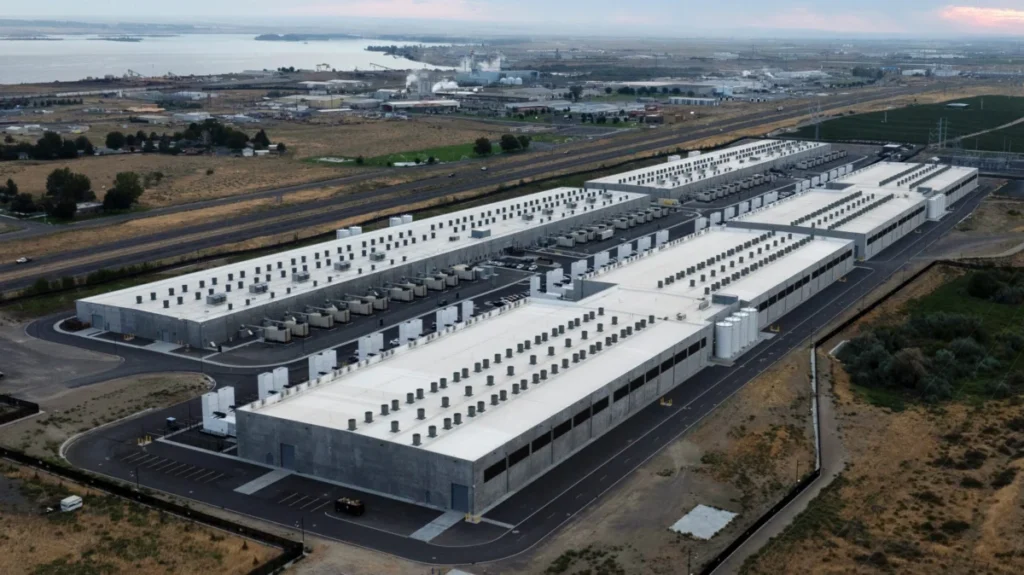
To understand the controversy, one must look at the physical architecture of the modern power grid. Data centers are not typical industrial users; they operate 24/7 with massive, constant energy demands. When a new facility is built, it often necessitates the construction of new transmission lines, substations, and, in some cases, new power generation capacity.
Currently, in many jurisdictions, these costs are socialized—spread across the entire rate base. This means that a homeowner in a rural township may effectively be subsidizing the infrastructure required to power a multibillion-dollar server farm located hundreds of miles away.
The Arguments for Regulation
Advocates for the Ratepayer Protection Act argue that the "cost-causer" should be the "cost-payer." By forcing utility regulators to account for these incremental costs, the bill would theoretically incentivize data center operators to either cover their own infrastructure expenses or locate their facilities in areas where the grid can handle the load without expensive upgrades.
The Corporate and Technological Counter-Argument
Tech industry representatives and some economists argue that such mandates could inadvertently stifle innovation. They contend that data centers are engines of economic growth and that the infrastructure upgrades they trigger—such as grid hardening and the integration of renewable energy—ultimately benefit the entire grid. They fear that placing the full cost burden on data center developers would drive investment overseas, effectively handicapping the U.S. in the global race for AI supremacy.
Official Responses and Political Posturing
The aftermath of the vote has been marked by a fierce war of words, with both sides accusing the other of political cynicism.
Senate Democratic Leader Chuck Schumer was unequivocal in his critique of the Republican strategy. Speaking to reporters on Tuesday, Schumer argued that the bill was never intended to become law. "Republicans are putting a bill they know will fail to try and secure political points instead of delivering real relief," Schumer stated. "While Americans are demanding real guardrails on AI and data centers, Republicans are offering a toothless messaging bill."
Schumer and other Democrats have pointed to the "GRID Savings Act" as a more robust alternative. This proposed legislation would require large data centers to pay the full cost of grid upgrades needed to serve them, rather than simply requiring regulators to "consider" the issue. Democrats argue this approach offers a concrete solution, whereas the Republican-led bill leaves the decision-making power in the hands of potentially industry-friendly utility commissions.
On the other side of the aisle, Senator Husted dismissed these claims as distraction tactics. "This is about accountability," Husted told reporters. "The American people are seeing their electricity bills climb while these massive tech conglomerates benefit from public infrastructure. We gave the Senate a chance to prove we’re on the side of the ratepayer, but our colleagues across the aisle chose to protect the status quo."
Implications for the November Midterms
The failure of the Ratepayer Protection Act arrives at a volatile moment in the election cycle. With Republicans holding a slim 53-47 majority in the Senate, every seat is critical. The optics of the vote—Republicans standing up for "lower electricity prices" against a "Big Tech-friendly" Democratic minority—are designed to resonate with suburban and working-class voters who are feeling the squeeze of inflation.
A New Line of Attack
The legislative defeat provides Republicans with a clear narrative for the final weeks of the campaign. By linking Democrats to the rising costs of AI, they hope to neutralize the advantage Democrats traditionally hold on issues like corporate accountability. In states like Ohio, where the cost of living has become a primary campaign issue, this strategy could prove pivotal.
The AI Governance Gap
Beyond the election, the broader implication is a growing governance gap. AI is moving faster than the regulatory state can adapt. Whether it is energy consumption, labor displacement, or data privacy, Congress remains caught in a cycle of reactive, politically charged maneuvering rather than proactive, comprehensive policy-making.
As the nation moves toward November 3, the debate over data centers is likely to intensify. The electorate is increasingly wary of the rapid expansion of AI, and voters are demanding to know who will pay the price for the digital transition. For now, the bill is dead, but the issue of who finances the future of American energy remains very much alive.
Data Snapshot: The Energy Demand Surge
While the legislative debate rages, the data illustrates the scale of the challenge facing utility commissions nationwide:
- Load Growth: According to the North American Electric Reliability Corporation (NERC), electricity demand projections for the next decade have doubled compared to 2023 estimates, driven almost exclusively by data center expansion.
- Infrastructure Costs: Estimates for grid upgrades specifically for AI-related load are projected to reach $50 billion by 2030, according to industry analysts.
- Public Sentiment: Recent polling indicates that over 60% of voters express concern regarding the impact of data centers on local utility rates, a sentiment that persists regardless of the general support for AI technology.
The Senate’s action on September 30 was not merely a procedural vote; it was a reflection of the profound tension between the demands of a high-tech future and the economic realities of the present. As the midterms approach, both parties will continue to refine their arguments, but the question of how to power the AI era—and who carries the bill—remains one of the most significant, yet unresolved, questions in contemporary American politics.