Rhine River Water Levels Rise Amid Persistent Navigation Hurdles: A Supply Chain Crisis in Slow Motion
By Investigative Desk
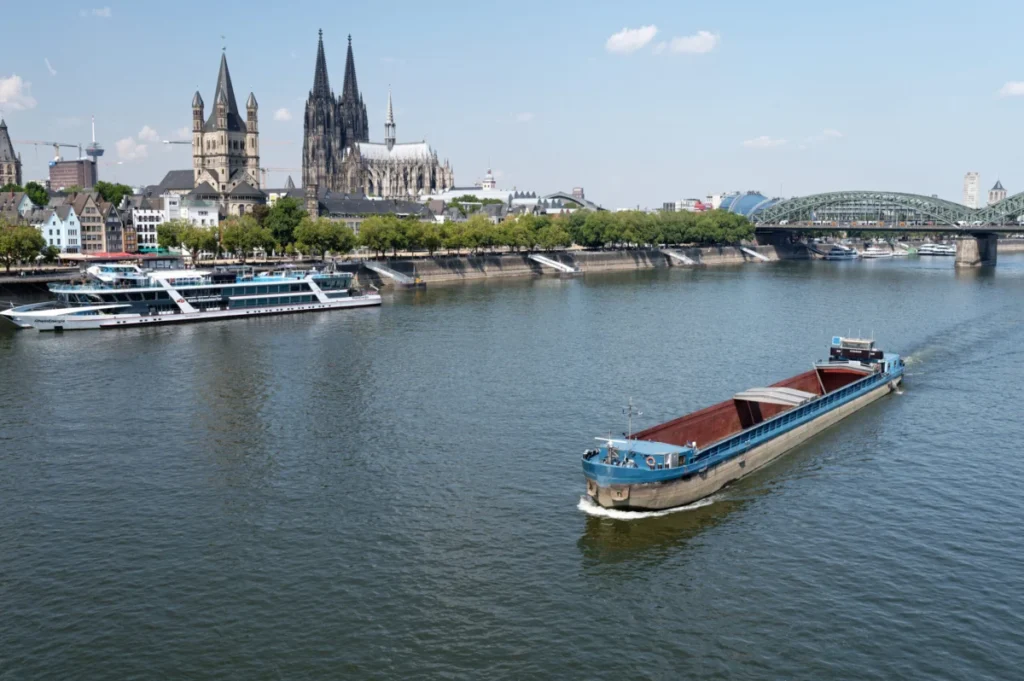
Water levels on the Rhine—Europe’s most critical inland waterway—have begun a modest recovery following recent rainfall in southern Germany. However, the respite remains fragile. While the inland navigation agency confirmed on Friday that water depths are trending upward, the river remains significantly hampered by prolonged shallowness. For the industrial heartlands of Germany, Switzerland, and the Netherlands, the situation is far from resolved, as the lingering constraints continue to inflate transport costs and threaten the stability of energy and commodity supply chains.
Main Facts: A Vital Artery Under Stress
The Rhine is not merely a river; it is a fundamental pillar of the European economy. Serving as a transit corridor for everything from coal and petroleum products to chemical raw materials and consumer goods, any disruption to its navigability sends shockwaves through the continent’s industrial output.
The current situation is characterized by a "two-speed" recovery. While meteorologists and hydrological agencies have observed increased precipitation in the Rhine’s southern catchment areas, the physical impact on river depths is delayed. Cargo vessels are still being forced to operate at a fraction of their standard capacity. To navigate the shallow stretches—most notably the notorious bottleneck at Kaub, near Frankfurt—ships must shed significant weight. This translates to higher per-ton shipping costs, as a single vessel might be forced to carry only 25% to 50% of its maximum load to avoid running aground.
The economic implications are immediate: producers are facing rising logistics surcharges, which are increasingly being passed on to end-users, further complicating an already inflationary economic environment in the Eurozone.
Chronology: From Drought to Lingering Constraints
The struggle to maintain consistent Rhine navigability is a recurring theme that has intensified over the last several years, often linked to shifting climate patterns.
- Mid-August 2022: The river reached critical lows, with depths at key gauges dropping to levels that effectively halted heavy-load transport. This period served as a wake-up call for German industry regarding the fragility of inland logistics.
- Late 2023/Early 2024: A period of relative stability followed, but as the summer of 2024 approached, concerns about a repeat of the 2022 drought began to surface.
- Early August 2024: Persistent dry spells across central Europe led to a steady decline in water levels, forcing shipping companies to initiate "low-water surcharges."
- Late August 2024 (Current): A shift in weather patterns brought rainfall to the south. While the water levels are now trending upward, the "recovery" is relative. The riverbed, shaped by years of varying flow, remains a hazardous environment for fully laden barges.
This timeline illustrates a growing vulnerability. The river, once a reliable "conveyor belt" for industrial Europe, is becoming increasingly seasonal and unpredictable, necessitating a long-term strategic rethink of German logistics.
Supporting Data: The Logistics of "Light Loading"
The physics of river transport is unforgiving. When water levels drop below specific thresholds, the "draft" of the vessel—the depth of the hull below the waterline—must be strictly managed.
Industry data suggests that for every centimeter of water lost at the Kaub gauge, a vessel must reduce its cargo load by several dozen tons. At extreme lows, the math is staggering: a barge that could normally transport 2,000 tons of coal might be restricted to 600 tons or less.
Economic Impact Metrics:
- Fuel Costs: Because more trips are required to transport the same amount of cargo, fuel consumption per ton-mile increases exponentially.
- Surcharges: Shipping companies have implemented tiered low-water surcharges. In periods of extreme shallow water, these fees can represent an additional 30% to 50% increase in freight costs.
- Inventory Buffers: Manufacturers are being forced to maintain higher inventory levels near their production sites to buffer against the "logistics volatility" of the Rhine, tying up capital that would otherwise be used for investment or R&D.
Official Responses and Strategic Shifts
The German Inland Navigation Agency (WSA) and the Federal Ministry for Digital and Transport have been under mounting pressure to provide a long-term solution.
In official statements, the agency has emphasized that while current forecasts predict further rises in water levels, the margin for error remains slim. "We are managing the situation on a day-by-day basis," a spokesperson noted. "While the recent rainfall provides a necessary buffer, it does not solve the underlying structural issues associated with climate-induced low-water events."
Industry bodies, such as the BDB (Association for Inland Navigation and Waterways), have been more vocal. They are calling for:
- Infrastructure Investment: Deepening the river channel at key bottlenecks through targeted dredging and structural modifications.
- Digitalization: Improved real-time monitoring and predictive AI-driven logistics platforms to help fleet operators optimize routes before they reach shallow zones.
- Fleet Modernization: Encouraging the construction of "low-water barges" specifically designed with shallower drafts to maintain operations even when traditional vessels are grounded.
Implications: The Broadening Economic Fallout
The Rhine’s shallow-water issue is not just a problem for shipping companies; it is a macro-economic concern.
1. Energy Security
Germany’s transition away from Russian natural gas has necessitated an increased reliance on coal and liquid fuels to bridge the energy gap. These commodities are moved in massive volumes via the Rhine. When the river is shallow, the "energy supply chain" slows down, potentially impacting the power generation capacity of southern German power plants.
2. The Chemical Industry
The Rhine corridor is home to the world’s largest chemical cluster. Companies like BASF rely on the river for the constant, rhythmic delivery of raw materials. Disruptions here cause "domino effects" in supply chains that stretch from the automotive sector to pharmaceuticals.
3. Inflationary Pressures
Logistics costs are a hidden component of almost every industrial product. When transport costs rise due to river conditions, the cost of manufacturing increases. This cost is ultimately passed down to the consumer, acting as a persistent, if invisible, contributor to inflation.
4. The Climate Adaptation Mandate
Perhaps the most significant implication is the realization that the Rhine is undergoing a permanent state of flux. Policymakers are now forced to confront the reality that "normal" water levels may be a thing of the past. Future infrastructure projects—including rail and pipeline expansions—are being discussed as potential "redundancy measures" to ensure that the German economy is not solely dependent on a river that is becoming increasingly temperamental.
Conclusion: Looking Ahead
As the Rhine begins its slow, cautious recovery, the industry remains in a state of high alert. The rain in the south is a welcome, albeit temporary, reprieve. However, the reliance on weather patterns to dictate the health of the European economy is a precarious model.
The coming months will likely see a push for greater investment in river infrastructure and a diversification of transport modes. The Rhine remains an essential artery, but its role in the 21st century will be defined by how effectively Europe can adapt to a changing climate that no longer guarantees the flow of its most important trade route. For now, ship captains continue to navigate with caution, and industry leaders remain focused on the daily updates from the gauges at Kaub, waiting for the water to return to a level that allows commerce to flow freely once again.