Polymarket Under Fire: Investigation Reveals Massive Campaign of Deceptive "Fake Bet" Marketing
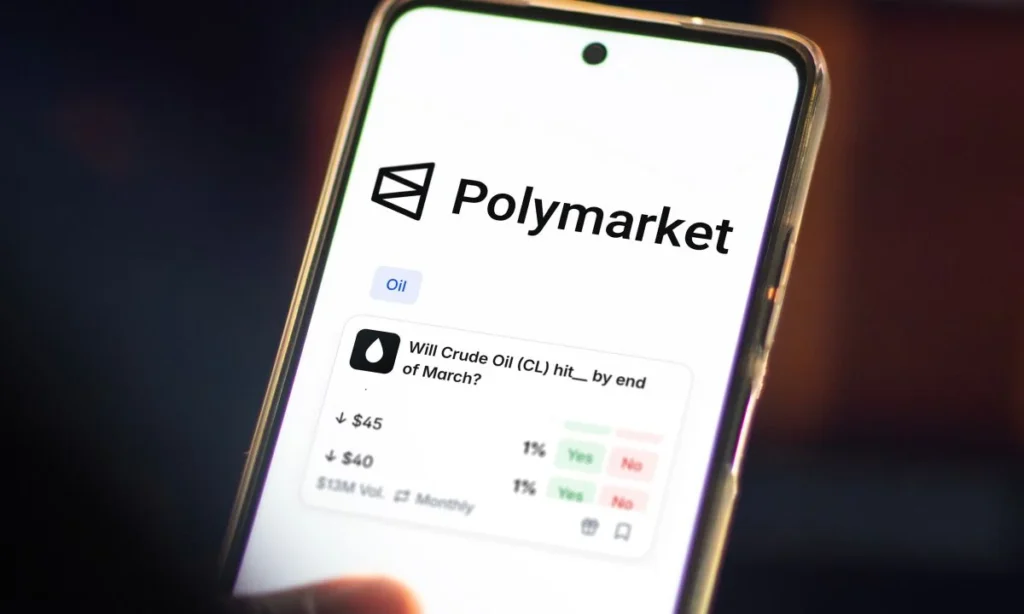
By PYMNTS | June 21, 2026
The rapidly evolving landscape of decentralized prediction markets has hit a significant reputational roadblock. Polymarket, a platform that has positioned itself as a vanguard of transparency and objective truth, is facing intense scrutiny following a damning investigative report by The Wall Street Journal. The findings suggest that the platform orchestrated a large-scale marketing campaign involving content creators who were paid to simulate trades and fabricate winning scenarios, effectively misleading potential users about the nature and success rate of betting on the platform.
The Core Allegation: A Facade of Financial Success
At the heart of the controversy is a sophisticated social media campaign that blurred the lines between genuine user experience and paid advertisement. According to the WSJ investigation, which analyzed over 1,100 promotional videos produced between December 2025 and May 2026, Polymarket utilized third-party contractors to recruit influencers. These creators were instructed to film themselves interacting with a near-perfect replica of the Polymarket interface—a "shadow site" designed to mimic the platform’s real-time functionality without involving actual capital or risk.
The videos, which were distributed across major social media platforms, were designed to appear organic. Influencers acted out scenes of high-stakes tension and triumph, reacting to curated, outdated, or entirely fictional market outcomes. The objective was to normalize the idea of high-frequency, high-reward trading on the platform, creating a perception of profitability that stood in stark contrast to the statistical reality of prediction markets.
Chronology of the Campaign and Discovery
The timeline of these activities spans roughly six months, a period during which Polymarket sought to expand its footprint significantly.
- Late 2025: As Polymarket began pushing for broader mainstream adoption, it ramped up its influencer marketing budget, engaging specialized agencies to bridge the gap between niche crypto-trading circles and broader retail audiences.
- December 2025 – May 2026: The period of the reported "faked" content. During these months, the 10 core creators tracked by the WSJ produced over 1,100 videos.
- Early June 2026: Investigative journalists began compiling evidence, cross-referencing timestamps on the videos with real-world market movements. The discrepancy between the creators’ claims of massive wins and the actual historical data for those specific events became glaringly obvious.
- June 21, 2026: The Wall Street Journal publishes its findings, detailing the methodology of the deception and confirming that the platform’s contractors were aware of the instructional materials used to create the fake trading environments.
Data Analysis: The Illusion of Profit
The most startling data point to emerge from the report is the disparity between claimed and actual performance. In a subset of 118 videos, influencers were seen celebrating "wins" that, had they been real, would have netted them approximately $900,000 in gains.
However, a forensic audit of those specific market events—using historical data—reveals that those exact trades would have resulted in losses exceeding $166,000. This $1.06 million swing illustrates a systematic effort to misrepresent the risk-reward profile of the platform. By utilizing "phony headlines" and outdated footage, the campaign created a "survivorship bias" effect, leading viewers to believe that winning on the platform was a common, replicable occurrence rather than a high-risk financial endeavor.
Furthermore, the investigation highlights a significant regulatory friction point: while Polymarket is restricted from operating within the United States due to ongoing regulatory concerns and a ban from the Commodity Futures Trading Commission (CFTC), the social media campaign specifically targeted American audiences. By encouraging the use of Virtual Private Networks (VPNs) to bypass geofencing, the marketing efforts effectively pushed U.S. users into a grey market environment, potentially inviting further scrutiny from federal regulators.
Corporate Response and Internal Accountability
In the wake of the publication, Polymarket issued a statement attempting to distance itself from the specific mechanics of the campaign while acknowledging the need for operational reform.
"We are committed to maintaining accurate, fair, and transparent markets," the company stated. "We are part of a rapidly growing industry and are constantly evaluating ways to improve how we’re engaging and earning the trust of our audience."
The company confirmed that it would immediately initiate a comprehensive audit of all active promotional content. While the statement lacked a specific apology for the deceptive nature of the videos, it signaled an attempt at damage control. By promising to audit their marketing contractors, Polymarket is likely attempting to shift the burden of responsibility onto the third-party agencies tasked with executing the strategy, though the presence of "instructional materials" provided by the company suggests a higher level of internal oversight than the platform is currently admitting.
The Industry Context: A Growing Divide
The scandal arrives at a time when prediction markets are fighting for institutional legitimacy. Just earlier this month, Polymarket made headlines for its first "on-chain institutional block trade" linked to AI compute infrastructure. Brooke Rizzetto, head of institutional liquidity at Polymarket, had recently lauded the platform as a "powerful venue for institutional block trades," arguing that the ability to hedge real-world assets like GPU compute exposure at scale represented the future of the industry.
This latest marketing scandal threatens to undermine that narrative. If the platform cannot be trusted to be transparent with retail marketing, institutions may grow hesitant to utilize the platform for the high-value, transparent hedging that Polymarket claims is its true purpose.
The broader sector is also feeling the heat. Kalshi, a primary rival to Polymarket, has reported a massive increase in revenue—tripling to $2 billion—largely driven by unconventional markets like NBA and World Cup outcomes. Kalshi is currently in early-stage talks regarding a potential IPO for 2027 or 2028. The Polymarket controversy serves as a cautionary tale for such companies: as they move toward public markets, the level of regulatory scrutiny regarding their marketing, user acquisition, and financial representations will increase exponentially.
Implications: The Regulatory Fallout
The immediate implications for Polymarket are threefold:
- Regulatory Scrutiny: The fact that the campaign targeted U.S. users through VPNs creates a direct challenge to the CFTC. Regulators are likely to view this not just as poor marketing, but as a potential violation of the terms of the existing trading ban.
- Trust Deficit: The "fake win" strategy is a classic hallmark of predatory financial marketing. For a platform that claims to rely on the "wisdom of the crowd" and objective data, being caught manufacturing outcomes is a significant blow to its core value proposition.
- Marketing Ethics: This incident will likely spur a new conversation within the decentralized finance (DeFi) sector regarding the ethical responsibilities of platforms when utilizing influencer marketing. The industry has long operated in a "wild west" environment, but as it seeks to displace traditional futures markets, the standards of consumer protection will inevitably rise.
As the industry matures, the incident marks a turning point. Prediction markets have promised to revolutionize how we view and trade on the future. However, if the foundation of that market is built on the marketing equivalent of a "house of cards," the path to mainstream, institutional, and regulatory acceptance will become significantly steeper. Polymarket must now prove that its recent internal audit is not merely a performative gesture, but a fundamental shift toward the transparency it claims to value.