Maritime Security Crisis: LNG Tanker "Vivit Africa" Targeted in Suspected Cyberattack
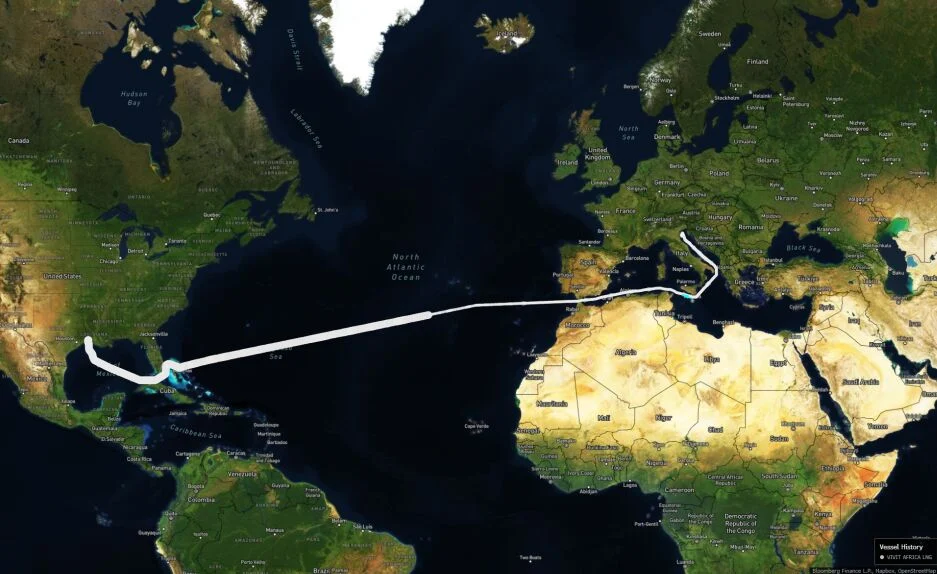
The global energy supply chain is facing a chilling new frontier of vulnerability as maritime authorities and intelligence agencies scramble to investigate a suspected cyberattack against the Vivit Africa LNG, a liquefied natural gas carrier that recently found itself dead in the water in the Mediterranean Sea. The incident, which paralyzed the vessel’s internal control systems earlier this month, marks a significant escalation in the frequency and sophistication of digital threats targeting the world’s merchant fleet.
As the Vivit Africa LNG—a South Korean-owned vessel currently under a long-term time charter to trading giant Vitol Group—remains a focal point of international concern, the event has reignited fears that critical energy infrastructure is increasingly susceptible to remote manipulation. While the investigation remains in its infancy, the ship’s abrupt change of course and the subsequent involvement of multiple maritime authorities highlight the profound operational and security risks posed by the digitization of global shipping.
The Anatomy of an Incident: Chronology of the Disruption
The Vivit Africa LNG departed from the Cameron LNG terminal in Louisiana in late August, carrying a vital cargo of fuel destined for the Italian market. The voyage was routine until the vessel entered the Mediterranean and Adriatic Seas in early September. According to individuals familiar with the matter who requested anonymity due to the sensitivity of the situation, the crew suddenly reported a total loss of access to several critical internal control systems.
The malfunction was not merely a mechanical hiccup; it was significant enough to render the vessel incapable of safely discharging its cargo. Following the incident, the Vivit Africa was forced to idle off the coast of Italy. As technicians struggled to regain control of the systems, the vessel’s status became a matter of international maritime security.
By mid-month, it became clear that the ship would not reach its intended destination of the Rovigo terminal. Shipping data compiled by Bloomberg indicates that on Wednesday, the Vivit Africa abandoned its approach to the Italian coast, turning away and setting a course for the Spanish port of Algeciras. This forced retreat near the entrance to the Mediterranean signals a major disruption to a high-value energy shipment and underscores the incapacitating nature of the suspected cyber breach.
Technical Vulnerabilities and the "Black Box" of Ship Systems
At the heart of the investigation is the complex interplay of industrial control systems (ICS) that govern modern LNG tankers. These ships are essentially floating, high-tech industrial plants that require constant monitoring of cryogenic storage pressures, navigational positioning, and propulsion parameters.
The Vivit Africa utilizes advanced equipment provided by Kongsberg Maritime, a global leader in maritime positioning, navigation, and automation technology. When asked about the incident, Kongsberg spokesperson Jon Berge acknowledged that the company is aware of the reports but cautioned against premature judgment. "It is too early to draw conclusions regarding the cause or any potential security implications," Berge stated.
The uncertainty surrounding the Vivit Africa reflects a broader industry challenge: the difficulty of forensic investigation in deep-sea environments. When a vessel’s digital architecture is compromised, identifying the "patient zero" of the infection—whether it was an external remote hack, a compromised USB drive, or a supply-chain vulnerability—requires a level of digital forensics that is often unavailable while a ship is at sea.
Official Responses and Maritime Intervention
The response to the Vivit Africa incident involved a coordinated effort by both corporate stakeholders and state authorities. The Italian Coast Guard, which maintained a watchful eye over the vessel during its period of instability, provided the most concrete details regarding the nature of the malfunction.
Captain Roberto D’Arrigo of the Italian Coast Guard confirmed that his office assisted the vessel "after the master reported a malfunction in the systems used to monitor cargo parameters." He emphasized that the intervention was primarily focused on "navigation safety purposes," noting that the Coast Guard issued an urgent notice to other mariners to maintain a safe distance from the drifting vessel.
The ship’s technical and safety advisor, the Korean Register, was notified early last week. Despite the severity of the incident, both the Korean Register and the vessel’s owner, H-Line Shipping Co. Ltd., have remained largely silent, providing no immediate response to inquiries. This silence is typical in the immediate aftermath of maritime cyber incidents, as corporations prioritize legal exposure, insurance liability, and the mitigation of further reputational damage.
A Growing Pattern: The "20 Ships" Threat Landscape
The Vivit Africa incident is not an isolated event; rather, it is a high-profile data point in a growing trend of digital aggression against the global merchant fleet. In late August, two separate oil and gas tankers off the coast of the United States were boarded by a joint task force consisting of the U.S. Coast Guard and the Federal Bureau of Investigation (FBI) to investigate potential cyberattacks.
These incidents have prompted a quiet but intense mobilization among Western intelligence agencies. Current reports suggest that American officials are actively monitoring nearly 20 ships worldwide that exhibit signs of potential cyber-compromise. This suggests that the threat is not just theoretical, but a sustained campaign of probing and testing the resilience of global supply chains.
The motivations behind these attacks remain obscured. While state-sponsored actors are frequently suspected in cyber-intrusions involving critical infrastructure, the maritime sector’s decentralized nature—involving multiple flag states, international crews, and global hardware suppliers—makes attribution an arduous, if not impossible, task.
Implications for Global Energy Markets
The vulnerability of LNG carriers carries significant weight for European energy security. As Europe continues to move away from pipeline-based natural gas, the reliance on maritime imports from the United States and other global suppliers has become absolute. A successful, large-scale cyberattack that disables a significant portion of the LNG fleet would not only drive up insurance premiums but could cause localized energy shortages and price volatility.
The incident also raises questions about the "smart ship" era. As vessels become more connected to the Internet of Things (IoT) for efficiency and fuel management, the "attack surface" available to malicious actors grows exponentially. The transition to automated, remotely monitored shipping is intended to save costs and reduce human error, but it has introduced a new, non-kinetic risk that traditional maritime law and safety protocols are ill-equipped to handle.
Conclusion: The Need for Maritime Cybersecurity Reform
The Vivit Africa case serves as a warning shot to the maritime industry. As the investigation into the cause of the failure continues, the shipping sector must grapple with the reality that digital security is now as critical as physical navigation safety.
For shipowners, the challenge is twofold: they must harden their internal networks against unauthorized access while simultaneously ensuring that their crews are trained to operate under "analog" conditions should their digital systems fail. For governments, the focus must shift toward international cooperation, intelligence sharing, and the development of robust protocols for responding to cyber-hijacking.
As the Vivit Africa makes its way toward Algeciras, the industry remains on high alert. The incident has stripped away the illusion of digital invulnerability, leaving the global shipping community to contemplate a future where the next "pirate" may not carry a weapon, but a line of malicious code. Whether this serves as a catalyst for a global maritime cybersecurity standard or merely a precursor to a larger, more damaging event remains to be seen. For now, the global fleet continues its voyage, carrying the world’s resources through a sea that has become significantly more dangerous.