Legislative Momentum: Senate Committee Advances Critical TRIA Reauthorization Through 2037
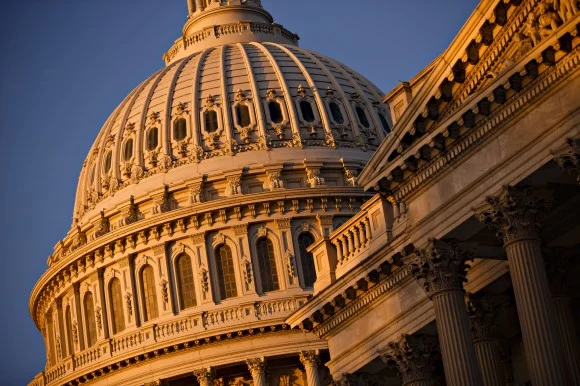
In a display of rare bipartisan consensus, the United States Senate Banking Committee voted 24-0 on September 17 to advance the Terrorism Risk Insurance Program Reauthorization Act of 2026 (S. 4395). This pivotal legislative move sets the stage for a full Senate vote, signaling a robust commitment to maintaining the stability of the nation’s insurance markets against the evolving, unpredictable threats of global terrorism.
The legislation aims to extend the Terrorism Risk Insurance Act (TRIA)—a foundational public-private partnership—through December 31, 2037. By securing this extension, lawmakers hope to provide a decade of economic certainty to businesses, insurers, and policymakers alike, ensuring that the marketplace remains resilient in the face of geopolitical volatility.
The Core Facts: What is TRIA?
The Terrorism Risk Insurance Act was originally signed into law in 2002 as a direct legislative response to the catastrophic insurance market collapse that followed the September 11, 2001, terrorist attacks. Before the Act, many insurers excluded terrorism coverage from commercial policies, fearing that the scale of potential losses—compounded by the inability to predict such events—would threaten their solvency.
The program creates a federal "backstop." Under the current framework, if a certified act of terrorism occurs, the federal government provides a layer of reinsurance to private insurance companies. This ensures that the primary burden of loss does not fall entirely on the private sector, which allows businesses to continue purchasing terrorism insurance at reasonable premiums. Without this federal support, the commercial real estate, construction, and transportation sectors would likely face prohibitive costs or a total lack of coverage, effectively freezing major economic activity in high-risk urban centers.
A Chronology of Resilience: Two Decades of Oversight
The trajectory of TRIA has been characterized by consistent, periodic reauthorizations, reflecting the changing nature of the threat landscape. Since its inception, the program has been adjusted to reflect shifting economic realities and evolving risk models:
- 2002: The original Terrorism Risk Insurance Act is enacted, establishing the federal backstop for the first time.
- 2005: Recognizing the ongoing need for market stability, Congress passes the first extension of the program.
- 2007: The Terrorism Risk Insurance Program Reauthorization Act of 2007 is signed into law, extending the program for another seven years.
- 2015: The Terrorism Risk Insurance Program Reauthorization Act of 2015 is enacted, introducing stricter triggers for federal involvement and signaling a move toward higher private-sector risk retention.
- 2019: The Terrorism Risk Insurance Program Reauthorization Act of 2019 extends the program through 2027.
- 2026 (June): The U.S. House of Representatives overwhelmingly approves legislation to extend the program, setting the stage for the current Senate action.
- 2026 (September): The Senate Banking Committee unanimously advances S. 4395, pushing for an extension through 2037.
Each reauthorization cycle has served as a "stress test" for the program, with Congress often utilizing these opportunities to increase the threshold for government intervention, thereby encouraging the private insurance market to retain a larger share of the risk.
Supporting Data: Why the Extension is Deemed Essential
The advocacy for a long-term extension is rooted in the unique nature of terrorism risk. Unlike natural disasters—such as hurricanes or wildfires—which follow geographical patterns and historical data trends, terrorism is a man-made, adaptive, and intentional threat.
According to industry experts, the "unpredictability" factor makes traditional actuarial modeling nearly impossible. Terrorists intentionally study defensive measures to circumvent them. As noted by Jimi Grande, senior vice president of federal and political affairs for the National Association of Mutual Insurance Companies (NAMIC), "Extending TRIA is critical because terrorism poses uniquely unpredictable risk. We don’t know where or when terrorists will strike, and unlike natural disasters, terrorists can and will adapt to counter any efforts to protect ourselves."
Furthermore, the economic implications of a lapse in coverage are significant. A study by various trade groups suggests that if the program were to expire, the cost of capital for major infrastructure projects would skyrocket, potentially delaying or canceling investments in downtown office buildings, sports stadiums, and transportation hubs.
Official Responses and Stakeholder Advocacy
The legislative push has been bolstered by a unified front from the insurance industry. In late July, a coalition of influential organizations—including NAMIC, the American Property Casualty Insurance Association (APCIA), the Independent Insurance Agents & Brokers of America, the Reinsurance Association of America, and the Vermont Captive Insurance Association—sent a formal letter to Senate leadership.
Their message was clear: "Avoid market disruptions and continue the economic certainty provided by the program." The unified stance of these groups underscores the industry’s reliance on the federal backstop to maintain consistent pricing and availability of terrorism coverage.
Joe Peiser, CEO of Risk Capital for Aon, highlighted that this reauthorization is arriving at a pivotal moment in global history. "Completion of congressional action on a long-term reauthorization of TRIA comes at a time when organizations are taking a fresh look at geopolitical risk," Peiser stated. "Recent events have prompted many businesses to reassess how they approach terrorism, political violence, critical infrastructure disruption and other complex exposures that can have far-reaching operational and financial consequences."
Implications: The Future of Geopolitical Risk Management
The extension of TRIA through 2037 carries profound implications for the U.S. economy and the broader global insurance market.
1. Stability for Capital Markets
Investors and lenders often require terrorism insurance as a prerequisite for financing large-scale commercial real estate projects. By guaranteeing the availability of this coverage through 2037, Congress is providing the necessary confidence for long-term lending. This is particularly important for 30-year mortgages and long-term development bonds that rely on a stable insurance environment.
2. Adaptation to "New" Threats
The modern threat environment has moved beyond traditional physical attacks. Policymakers and industry leaders are increasingly debating how TRIA should address "cyber-terrorism"—attacks on critical infrastructure or digital systems that result in massive financial loss. While current legislation focuses on physical damage, the 2037 extension provides a stable platform for future congressional debates on whether to expand the program’s scope to address intangible, systemic digital threats.
3. A Model for Global Policy
TRIA is frequently cited as a gold-standard model for public-private partnerships. By allowing private insurers to write policies while the federal government acts as the "insurer of last resort," the U.S. maintains a vibrant insurance sector. Other nations, including those in Europe and Asia, often look to the U.S. framework when designing their own domestic programs to manage the risks associated with political violence and terrorism.
4. The Shift Toward Self-Insurance
As the program enters its third decade, there is a growing trend toward "captive insurance"—where large companies form their own insurance subsidiaries to manage specific risks. The inclusion of the Vermont Captive Insurance Association in the recent letter to Congress highlights that even self-insured entities recognize the systemic importance of the federal backstop. It provides a safety net that prevents localized incidents from cascading into systemic financial crises.
Conclusion
The unanimous vote by the Senate Banking Committee represents a significant victory for economic stability. By pushing S. 4395 toward the Senate floor, lawmakers are acknowledging that while the threat of terrorism evolves, the need for a stable, predictable insurance market remains a constant pillar of American economic security.
As the program nears its current expiration date of December 31, 2027, the push for a 2037 expiration date is not merely a procedural renewal. It is a strategic effort to insulate the American economy from the uncertainty of an increasingly volatile world. For business owners, risk managers, and insurers, the message from Washington is clear: the public-private partnership that has defined the post-9/11 era is poised to remain a cornerstone of national resilience for the decade to come.
As the Senate prepares for its final debate, the eyes of the global insurance industry remain fixed on Washington, awaiting the final passage of a bill that provides the one thing markets crave above all else: certainty.