HSBC Chief Financial Officer Pam Kaur to Step Down Ahead of 2027 Annual General Meeting
Main Facts
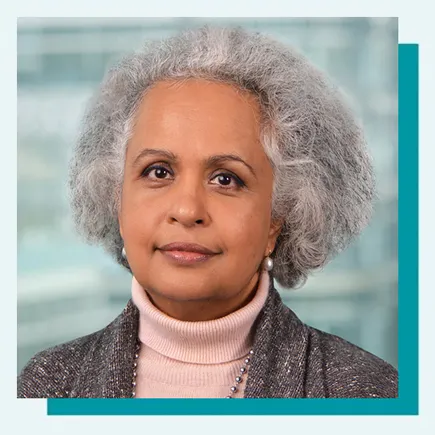
HSBC Holdings plc, Europe’s largest bank by assets, announced a major leadership transition on Thursday, revealing that Group Chief Financial Officer Pam Kaur will step down from her role next year. Kaur, who made history as the first woman to serve as finance chief for the $3.4 trillion-asset global banking juggernaut, will vacate her executive position prior to the bank’s annual general meeting.
In addition to relinquishing her post as CFO, Kaur will not stand for re-election to the HSBC board of directors at next year’s shareholder gathering. However, her departure from the executive suite does not mark an immediate and total severance from the institution. According to regulatory filings and corporate statements, Kaur is slated to transition into a new advisory capacity. Beginning immediately after she steps down from her day-to-day financial duties, she will advise CEO Georges Elhedery on ongoing strategic projects, an advisory tenure scheduled to run through the end of 2028.
The announcement triggers an immediate internal and external executive search as the London-headquartered bank looks to fill one of the most powerful and critical roles in global finance. Kaur’s impending exit represents a high-profile shift within the upper echelons of HSBC, coming amid a sweeping, multi-year transformation of the bank’s operational model, geographical footprint, and executive ranks under Elhedery’s leadership.
Chronology and Career Trajectory
Pam Kaur’s journey to the pinnacle of HSBC’s financial hierarchy spans a distinguished four-decade career across some of the world’s most formidable financial institutions. Before joining HSBC in 2013 as head of internal audit, Kaur accumulated extensive institutional experience with prominent global banks, including stints at Citigroup, Lloyds Banking Group, the Royal Bank of Scotland, and Deutsche Bank.
Upon entering HSBC, Kaur quickly established a reputation for rigorous compliance, acute risk management, and sharp operational oversight. She climbed the corporate ladder within the institution, eventually serving as chief risk and compliance officer—a critical vantage point following complex global regulatory pressures.
Her ascent culminated at the start of 2025, when she was named Group Chief Financial Officer, succeeding Georges Elhedery, who had recently been elevated to the role of CEO. As the first female CFO in the multi-trillion-dollar bank’s history, Kaur assumed the financial reins at a time of profound organizational strategy shifts. Her tenure as CFO, though relatively brief, proved to be intensely active, defined by aggressive capital allocation strategies, cost-reduction programs, and portfolio rationalization designed to streamline the multinational bank.
Under the terms of her transition agreement released Thursday, Kaur will continue to receive her baseline salary, a cash allowance in lieu of pension, and standard executive benefits through September 9, 2027. Furthermore, she remains eligible for annual incentive awards for both the 2026 and 2027 financial years, subject to performance metrics and her specific contributions, with the 2027 award subject to a proration based on her official departure date from the board. Previously deferred executive compensation awards will continue to vest and be disbursed in accordance with their original schedules.
Supporting Data and Financial Performance
Market reaction to Kaur’s departure highlighted the critical operational and symbolic role she played during her brief tenure as finance chief. Edward Firth, a prominent London-based financial analyst at Keefe, Bruyette & Woods, characterized the impending exit as "a bit of a surprise" to the institutional investor community.
Firth pointed to Kaur’s instrumental role in executing the bank’s broader restructuring roadmap. "She has done a good job since being appointed in supporting Elhedery’s restructuring and selling off superfluous parts of the bank, the results of which can be seen in the share price," Firth wrote in a note to clients.
The financial metrics bear out this assessment. Since Kaur ascended to the CFO position at the beginning of 2025, HSBC’s stock value has experienced an extraordinary surge, climbing roughly 125%. This appreciation reflects investor confidence in the bank’s sharpened strategic focus, disciplined cost management, and the successful divestment of non-core, lower-returning international assets.
The bank’s financial health under Kaur’s watch has remained robust. HSBC successfully navigated macroeconomic headwinds, fluctuating interest rate cycles across the globe, and geopolitical frictions, maintaining strong capital buffers well above regulatory minimums. This financial resilience provided Kaur with what she described as an opportune moment to hand over the financial controls to a successor.
Official Responses and Executive Statements
Corporate leadership was quick to praise Kaur’s extensive contributions to the bank, emphasizing her integrity, institutional knowledge, and collaborative partnership with the chief executive.
"With the bank in a strong place, financially and strategically, 2027 feels the right time in my career to embrace new leadership opportunities and apply my experience in a different context," Kaur said in her official statement released Thursday.
HSBC Group Chairman Brendan Nelson lauded Kaur’s long-standing dedication and multifaceted service to the organization over her 14-year tenure. "In her roles in Internal Audit, Risk & Compliance, and Finance, she has demonstrated strong judgment and integrity," Nelson noted. "She will leave the Group CFO role with our deepest thanks and best wishes."
Chief Executive Officer Georges Elhedery, whose partnership with Kaur has defined the bank’s strategic direction over the last two years, expressed gratitude for her financial stewardship and welcomed the news that her institutional wisdom would remain accessible through her advisory role.
"Over the last two years as Group CFO and during her tenure at HSBC, Pam’s deep experience, strong judgment and firm commitment to financial discipline have been invaluable," Elhedery stated. "I am grateful for her support and partnership and am pleased this will continue in her capacity as an adviser on ongoing strategic projects."
Implications for HSBC’s Strategic Future
Kaur’s forthcoming departure marks the latest in a rapid succession of executive shuffles that have characterized a tumultuous and transformative two-year period for HSBC under CEO Georges Elhedery. The leadership landscape at the banking giant has undergone unprecedented reshaping since Elhedery took the helm.
During this brief window, HSBC has welcomed a new group chairman, navigated two distinct leadership transitions at its crucial U.S. banking unit (culminating in the appointment of Lisa McGeough), recruited a prominent private-banking chief from Citigroup (Liu), and pioneered a newly minted artificial intelligence chief executive role to drive technological modernization.
Operationally, the bank has survived intense market speculation and external pressure regarding a potential corporate breakup, ultimately opting for a deep internal reorganization that consolidated regional structures and eliminated redundant management layers while preserving its core global network.
The search for Kaur’s successor carries profound implications for the bank’s trajectory. As HSBC pivots from defensive restructuring and cost-cutting toward sustainable, technology-driven growth, the incoming CFO will be tasked with maintaining strict financial discipline while accommodating investments in digital transformation, Asian market expansion, and wealth management initiatives.
Whether the board selects an internal candidate steeped in HSBC’s unique corporate culture or recruits an external change-agent from a rival global institution, the next finance chief will inherit a balance sheet that is structurally leaner, highly capitalized, and intensely scrutinized by global markets. Kaur’s transition into an advisory role through 2028 ensures that while the executive title changes, a bridge of continuity remains intact for the bank’s most sensitive strategic maneuvers.