From Private Mourning to Public Power: The Unyielding Resistance of the Mothers of Soacha
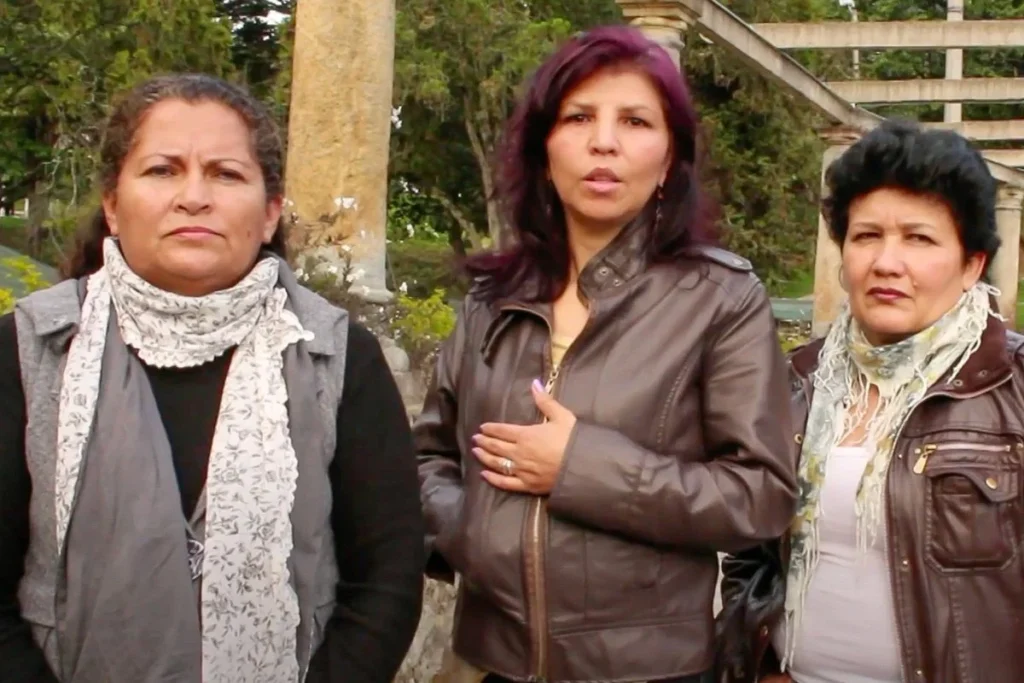
The story of the Madres de Soacha (Mothers of Soacha) is not merely a chronicle of grief; it is a profound study of political metamorphosis. In the early 2000s, a group of Colombian women, previously confined to the domestic sphere, found themselves thrust into the center of a national scandal that would shake the foundations of the country’s democratic institutions. Their struggle to reclaim the truth about their sons—victims of state-sanctioned extrajudicial executions—represents one of the most resilient and transformative social movements in Latin American history.
The Catalyst: The "False Positives" Scandal
To understand the mobilization of these mothers, one must first confront the grim reality of the "false positives" (falsos positivos). This term, a euphemism coined by the press, refers to a systemic practice in which military units murdered impoverished civilians and disguised their bodies as enemy combatants killed in action.
The motivation behind this macabre policy was rooted in institutional pressure. During the "Democratic Security" policy era under the administration of Álvaro Uribe Vélez (2002–2010), military success was measured by combat results. Troops were incentivized with promotions, bonuses, medals, and leave time based on the number of guerrillas they "neutralized." When genuine combat engagements were insufficient to meet these quotas, marginalized young men—often lured from the impoverished municipality of Soacha by promises of legitimate employment—were abducted, executed, and fitted with combat gear to inflate the military’s performance metrics.
Chronology of a Crisis: From Disappearance to Revelation
The emergence of the movement was not instantaneous; it was born of a slow, agonizing realization.
- 2006–2008: Families in Soacha began reporting the disappearance of their sons. Initially, the disappearances were treated as isolated incidents of young men seeking work in distant provinces.
- Late 2008: The grim pattern surfaced. The mothers, who had been searching independently, began to compare notes. They discovered that their sons had been killed hundreds of kilometers away and buried in mass graves as "unidentified combatants."
- 2009: The scandal exploded into the public consciousness. The mothers began organizing, marching with photographs of their sons, and demanding accountability from a government that was initially hostile to their claims.
- 2010–Present: The movement expanded its reach, collaborating with human rights organizations and legal bodies to force the Colombian justice system to confront the systemic nature of the crimes. Their advocacy eventually became a cornerstone of the peace process and the work of the Truth Commission.
Supporting Data: The Scale of State Violence
The "false positives" were not an aberration but a widespread systemic practice. According to the National Center for Historical Memory (CNMH), the Colombian armed conflict, ongoing since 1944, has claimed at least 282,879 lives. The specific phenomenon of extrajudicial executions remains a dark chapter within this broader history.
While military reports frequently claimed these victims were high-ranking guerrilla fighters, the reality was starkly different. The victims were often laborers, students, and in one documented, harrowing case, a young man with a cognitive disability who lacked the capacity to travel, let alone command a criminal organization. The physical evidence found on the bodies—uniforms that were brand-new or boots placed on the wrong feet—provided chilling proof of staged scenes designed to justify cold-blooded murder.
Official Responses and the Culture of Denialism
The response from the state was characterized by initial denial and active stigmatization. When the Mothers of Soacha first raised their voices, they were met with institutional gaslighting. The rhetoric from the highest levels of government was particularly damaging. Then-President Álvaro Uribe infamously remarked in 2008, "They didn’t go to pick coffee; they went there with criminal intent, and they didn’t die the day after they went missing, but a month later."
This statement was more than a political defense; it was a character assassination of the victims and a direct attack on the mothers’ credibility. By framing the young men as criminals, the state sought to justify their deaths and shield the military from scrutiny. This systemic stigmatization served to isolate the mothers, forcing them to navigate a legal system that was structurally designed to protect the perpetrators rather than the victims.
The Politicization of Grief
The transformation of these women from mourning mothers into political actors is a masterclass in the "politicization of grief." In Latin American tradition, the mother is the pillar of the private sphere—the caregiver, the silent keeper of the family unit. When the state stripped these women of their children, it expected them to grieve in silence.
Instead, these women shattered the boundaries of the private sphere. They took their pain into the streets, into the halls of Congress, and into the international courts. By moving their grief into the public domain, they forced the state to recognize the human cost of its "security" policies. This shift was not based on a pre-existing political ideology but on an "affective logic"—the raw, undeniable reality of a mother’s loss.
As one mother famously stated, "The day I don’t speak out about what the government did to us, I feel suffocated. If it isn’t so, what would be the meaning of my son’s disappearance? Seeking justice is the only path that makes sense to walk."
Implications: A Legacy of Resilience
The Mothers of Soacha have fundamentally altered the landscape of Colombian civil society. Their legacy includes:
- Challenging the Dominant Narrative: They effectively dismantled the government’s "security at any cost" narrative, exposing the moral bankruptcy of policies that prioritize statistics over human lives.
- Institutional Reform: Their persistence was a catalyst for the investigations by the Special Jurisdiction for Peace (JEP), which has begun the long, arduous process of holding military officers accountable for extrajudicial killings.
- Global Inspiration: Their struggle serves as a blueprint for maternal activism worldwide. By utilizing symbolic actions, such as the public display of photographs and the occupation of plazas, they have provided a model for how marginalized groups can challenge state power.
Conclusion: The Unfinished Search
The movement of the Mothers of Soacha remains a testament to the power of collective memory. Their journey from the margins of society to the center of national debate proves that even in the face of authoritarian pressure and institutional violence, the persistent search for truth is an insurmountable force.
As they continue to seek justice for their sons, these women remind us that the state’s duty is not merely to maintain order, but to protect the dignity of its citizens. The story of the Mothers of Soacha is not just about the past; it is a warning for the future, highlighting the necessity of constant vigilance in a democracy. Their activism transformed their private sorrow into a public demand for a more just and accountable society, ensuring that the "disappeared" are not merely names in a file, but enduring symbols of a struggle that continues to define modern Colombia.