From Fencing to Financial Freedom: How One Dropout Built a Real Estate Empire in Four Years
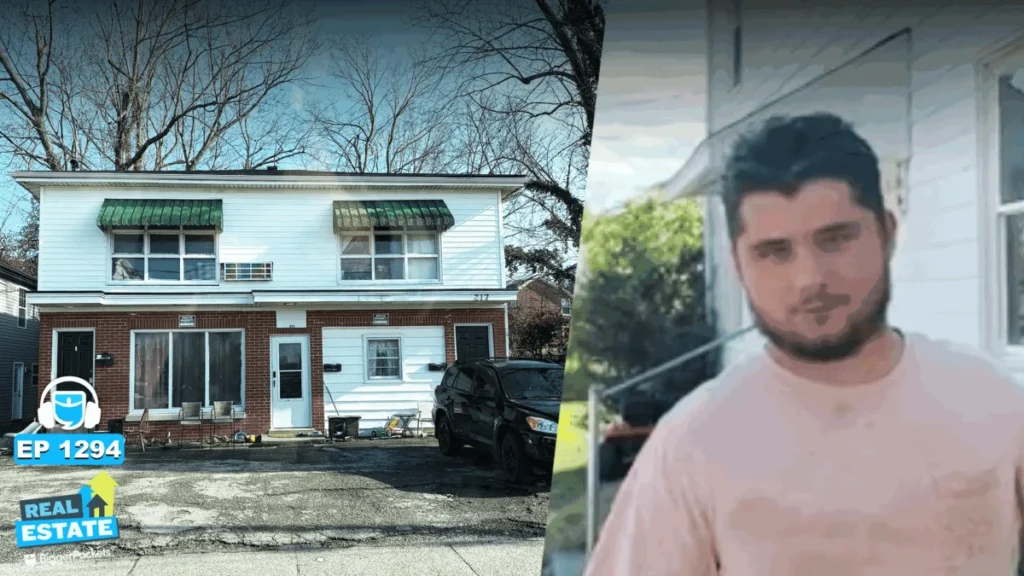
In the landscape of modern personal finance, few narratives are as compelling—or as unorthodox—as that of Britton Eads. Just four years ago, Eads was a high school graduate working a grueling, manual labor job installing fences for $15 an hour. With no college degree, a brief, unsuccessful stint in the electrician trade, and limited professional prospects, he appeared to be on a conventional path toward economic stagnation. Today, he manages a portfolio of over 15 rental units, has successfully replaced his previous labor-intensive income, and holds over $200,000 in equity.
His journey, recently chronicled on the BiggerPockets podcast, serves as a masterclass in the power of decisive action over academic pedigree. While his path was riddled with rookie mistakes—ranging from buying properties sight-unseen to battling burst pipes—Eads’ story highlights a repeatable framework for wealth creation: consistency, networking, and a relentless focus on cash flow.
The Genesis of an Investor: A Shift in Mindset
The turning point for Eads arrived in 2021 when he was 18 years old. While working for his father’s fencing business, he was introduced to Robert Kiyosaki’s seminal work, Rich Dad Poor Dad. The book acted as a catalyst, reframing his understanding of wealth.
"As soon as I read it, I was like, ‘Wow, is it really this easy to go and buy real estate or start a business and not have to work?’" Eads recalled.
Disenchanted with the traditional educational path—having already dropped out of both college and an electrician’s apprenticeship—Eads chose to channel his limited savings into the property market. By December 2022, he had secured his first deal: a $70,000 duplex. It was a purchase defined by raw ambition rather than technical expertise; Eads bought the property without ever walking through it, commissioning an inspection, or verifying the building’s age. It was, as he later admitted, a gamble that could have easily ended in disaster.
Chronology of a Portfolio
Eads’ growth was not linear, but it was aggressive. His portfolio expansion can be categorized into three distinct phases of learning and scaling.
Phase 1: The "Baptism by Fire" (2022)
The initial duplex purchase served as Eads’ real-world classroom. Despite his lack of due diligence, the property was already tenanted, providing immediate, albeit modest, cash flow. After six months of research and listening to educational resources, Eads decided to force appreciation. He secured a $30,000 construction loan to renovate the units—replacing an old claw-foot tub, installing mini-split HVAC systems, and upgrading to LVP flooring. While the appraisal didn’t initially meet his expectations, the move successfully increased the rent from $1,000 to $1,800 per month, cementing his belief in the value-add strategy.
Phase 2: Scaling Through Mentorship (2024)
Following the initial duplex, Eads spent nearly 18 months refining his strategy. During this period, he utilized his personal network—specifically his mother’s professional connection at a local bank—to find a mentor. He was introduced to Hank Ballinger, a seasoned investor with over 800 doors.
Under Ballinger’s tutelage, Eads learned the "1% Rule" (aiming for monthly rents that equal 1% of the purchase price) and the importance of buying in areas that balance cash flow with long-term appreciation. This mentorship paved the way for his second acquisition: a $245,000 fourplex purchased via an FHA loan, which required only 3.5% down.
Phase 3: The Portfolio Leap (2025)
By 2025, Eads was operating with increased sophistication. He identified a distressed triplex and a small cottage listed for $185,000. Recognizing that the property next door was identical and owned by the same individual, he negotiated a deal to acquire both, bringing his total unit count up significantly. By utilizing creative financing—borrowing the down payment from a private investor at 10% interest and cross-collateralizing his loans—he was able to control assets valued at over $500,000 with minimal personal capital.
Supporting Data: The Mechanics of the Deal
Eads’ success is built on fundamental financial metrics. When analyzing his portfolio, several key figures stand out:
- Cash Flow Prioritization: Every property Eads purchased had to show positive cash flow on "day one." This provided the safety net required to weather emergencies.
- Forced Appreciation: By purchasing "ugly" properties—often those with deferred maintenance or poor management—Eads was able to perform targeted renovations that increased the value of the properties significantly above his cost basis.
- The Power of Refinancing: Through a strategic cash-out refinance, Eads pulled out $212,000 in equity. This infusion of capital did not just provide a "win"; it provided the reserves necessary for a business of his size. As Eads noted, he faced $15,000 in emergency repairs in a single month shortly after; without those reserves, he would have been forced to liquidate his assets.
Official Perspective: Lessons in Risk Management
Host Henry Washington, a seasoned investor in his own right, provided a professional assessment of Eads’ methodology. While Washington praised Eads’ "massive action" approach, he cautioned that the beginner-level mistakes—such as skipping inspections—could be catastrophic in a less favorable market cycle.
"What I like about your story is that it was action-based," Washington noted. "I do not love the fact that you didn’t see the property, nor did you get an inspection. If you were to repeat that now in the current market, you would be in a world of hurt."
The consensus between the two investors is clear: while Eads was successful, his reliance on "lucky" outcomes in the beginning was not a sustainable business model. The transition from "gambler" to "investor" occurred only when Eads began prioritizing professional due diligence, such as inspections and meticulous market analysis.
Implications for Aspiring Investors
The implications of Britton Eads’ story for the average person feeling "stuck" in a low-wage job are profound. His trajectory suggests three major pillars for success:
1. The Necessity of Cash Reserves
The most critical takeaway is that real estate is not a "get-rich-quick" scheme; it is a business that requires liquidity. Eads’ ability to survive the burst pipes and broken HVAC units was not due to luck, but due to his eventual realization that cash flow must be reinvested into reserves.
2. Networking as a Multiplier
Eads did not have a massive inheritance or a high-paying salary to fuel his growth. Instead, he leveraged his immediate network—his mother, his bank, and his local real estate community—to find mentors and private lenders. His story underscores that "your network is your net worth."
3. Action Over Analysis Paralysis
Perhaps the most damaging trait in aspiring investors is "analysis paralysis"—the tendency to spend years studying without ever making an offer. Eads’ willingness to make a mistake and then correct it served him better than the years of hypothetical planning that many would-be investors engage in.
Final Thoughts
Britton Eads is no longer the teenager installing fences for $15 an hour. He is a property owner who has successfully navigated the complexities of commercial loans, private lending, and property management. His story serves as a reminder that the barrier to entry in real estate is often psychological rather than financial. By starting with what he had, learning from the inevitable failures, and scaling through prudent cash flow management, Eads transformed his financial reality in the time it takes most students to finish a standard undergraduate degree. For those watching from the sidelines, his message is simple: you don’t need to be perfect to start, you just need to start.