Fed Governor Waller Signals Pivot: Tightening Likely as Inflation Remains Persistent
By Jim Tyson | July 13, 2026
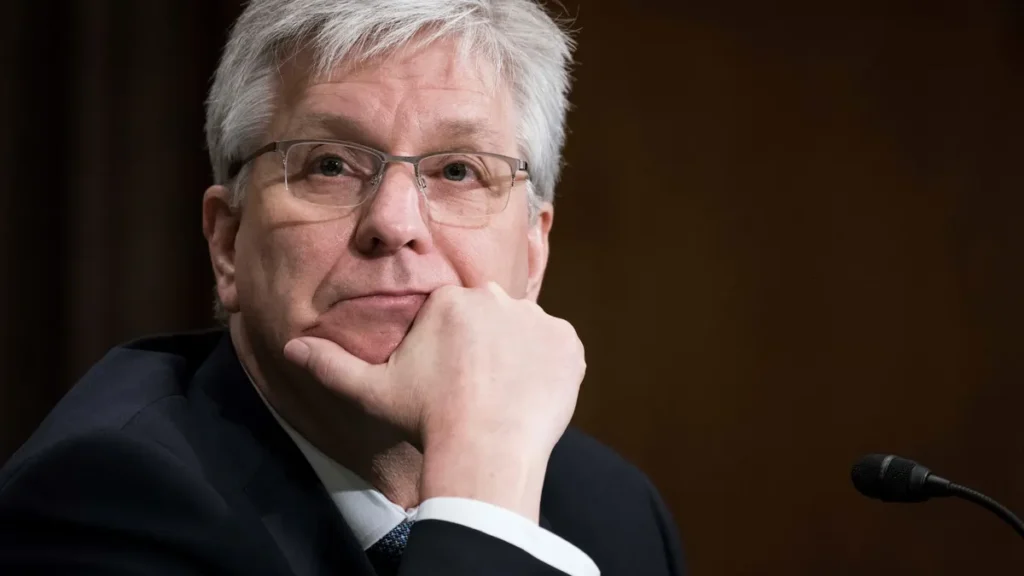
Federal Reserve Governor Christopher Waller has issued a stern warning to financial markets and the broader economy: the central bank’s period of interest rate accommodation is effectively over. In a candid assessment of the current macroeconomic environment, Waller underscored that with the labor market showing resilience and inflation trending upward, the Federal Reserve must pivot toward tighter monetary policy.
“Sternly staring at inflation until it melts before our withering gaze is not an option,” Waller remarked, emphasizing that the Federal Reserve will no longer rely on passive monitoring to address price instability. His comments signal a decisive shift in sentiment among the Federal Open Market Committee (FOMC), reflecting a growing consensus that the era of "transitory" inflation narratives has been replaced by a commitment to proactive intervention.
The Core Mandate: Why the Fed is Shifting Stance
The landscape of U.S. monetary policy has undergone a significant metamorphosis over the past year. Throughout the latter half of 2025, the central bank engaged in a series of rate cuts, trimming the federal funds rate by a quarter percentage point on three separate occasions between September and December. At that time, the rationale was clear: signs of a softening labor market suggested that the economy required a cushion to prevent a potential downturn.
However, recent data suggests that the labor market has regained its footing, maintaining a level of stability that allows the Fed to refocus its efforts exclusively on its primary mandate of price stability. Waller noted that current indicators confirm a "stable and balanced" labor market, effectively removing the primary justification for further monetary easing.
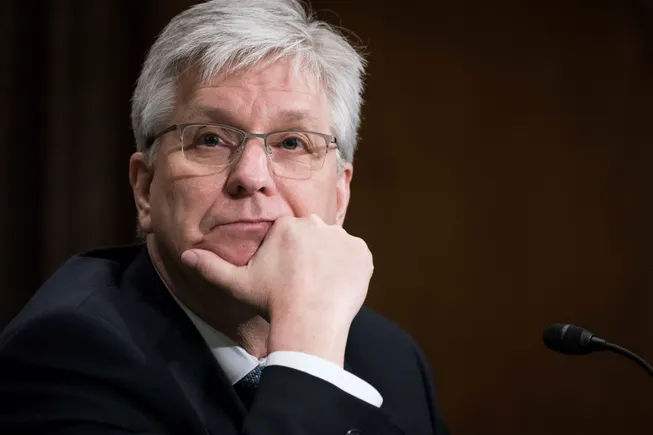
"When inflation is well above its target and the labor market is near full employment and stable, any serious policy rule calls for raising the policy rate to bring down inflation," Waller stated. This framing is a direct challenge to any lingering expectations of further rate cuts, signaling instead that the FOMC is preparing to lean into a restrictive stance to combat the stubborn persistence of core inflation.
A Chronology of the 2026 Inflation Surge
To understand the urgency behind Waller’s comments, one must look at the progression of the economic climate since the start of 2026:
- September – December 2025: The Fed implements three consecutive quarter-point rate cuts, responding to concerns about weakening employment figures.
- January – March 2026: Economic indicators begin to show an unexpected uptick in core price pressures. Contrary to the softening trends observed in 2025, consumer spending remains surprisingly robust.
- April 2026: Geopolitical tensions in the Middle East begin to exert upward pressure on global energy prices, complicating the Fed’s path toward disinflation.
- June 16, 2026: Kevin Warsh takes the helm as the new Federal Reserve Chair. In his inaugural press conference, Warsh emphasizes the central bank’s commitment to curbing price pressures, explicitly signaling an end to the five-year period of above-target inflation.
- July 2026: With the CPI data for June approaching, market participants begin to recalibrate expectations, reflecting a significantly higher probability of a rate hike.
Supporting Data and Market Sentiment
Financial markets have reacted sharply to the evolving rhetoric from the Federal Reserve. According to the CME Group’s FedWatch tool, traders in interest rate futures are rapidly pricing in a more aggressive Fed. As of Monday, the market assigned a 43.3% probability of a quarter-percentage-point rate hike at the next FOMC meeting, scheduled to conclude on July 29. This is a marked increase from the 34.2% probability registered just three days prior.
The primary driver of this market anxiety is the persistence of "core" inflation. While headline inflation—which includes volatile energy and food prices—may show signs of deceleration due to fluctuations in oil prices, the Fed is increasingly focused on the underlying inflationary pressures within the economy.
Waller highlighted that he is particularly "alert to the risk that the increase in core inflation is a sign that inflationary pressures are spreading through the economy." He explicitly cautioned against a repeat of the 2021-2022 policy failure, during which many officials incorrectly characterized rising price pressures as "transitory," leading to a delayed and ultimately more painful response.

Official Responses and Strategic Direction
The current strategy under Chair Kevin Warsh appears to be one of vigilance and corrective action. By acknowledging that inflation is "up this year no matter how you cut it," the leadership is attempting to reset inflation expectations among both businesses and households.
Waller’s comments serve as a clarion call for the FOMC to avoid the pitfalls of past policy errors. By focusing on core inflation—which excludes the volatile components of food and energy—the Fed is signaling that it is looking for a sustained decline in price pressures, not just a temporary dip caused by external factors like fluctuating oil costs.
"The FOMC has to be ready to tighten monetary policy to prevent a repeat of the 2021-to-2022 inflation episode," Waller warned. This suggests that the Committee is willing to risk a slowdown in economic activity if it is necessary to secure long-term price stability.
Implications for the Broader Economy
While the tightening of monetary policy may lead to higher borrowing costs for businesses and consumers, the economic backdrop remains surprisingly strong. Waller pointed to the resilience of household and business spending, noting that the economy has absorbed the shocks of higher goods costs generated by recent trade tariffs and energy price volatility.
The Outlook for Business
For the corporate sector, the shift in interest rate policy implies a higher cost of capital. Businesses that have relied on cheap debt to fuel expansion or maintain liquidity will likely face increased scrutiny from lenders and a higher burden for debt servicing. CFOs are being advised to prepare for a "higher for longer" interest rate environment, which may impact capital allocation strategies and investment horizons.

The Labor Market Paradox
The stability of the labor market is a double-edged sword. While it is undeniably positive for the American workforce, it provides the Fed with the "room" to raise rates without the immediate fear of triggering mass unemployment. By effectively removing the "soft labor market" excuse, the Fed is signaling that the economy is strong enough to withstand a return to more traditional interest rate levels.
The Consumer Impact
For consumers, the most immediate implication is a potential stabilization of purchasing power, provided the Fed succeeds in its goal of curbing inflation. However, in the short term, the cost of credit—ranging from mortgages and auto loans to credit card debt—is expected to rise, potentially cooling the consumer spending that has served as a pillar of economic growth over the last year.
Conclusion: Preparing for the Next Chapter
As the Bureau of Labor Statistics prepares to release the June Consumer Price Index (CPI) data, all eyes remain fixed on the Fed’s next move. Governor Waller’s warning has clearly shifted the narrative from "when will they cut" to "how much will they hike."
The Federal Reserve is clearly signaling that it has learned from the past. By prioritizing core inflation and acknowledging the inherent dangers of delayed action, the FOMC is setting the stage for a more hawkish, proactive era of policy. Whether this approach successfully brings inflation back to the target without stalling the broader economic engine remains the defining question for the remainder of 2026. For now, the message from the Fed is unmistakable: the era of waiting is over, and the era of decisive, data-driven tightening has arrived.