Economic Pressures Mount as Federal Reserve Signals Likely Interest Rate Hike Amid Rising Tariffs and Energy Costs

WASHINGTON — A convergence of intensifying geopolitical conflicts, protectionist trade policies, and persistent domestic inflation has dramatically shifted the macroeconomic landscape in the United States. Federal Reserve officials, confronting an environment where inflation has stubbornly outpaced the central bank’s established 2% target for more than five years, are facing mounting pressure to alter monetary policy. Current economic indicators suggest that policymakers are increasingly likely to raise the benchmark federal funds rate from its present range of 3.5% to 3.75% during their upcoming policy meeting.
The shifting consensus among central bankers reflects a reactive stance to a barrage of external economic shocks. Chief among these are a fresh wave of trade tariffs implemented by the Trump administration and a volatile spike in global energy markets driven by military flare-ups in the Middle East. With domestic labor markets retaining their resilience, the argument that the U.S. economy can absorb higher borrowing costs without tipping into recession has gained considerable traction in Washington boardrooms.
Main Facts
The foundational catalyst for the Federal Reserve’s anticipated pivot lies in a potent mix of surging commodity prices, aggressive trade maneuvers, and a remarkably durable labor market.
- Interest Rate Projections: Following the release of critical consumer price data, financial markets have rapidly priced in a shift in monetary policy. According to CME Group’s FedWatch tool, traders in interest rate futures assigned an 86.5% probability to the Federal Open Market Committee (FOMC) raising the federal funds rate at its September meeting, up sharply from 72.4% just a day prior.
- Energy and Producer Prices: Geopolitical friction, specifically sporadic military engagements between U.S. and Iranian forces, has sent shockwaves through energy markets. Brent crude oil prices surged 18% over a single month to reach $104.96 per barrel. This translated directly into domestic consumer pain: the Bureau of Labor Statistics (BLS) reported that overall energy prices jumped 2.1% in August alone, paced by a 3.9% increase in gasoline and a 10.1% surge in fuel oil.
- Wholesale Inflation: These surging input costs directly impacted the broader economy, pushing the producer price index (PPI) up by 0.4% last month. Economists view this upward pressure on wholesale goods as a direct precursor to persistent elevation in the personal consumption expenditures (PCE) price index—the Federal Reserve’s preferred gauge of inflation.
- Labor Market Resilience: Despite cost-of-living concerns, the American labor market continues to display robust health. U.S. employers added 162,000 jobs last month, while the national unemployment rate held steady at a low 4.1%. This employment strength removes a primary constraint that might otherwise have stayed the Fed’s hand, allowing policymakers to direct their full focus toward their congressional mandate of maintaining price stability.
Chronology of Events
To understand how the U.S. economy arrived at this juncture, it is necessary to trace the sequence of escalating policy decisions, geopolitical incidents, and data releases that have unfolded over recent months:
- Late Spring / Early Summer: Persistent signs that inflation would not quickly retreat to the Federal Reserve’s 2% target began to frustrate central bank traditionalists. Beneath the surface of seemingly stable economic data, underlying price pressures were beginning to build.
- July FOMC Meeting: Internal divisions within the central bank broke into public view. During the Federal Open Market Committee meeting, three regional Federal Reserve bank presidents officially dissented from the decision to hold the benchmark interest rate steady, breaking rank to advocate for an immediate quarter-point increase to cool off the economy.
- Late Summer (Trade and Geopolitics Escalate): President Donald Trump instituted a fresh round of sweeping tariffs, taking direct aim at key trade partners, most notably Canada—the second-largest U.S. trade partner trailing only Mexico. Simultaneously, sporadic armed conflict erupted between U.S. and Iranian forces in the Middle East, violently disrupting international shipping lanes and energy infrastructure.
- Early August: Global crude oil benchmarks began a violent upward trajectory. Brent crude breached the $104-per-barrel threshold, representing an 18% month-over-month increase that immediately threatened transportation, manufacturing, and consumer logistics.
- Mid-August (BLS Data Releases): The Bureau of Labor Statistics published its monthly inflation and employment figures. The data revealed a 2.1% spike in energy costs for August, alongside a 0.4% bump in the producer price index. Concurrently, the jobs report showed the addition of 162,000 jobs and an unemployment rate parked at 4.1%.
- Mid-September: Consumer sentiment indicators published by the University of Michigan revealed a sharp loss of confidence, with households projecting year-ahead inflation to jump from 4% in August to 4.6%. The convergence of these data points culminated in a massive swing in interest rate futures pricing ahead of the scheduled September 15–16 FOMC meeting.
Supporting Data and Market Reactions
The empirical evidence underpinning the pivot toward monetary tightening is visible across multiple economic vectors, capturing everything from raw commodities to consumer psychology.
+-------------------------------------------------------------------------+
|                    KEY ECONOMIC METRICS & DATA POINTS                   |
+------------------------------+--------------------+---------------------+
| Indicator                    | Recent Reading     | Trend / Direction   |
+------------------------------+--------------------+---------------------+
| Brent Crude Oil              | $104.96 / barrel   | Up 18% (1 Month)    |
| Energy Prices (August)       | +2.1%              | Accelerating        |
| Gasoline Prices (August)     | +3.9%              | Accelerating        |
| Fuel Oil (August)            | +10.1%             | Surging             |
| Producer Price Index (PPI)   | +0.4%              | Monthly Increase    |
| Nonfarm Payrolls (Last Month)| +162,000 jobs      | Robust Growth       |
| Unemployment Rate            | 4.1%               | Steady              |
| Fed Rate Hike Odds (Sept 16) | 86.5%              | Up from 72.4%       |
| 1-Year Inflation Expectation | 4.6%               | Highest since June  |
| Long-Run Inflation Sentiment | 3.4%               | Up from 3.3%        |
+------------------------------+--------------------+---------------------+
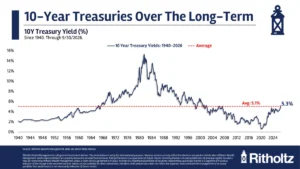
Financial markets have reacted swiftly to these developments. Bond yields have adjusted upward, and equity markets have experienced heightened volatility as institutional investors recalibrate their portfolios for a higher-for-longer interest rate regime.
Furthermore, consumer sentiment has cratered under the weight of these compounding pressures. Joanne Hsu, director of the University of Michigan’s Surveys of Consumers, noted a drastic contraction in household sentiment this month.
"With a resurgence in fuel prices and trade tensions, consumers anticipate greater pressures on their pocketbooks to come," Hsu stated. She pointed out that overall consumer sentiment is now sitting 16% below February levels—prior to the outbreak of the Iran conflict—and stands 13% lower than it was at the same time last year.
Most concerning to monetary policymakers are shifting psychological expectations around inflation. Year-ahead inflation expectations spiked to 4.6% this month from 4% in August, registering the highest reading since June. More critically, long-run inflation expectations—a metric closely monitored by the Fed to prevent wage-price spirals—ticked up to 3.4%, terminating a three-month plateau at 3.3%.
Official Responses and Perspectives
As the Federal Open Market Committee prepares to convene on September 15–16, commentary from economists, regional Fed presidents, and central leadership highlights a growing consensus driven by necessity rather than enthusiasm.
In July, three regional bank presidents broke with consensus to demand rate hikes. While that trio represented a minority at the time, macroeconomic conditions have deteriorated to the point where their cautious stance has become mainstream. Gregory Daco, chief economist at Oxford Economics (or equivalent macroeconomic advisory frameworks), projects that dissent at the upcoming FOMC gathering will be minimal. He anticipates that only one or two policymakers will push back in favor of maintaining borrowing costs at their current levels.
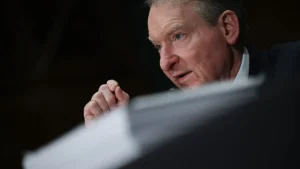
Crucially, Daco suggests that Federal Reserve Chair Kevin Warsh will align with the emerging hawkish majority. Rather than resisting the shift, Warsh "will likely use the cover of the majority to lead from behind and also vote for a hike," according to Daco. By allowing the incoming stream of negative inflation and geopolitical data to force the committee’s hand, the Fed Chair can present a unified front to the markets, signaling that the central bank remains unequivocally committed to anchoring long-term price stability, regardless of political noise or short-term market discomfort.
Implications
The decision to raise interest rates against a backdrop of escalating geopolitical tensions and trade protectionism carries profound implications for the domestic and global economy.
- Borrowing Costs and Credit Markets: For consumers and businesses alike, a rate hike to a range of 3.75% to 4.0% (or higher, depending on the committee’s final language) will immediately translate into costlier credit. Mortgages, auto loans, credit card debt, and corporate commercial lines of credit will reprice upward. This intentional cooling mechanism is designed to suppress consumer demand and business expansion, thereby starving inflation of its momentum.
- The Global Trade and Tariff Fallout: The administration’s aggressive posture on trade—particularly the new round of tariffs levied against Canada and other partners—adds an artificial layer of friction to supply chains. Economists warn that protectionist policies act effectively as a tax on domestic consumers and manufacturers, complicating the Fed’s job by keeping goods prices artificially elevated even as domestic demand slows.
- Geopolitical Vulnerabilities: The sensitivity of the U.S. economy to Middle Eastern skirmishes underscores the persistent vulnerability of domestic energy independence to foreign conflicts. A prolonged standoff with Iran that keeps Brent crude hovering above $100 per barrel ensures that energy costs will remain a stubborn drag on household budgets throughout the autumn and winter seasons.
- Political Ramifications: Raising interest rates ahead of an active political cycle inevitably invites scrutiny and critique from the executive branch and lawmakers concerned about economic growth. However, with consumer inflation expectations breaking out of their former ranges, the Federal Reserve appears to have concluded that the political and economic dangers of inaction—namely, unanchored inflation expectations—far outweigh the short-term pain of higher borrowing costs.
As September 16 approaches, all eyes remain fixed on Washington. The central bank’s upcoming decision will not merely adjust the cost of capital; it will serve as a definitive statement on the limits of monetary policy in an era defined by fractured global trade, volatile energy markets, and stubbornly resilient domestic inflation.