The Digital Ledger: Why Real-Time Expense Tracking is the New Frontier of Personal Finance

In the modern economy, the friction of commerce has all but vanished. With a single tap of a smartphone, a wave of a contactless credit card, or an automated subscription renewal, money leaves our accounts in milliseconds. Individually, these transactions—a morning latte, a ride-share home, a monthly streaming service—seem trivial. Yet, when aggregated, these "micro-purchases" represent a silent, steady erosion of monthly budgets that often goes unnoticed until the bank statement arrives, days or weeks too late to rectify.
For millions of consumers, the traditional "end-of-month review" has become an obsolete practice. By the time a user audits their spending in retrospect, the financial damage is already done. This reality has fueled the rapid rise of personal finance technology, specifically the money tracker app, which aims to shift the paradigm from reactive accounting to proactive financial awareness.
The Psychology of Financial Blind Spots
Financial instability rarely arrives via a single, catastrophic purchase. Instead, it is the product of "death by a thousand cuts"—dozens of small, habitual transactions that, when left unmonitored, aggregate into a significant sum.
Behavioral economists suggest that the lack of "pain of payment" in digital transactions exacerbates this issue. Because we no longer physically hand over cash, the psychological weight of spending is diminished. A money tracker app acts as a digital circuit breaker, forcing the user to confront these transactions in real-time. By providing an immediate, bird’s-eye view of financial activity, these tools help users identify spending leaks before they escalate into structural financial problems.
The Evolution of the Financial Toolkit
Personal finance has transitioned from the leather-bound ledger to the complex spreadsheet, and now, to the automated mobile application. Modern expense tracking software is designed to synthesize vast amounts of raw data into actionable intelligence.
Core Features of Modern Trackers
The most effective platforms go beyond mere record-keeping. They offer:
- Automated Categorization: Utilizing machine learning to sort transactions into logical buckets like "Groceries," "Entertainment," and "Utilities."
- Subscription Monitoring: Identifying recurring charges that may have been forgotten or inflated over time.
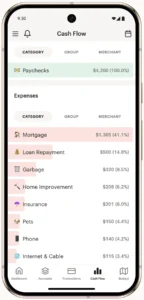
- Visual Analytics: Converting abstract numbers into intuitive charts and graphs that make trends immediately apparent.
- Budgeting Thresholds: Setting real-time alerts that notify users when they are nearing their self-imposed limits in specific categories.
Chronology of Financial Tracking: From Paper to Platform
The history of expense tracking reflects the history of financial technology:
- The Manual Era (Pre-2000s): Consumers relied on checkbooks and handwritten ledgers. While accurate, the manual labor involved meant that compliance was low.
- The Spreadsheet Era (2000–2010): The advent of personal computing allowed for more sophisticated modeling. However, data entry remained a bottleneck, requiring users to manually export and import bank files.
- The API Revolution (2010–2020): With the rise of Open Banking APIs (Application Programming Interfaces), apps could finally "talk" to banks securely, allowing for real-time transaction syncing.
- The Era of Artificial Intelligence (2020–Present): Today, apps like PocketGuard utilize AI to predict future spending, analyze cash flow, and offer personalized financial advice based on historical user behavior.
The Great Debate: Automated vs. Manual Tracking
A significant point of contention among financial planners is whether to automate the tracking process or maintain it manually.
The Case for Automation
For the vast majority of users, automation is the key to consistency. Apps that sync directly with financial institutions reduce the barrier to entry to zero. By eliminating the need for manual data entry, these apps ensure that 100% of transactions are captured, minimizing the risk of "forgotten" expenses. This approach is ideal for those who value efficiency and want a hands-off approach to basic record-keeping.
The Case for Manual Control
Conversely, some financial purists argue that manual tracking is superior for psychological reasons. Entering every purchase by hand creates a "mindfulness" effect—the act of physically recording an expense forces the user to pause and reflect on the purchase. Furthermore, for privacy-conscious users who are wary of providing third-party apps with bank credentials, manual trackers offer a layer of security by keeping financial data entirely local.
Supporting Data: The Impact of Financial Awareness
Recent studies on consumer spending behavior indicate a strong correlation between tracking and net worth growth. According to a survey conducted by the National Foundation for Credit Counseling, individuals who utilize digital budgeting tools report a 25% higher satisfaction rate with their financial situation compared to those who do not.
Furthermore, data suggests that "leakage"—money lost to unused subscriptions and impulse buys—accounts for roughly 10-15% of the average household’s monthly disposable income. Users who adopt a tracking system often report "finding" hundreds of dollars in their existing budget simply by identifying and eliminating these invisible leaks.
Security Considerations: Can You Trust the App?
Perhaps the most significant barrier to the widespread adoption of financial apps is security. Users are rightly cautious about sharing login credentials with third-party software.
Professional financial applications have responded by adopting enterprise-grade security protocols:
- Encryption: Data is encrypted both in transit and at rest, mirroring the standards used by traditional banking institutions.
- Read-Only Access: Most reputable apps utilize read-only tokens, meaning the app can "see" your balance and transactions but cannot move, transfer, or withdraw your funds.
- Multi-Factor Authentication (MFA): Adding a mandatory second layer of verification for app access ensures that even if a device is lost, the financial data remains shielded.
When selecting an application, experts advise users to prioritize platforms that maintain transparent security disclosures and maintain a clear, established track record in the fintech space.
Implications for Financial Health
The primary implication of using a money tracker is the shift from "what happened?" to "what is happening?" When financial data is accessible anywhere—while standing in a coffee shop, browsing an online store, or sitting on the train—it transforms from a static report into a dynamic decision-making tool.
This accessibility encourages "Just-in-Time" financial decisions. If an app notifies a user that they have already hit their "Dining Out" budget for the month, they are significantly more likely to reconsider an unnecessary dinner reservation. This real-time feedback loop is the difference between struggling to save and actively building wealth.
Official Industry Perspectives
Financial experts often emphasize that an app is merely a tool, not a panacea. "The app doesn’t save the money; the user does," notes a leading financial analyst. "The technology provides the clarity. Once you see the patterns, you are empowered to change them. The most successful users are those who treat their app like a dashboard, checking it briefly but consistently to stay aligned with their long-term objectives."
Industry leaders in the sector, such as PocketGuard, focus on the concept of "In My Pocket"—a metric that calculates exactly how much spendable income a user has after accounting for bills, goals, and necessities. This simplifies the complex web of personal finance into a single, understandable number, reducing the anxiety often associated with money management.
Conclusion: Moving Beyond Restricted Spending
There is a common misconception that tracking expenses is a restrictive, joyless endeavor. In reality, the opposite is true. By identifying and cutting unnecessary costs, users often find they have more freedom to spend money on the things that truly matter to them.
Expense tracking is the art of alignment. It is the process of ensuring that your daily outflow of cash matches your long-term personal and financial goals. Whether you prefer the convenience of an automated, bank-synced platform or the meditative practice of manual entry, the objective remains the same: to gain control.
As we move further into a digital-first economy, the question is no longer if you should track your spending, but how. By leveraging modern technology to shed light on our financial habits, we can transform our relationship with money, moving from a state of uncertainty to one of confidence and intentionality. The sooner you begin, the sooner you gain the clarity required to build a sustainable, prosperous financial future.