Beyond the Property: How One Investor Turned a Flooded "Hoarder House" into a Scaling Real Estate Empire
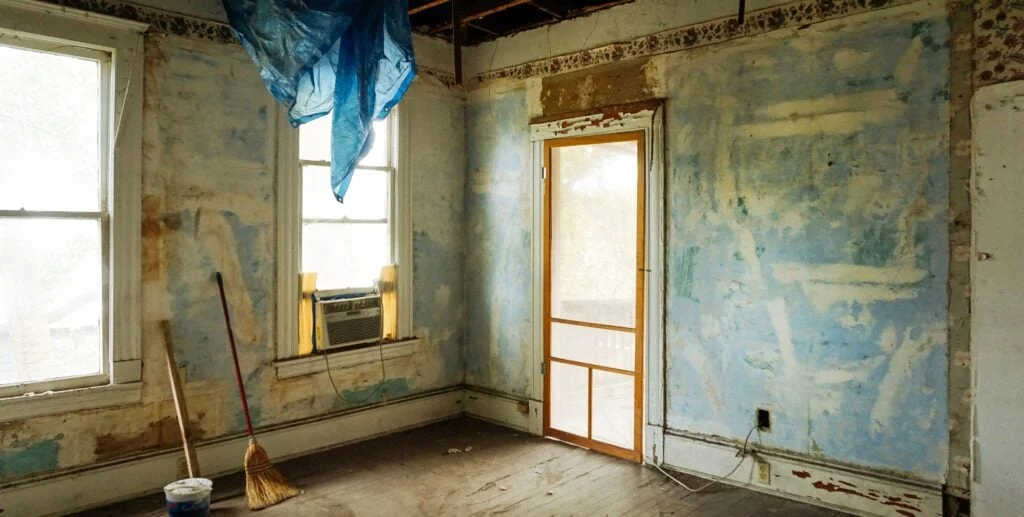
In the high-stakes world of real estate investing, the final walkthrough is meant to be a formality—a final confirmation that the house you’ve spent weeks negotiating for is exactly as you left it. For Bogdan, an out-of-state investor looking at a property in Warren, Michigan, that formality turned into a crisis. As he and his agent walked through the house, they discovered a burst pipe had flooded the residence, creating a scene of sodden drywall, standing water, and immediate, costly damage.
To the novice, a flooded house is a reason to run. To the seasoned professional, it is merely a new variable in an equation. Rather than backing out of the deal, Bogdan did something that caught his team off guard: he asked for a further discount. That decision—to treat a disaster as a negotiation point—is the defining characteristic of his transition from a stressed, commuting professional in New York to a full-time, independent real estate mogul in metro Detroit.
The Catalyst: Reclaiming the Minutes
Bogdan’s journey did not begin with a desire for a massive empire, but with a desire for time. Like many, he found himself trapped in the soul-crushing cycle of a high-pressure 9-to-5 job coupled with a grueling two-to-three-hour daily commute in New York.
"I say freedom and not financial freedom, because freedom is not money," Bogdan reflects. "It’s the extra minutes you get to spend with your son, your wife, and your family, learning new things and traveling."
He realized that the pursuit of a traditional career trajectory was costing him his life’s most non-renewable resource: time. Real estate emerged not just as an asset class, but as a vehicle for reclaiming his schedule. He began to view his portfolio as a business operation, one that, if built correctly, could eventually run with enough autonomy to free him from his W-2 obligations.
Chronology: From Nashville Condo to Detroit Scale
Bogdan’s path to 20 doors was not a straight line. It was a calculated, multi-stage evolution that prioritized education and infrastructure over aggressive acquisition.
Phase 1: The Foundation (Learning the Landscape)
Before committing significant capital, Bogdan understood that out-of-state investing requires a bridge. Having previously owned a condo in Nashville, he understood the basics of remote management, but he knew that scaling in a new market required local expertise. He leveraged the BiggerPockets platform to identify top-tier investor-friendly brokers, eventually connecting with the FIRE Realty Team in metro Detroit.
Under the guidance of team lead Joe Hammel and agent Richi Brown, Bogdan spent three months in a rigorous "learning phase." He studied neighborhood demographics, rental yields, governing regulations, and the specific nuances of Michigan’s housing laws.
Phase 2: The Turnkey Experiment
Bogdan started with "turnkey" properties—fully renovated homes with tenants already in place. This allowed him to gain exposure to the market with lower risk. However, he quickly realized that while turnkeys provided a steady learning ground, they were inefficient for long-term wealth building. The margins were thin, and the capital was tied up in a way that prevented rapid scaling.
Phase 3: The BRRRR Pivot
The transition to the BRRRR method (Buy, Rehab, Rent, Refinance, Repeat) was the turning point. By recycling his capital rather than deploying fresh cash for every new unit, Bogdan was able to increase his velocity. He liquidated his New York and Nashville assets, funneled the proceeds into his Michigan operations, and began managing his own rehab projects with a meticulous eye for detail.
Supporting Data: The Three-House Comparison
To understand the discipline behind Bogdan’s strategy, one must look at his selection process. At one point, he had three distinct investment opportunities on his radar:
- The $40K "Shell": A 950-square-foot, three-bed, one-bath house on a corner lot. It appeared profitable on paper, but a physical inspection revealed deep structural issues. The cost to repair would have exceeded the potential ARV (After Repair Value), making it a "trap" deal.
- The $72K "Hoarder House": An 870-square-foot, three-bed, one-bath house with a garage and basement. Despite being packed with debris and requiring heavy aesthetic work, the structural integrity was sound, and the location was prime.
- The $130K "Keeper": A turn-key, 1,000-square-foot, three-bed, two-bath house in Eastpointe. It was already tenant-occupied and required zero work, but the upside was capped due to the higher entry price.
Bogdan opted for the $72K "hoarder house." By choosing the mid-tier option, he balanced the need for forced appreciation (via renovations) with a location that guaranteed long-term rental demand.
Official Perspective: The Team’s Role
Richi Brown, the agent who brokered the deal, notes that investors often misunderstand the nature of the business. "Most investors approach real estate with the wrong expectations," Brown says. "They think that because they underwrote a deal and made it ‘pencil out’ on a spreadsheet, the money will naturally follow. The reality is that identifying the deal is the easy part. Executing the deal is where the money is made."
Brown emphasizes that Bogdan’s success stems from his willingness to treat real estate as a business rather than a passive investment. When the pipes burst during the final walkthrough, most investors would have panicked or walked away. Bogdan, however, trusted his team and his own underwriting. By renegotiating the price to account for the new water damage, he essentially received a discount that paid for the repairs and increased his equity position.
Implications: The Hard Truth of Scaling
The implications of Bogdan’s journey are clear for any aspiring investor: success is not found in the "easy" deals. It is found in the management of the "hard" deals.
The Human Element of Operations
Bogdan’s path was not without its own set of trials. In his first year, he went through three to five property management companies before finding a partner who met his standards. He cycled through even more contractors. This, however, is exactly what he considers the "work." He wasn’t just buying houses; he was building a supply chain. By bringing the management of his operations in-house, he was able to cut the friction that typically erodes margins for out-of-state investors.
The "20 Doors" Goal
With his W-2 job now a thing of the past, Bogdan is currently on track to hit his goal of 20 doors by the end of 2026. He is currently employing a dual-strategy approach:
- The Heavy Lift: Finding distressed properties where he can maximize ARV through significant sweat equity.
- The Efficiency Play: Identifying tenant-occupied properties in strong markets that can be purchased below market value and improved with minimal, targeted work.
Conclusion: Lessons for the Modern Investor
Bogdan’s story is a blueprint for the "slow and steady" investor. By refusing to rush into the market, by building a team before building a portfolio, and by maintaining a flexible, business-first mindset, he has successfully transitioned from a stressed commuter to a master of his own time.
"Rome wasn’t built in a day," Bogdan says, "and I guarantee no real estate portfolio was built overnight."
The burst pipe in Warren, Michigan, serves as a metaphor for the entire journey. Every deal will have its unexpected leaks, its sudden floods, and its unforeseen expenses. The investors who "tap out" are the ones who view these events as obstacles. The investors who "make it"—like Bogdan—view them as costs of doing business, leverage for better pricing, and, ultimately, the dues paid on the road to true, lasting freedom.