Beyond the Horizon: Why Ukraine’s Drone Revolution is Only Part of the Victory Puzzle
By Yuriy Gorodnichenko, Viktor Koziuk, and Ilona Sologoub
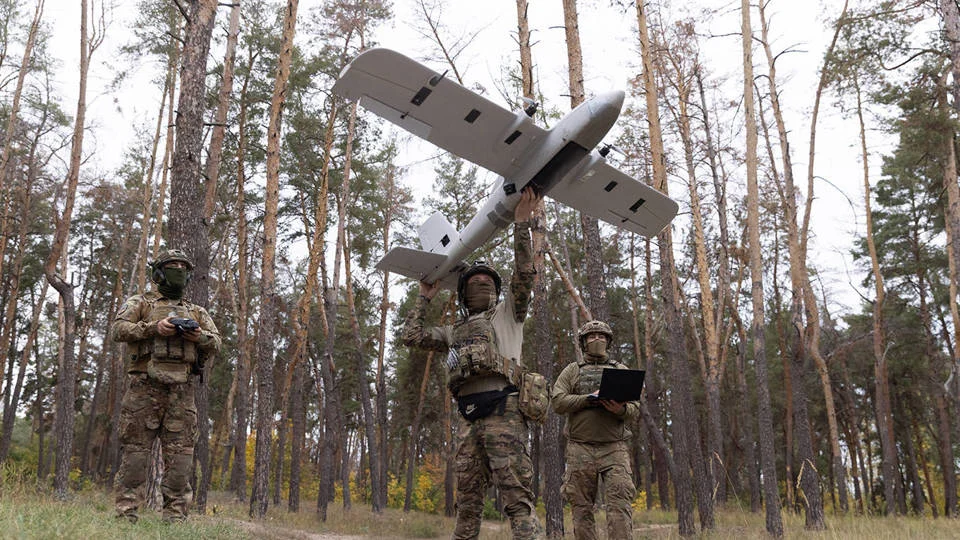
BERKELEY/KYIV — In the high-stakes theater of modern warfare, few phenomena have reshaped the battlefield as rapidly or as decisively as the democratization of aerial combat technology in Ukraine. In recent months, Ukrainian-made unmanned aerial vehicles (UAVs) have systematically struck dozens of critical sites deep within Russian territory, meticulously targeting the Kremlin’s oil refineries, sprawling weapons manufacturing plants, and vital logistics hubs.
Yet, as NATO leaders convene in Ankara this week to deliberate on the future of trans-Atlantic defense and rearmament, a sobering reality must temper the enthusiasm for this technological marvel: while Ukraine has pioneered a world-leading military technology sector to defend itself against a significantly larger aggressor, drones alone will not end the war.
The Evolution of Necessity: A Chronology of Innovation
If necessity is the mother of invention, Ukraine’s current defense industrial base is Exhibit A. The journey from a fledgling, volunteer-driven hobbyist movement to a state-integrated military juggernaut has been as rapid as it has been harrowing.
2014–2016: The Reconnaissance Era
When Russia first violated Ukrainian sovereignty in 2014, the use of drones was rudimentary. They were largely off-the-shelf civilian quadcopters, used primarily for basic reconnaissance and artillery spotting. Production was fragmented, localized, and largely ignored by the official state procurement apparatus.
2017–2021: The Seedbed of Strategy
During the years of the "frozen" conflict in the Donbas, Ukrainian firms began experimenting with more robust models. While production remained limited and civilian-focused, this period saw the emergence of a domestic talent pool—engineers, software developers, and hobbyists who would later form the backbone of the "Army of Drones" initiative.
2022–2024: The Scaled Offensive
The full-scale invasion of February 2022 served as the ultimate stress test. Under the pressure of existential threat, the gap between civilian innovation and military requirement collapsed. The Ukrainian government launched the "United24" initiative, which streamlined procurement and created a sandbox for drone manufacturers to test their products in live combat.
2025–Present: Deep-Strike Capability
Today, the war has entered a phase of technological attrition. Ukraine is no longer just defending its front lines; it is projecting power thousands of kilometers into the Russian interior. By targeting the economic lifeblood of the Russian war machine—the oil and gas infrastructure—Ukraine has successfully turned the drone into a strategic instrument of economic warfare.
The Data Behind the Dominance
The efficacy of Ukraine’s drone campaign is not merely anecdotal; it is quantified by the strain placed on the Russian military-industrial complex.
Strategic Impact Metrics
- Economic Degradation: Independent energy analysts suggest that Ukrainian drone strikes on Russian refineries have reduced total processing capacity by nearly 15%. This has led to domestic fuel shortages in several Russian regions and increased the volatility of oil prices on the global market.
- Logistical Disruptions: By hitting rail hubs and ammunition depots, Ukraine has forced the Russian military to push its supply lines further back, increasing the "last mile" cost of transporting munitions to the front.
- Cost-Benefit Asymmetry: A long-range, one-way attack drone (OWA-UAV) costs a fraction of the price of the anti-aircraft missile systems Russia must use to intercept them. This economic imbalance forces Moscow to make impossible choices regarding which assets to protect and which to leave vulnerable.
The NATO Comparison
As NATO leaders meet in Ankara, they are looking at a procurement model that is vastly different from their own. Western defense procurement is often characterized by long-cycle development, high-cost platforms, and stringent bureaucratic oversight. Ukraine’s model, by contrast, is defined by:
- Iterative Development: The "fail fast, learn faster" approach where drones are updated weekly based on field feedback.
- Decentralized Production: Thousands of small workshops across the country make it impossible for Russian missile strikes to decapitate the entire industry.
- Cross-Sector Collaboration: The integration of civilian tech giants into the defense supply chain.
Official Responses and Global Implications
The success of these programs has prompted varied responses from the international community.
The View from Kyiv
Ukrainian officials emphasize that while the domestic drone industry is a triumph of human ingenuity, it is insufficient to overcome the sheer volume of Russian manpower and artillery. "The drone is our eyes and our surgical blade," a senior official in the Ministry of Digital Transformation remarked. "But you cannot hold a village with a camera, and you cannot stop an armored column with a plastic frame. We need the heavy metal—artillery, air defense, and armored vehicles—that only our partners can provide."
The NATO Perspective
In Ankara, the conversation is shifting toward "interoperability of innovation." NATO is studying how to integrate the "Ukrainian experience" into their own defense planning. The fear is that if NATO does not adapt its procurement cycles to match the speed of modern technological evolution, they will remain perpetually one step behind in a future peer-level conflict.
The Russian Reaction
Moscow has responded with a combination of intensified electronic warfare (EW) and localized production. However, Russian attempts to replicate the Ukrainian model have been hampered by systemic corruption, bureaucratic rigidity, and the "siloing" of technical information, which prevents the same level of rapid, iterative improvement seen on the Ukrainian side.
The Strategic Reality: Why Drones Are Not Enough
While the drone revolution is a testament to the resilience of a sovereign nation under fire, it is a mistake to view these systems as a "silver bullet."
The Limitations of UAV Warfare
- Terrain and Weather: Drones are highly susceptible to weather conditions, including high winds and heavy precipitation, which can ground an entire fleet for days.
- The EW Arms Race: Electronic warfare is constantly evolving. As drones become more sophisticated, so do the jammers and "spoofing" technologies deployed to down them. This creates a perpetual cycle of technological leapfrogging that drains resources.
- Territorial Control: No drone, no matter how advanced, can occupy a city, clear a trench, or provide the psychological deterrent of a tank battalion. The fundamental nature of war—the occupation and control of territory—remains a task for conventional, mechanized forces.
Looking Ahead: The Future of Conflict
The lessons from the Ukrainian theater are clear: the future of warfare is a hybrid of the industrial age and the digital age.
For Ukraine, the immediate challenge is to integrate these drones into a combined-arms strategy. Drones must act as a force multiplier for, not a replacement of, traditional military assets. For NATO, the challenge is institutional. To survive the next generation of warfare, the Alliance must find a way to merge its immense capital and industrial capacity with the agile, decentralized, and rapid innovation cycles that Ukraine has so successfully pioneered.
As the summit in Ankara concludes, the takeaway should be one of guarded optimism. Ukraine has provided the world with a blueprint for how a technologically savvy, motivated force can hold back a superior adversary. But as the war continues, the world must recognize that while innovation can level the playing field, only sustained, large-scale support of conventional capabilities will ensure the final, decisive victory.
The drone has changed the battlefield, but the war—and the peace that will eventually follow—will be decided by the commitment of the international community to provide the full spectrum of tools necessary for a sovereign nation to reclaim its borders.