Beyond the Crisis: The Deep Roots and Future of Collective Care Infrastructure

In the face of intensified immigration enforcement and the widening reach of state surveillance, a quiet but profound transformation has taken hold in communities across the United States. When U.S. Immigration and Customs Enforcement (ICE) agents began escalating raids, the response was not merely reactive; it was an activation of long-dormant—or rather, long-sustained—networks of care. Neighbors organized rapid-response systems almost overnight, mutual aid funds saw surges in grassroots donations, and community members meticulously mapped resources: who could shelter, who could transport, and who could interpret.
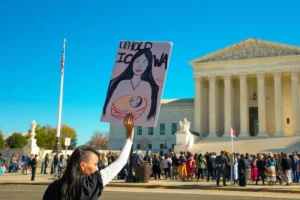
As the call to abolish ICE moves from the fringes of political discourse to the mainstream—with polling indicating that 50 percent of U.S. adult citizens now support the agency’s dissolution—it is critical to recognize that this is not a sudden emergence of new tactics. Rather, it is the visible manifestation of a deep, historical lineage of abolitionist practice and collective care infrastructure.
A Chronology of Care: From Survival to Systematic Resistance
The infrastructure currently protecting marginalized communities did not spring into existence in response to recent raids; it is the culmination of decades of political evolution.
- The 1960s and 70s: The foundation was laid by Black, Indigenous, and Latine feminist movements. The Black Panther Party’s free breakfast programs, the Young Lords’ health clinics, and the American Indian Movement’s community safety patrols demonstrated that collective care was a political act of sovereignty. During this era, Black feminist organizers, such as those in the Combahee River Collective, established safe-house networks using signals like green porch lights to protect women from gender-based violence that law enforcement ignored.
- The 1980s and 90s: The tradition of sociedades mutualistas (mutual aid societies) continued to flourish within Mexican American communities, providing financial and social support that formal state institutions failed to provide.
- The 2010s: Following the formation of INCITE! Women of Color Against Violence, the vocabulary of "healing justice" began to permeate activist circles. These groups articulated a framework where the safety of the community was divorced from the presence of the state.
- 2020 Uprisings: The national protests against police violence served as a crucible for abolitionist organizing, providing the organizational groundwork that anti-ICE networks are utilizing today.
- 2026–Present: Rapid response networks, pod-mapping, and bond funds have become standard, essential components of community defense, scaling up in response to the current federal climate.
Supporting Data: The Scope of the Abolitionist Shift
The shift in public sentiment is quantifiable. According to an Economist/YouGov poll conducted in March 2026, support for abolishing ICE reached the 50 percent mark. This statistic is not merely an ideological data point; it reflects a growing public awareness of the "symbiotic relationship" between local policing and federal immigration enforcement.
Data from the New York Civil Liberties Union and other watchdog groups highlights why this sentiment has grown. In cities like New York and Washington, D.C., the deployment of "jump-out" squads, the widespread use of stop-and-frisk, and the enforcement of curfews on youth have created an environment where policing is increasingly viewed as a tool of social control rather than a mechanism for safety. When immigrant justice movements track ICE vehicles, they are not only avoiding deportation; they are navigating a geography of state violence that has historically targeted Black and Brown neighborhoods.
The Symbiosis of Policing and ICE
The argument for abolition is rooted in the history of American policing, which traces its origins to slave patrols and the systemic racial control of the 19th century. Modern "collaboration" between local sheriff departments and ICE is the contemporary continuation of this legacy.
In Chicago, for example, research suggests that when police are deployed to "manage" protests against ICE, they are subsequently redirected into Black neighborhoods, resulting in increased arrests of youth and sex workers. This creates a feedback loop: the state uses the excuse of "order" to ramp up policing, which then produces more criminalization.

Consequently, for many communities, calling the police is not an option; it is a threat. As a result, alternative safety systems—such as walking immigrant children to school, delivering food to homebound families, and facilitating restorative justice circles in Florida—are not auxiliary services. They are the primary, essential infrastructure for survival.
Implications for Philanthropy and Policy
The current moment presents a critical juncture for the philanthropic sector. Historically, funding follows a "boom and bust" cycle: a crisis occurs, money floods the most visible organizations, and then, as media attention wanes, funding evaporates.
This model is fundamentally incompatible with the reality of movement building. The organizations that sustain these crises are often small, under-resourced, and led by the very people who have been historically marginalized: queer, trans, Black, Indigenous, and Latine women and femmes.
Redefining Sustainability
Philanthropy must pivot from treating collective care as an "emergency response" to recognizing it as essential community infrastructure. This implies three fundamental shifts:
- Long-Term Investment: Moving away from short-term project grants toward flexible, multi-year funding that allows organizers to maintain their physical and mental health.
- Resource Recognition: Acknowledging that the people building safety outside the state are the architects of the movement, not merely the volunteers. Funding must flow directly to these grassroots hubs.
- Abolitionist Literacy: Philanthropic institutions must understand the historical lineage of the tools they are funding. Supporting a bond fund without understanding the abolitionist philosophy behind it risks stripping the work of its transformative power.
Conclusion: The Political Imagination
Collective care is more than just a survival strategy; it is an act of "political imagination." By building systems that provide safety without relying on the police, communities are demonstrating that a different future is possible.
The infrastructure that supports these movements—from pod-mapping to healing circles—is deeply feminist, intersectional, and rooted in a history of resistance that spans generations. As we look toward the future, the challenge for both activists and donors is to prevent the erasure of these architects. We must ensure that the funding and the power remain where they have always been: with the people who, in the absence of state protection, have built a world where they can protect one another.
The infrastructure exists. The question remains whether those with the resources to sustain it will finally choose to see it for what it truly is: the foundation of a more liberated society.