Beyond the Ballot: Why Proportional Representation Could Be the Key to Reconstructing American Democracy

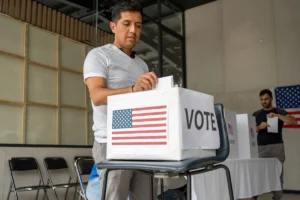
In an era defined by political polarization, legislative gridlock, and a growing sense of disenfranchisement among the American electorate, the foundations of the U.S. democratic experiment are under unprecedented strain. As the nation approaches the upcoming midterms, the electoral map—once a fluid landscape of competitive districts—has become a rigid grid of predetermined outcomes. With only a handful of House seats considered "toss-ups," the American voting process increasingly resembles a closed loop.
However, amidst the gloom, a growing chorus of scholars, advocates, and philanthropic leaders is pointing toward a potential structural solution: proportional representation. By moving away from the "winner-take-all" model that has historically dominated U.S. politics, proponents argue that we can neutralize the destructive power of gerrymandering, break the two-party duopoly, and finally ensure that government reflects the will of the people.
The Shrinking Map: The Reality of Modern Gerrymandering
The current state of American elections is not merely the result of natural political sorting; it is the product of deliberate, systemic design. Over the past 18 months, the landscape has been reshaped by aggressive redistricting efforts, accelerated by a significant shift in legal precedent.
The turning point arrived in April with the Supreme Court’s decision in Louisiana v. Callais, which effectively gutted Section 2 of the Voting Rights Act. The impact was immediate. State legislatures, particularly across the South, moved with speed to redraw congressional maps, often dismantling majority-Black districts in the process. Tennessee’s rapid partitioning of Memphis and the consolidation of Louisiana’s remaining majority-Black district into a single corridor from New Orleans to Baton Rouge serve as stark case studies.
When these recent changes are added to the aggressive gerrymandering cycles previously seen in Texas, North Carolina, Florida, Ohio, and beyond, the math becomes clear: more than 25 percent of all congressional seats have been redrawn in the middle of a single decade. For millions of Americans, the result is a profound sense of alienation. When districts are engineered to ensure safe seats, the general election becomes a formality, and the power of the individual vote is effectively neutralized.
Chronology of a Crisis: How We Got Here
The erosion of competitive democracy did not happen overnight. To understand the current climate, one must look at the progression of electoral degradation:
- Pre-2020s: A steady increase in partisan polarization driven by demographic sorting and early, sophisticated digital gerrymandering.
- 2020–2023: A period of aggressive redistricting following the 2020 Census, where both parties utilized new data-modeling tools to solidify regional strongholds.
- April 2026: The Supreme Court’s ruling in Louisiana v. Callais removes the "effects" standard from the Voting Rights Act, providing a legal green light for state legislatures to redraw maps with minimal oversight regarding racial equity.
- Late 2026: The current electoral environment, characterized by the lowest number of competitive House districts in modern history—roughly 20 out of 435—marking a new low in American political competition.
The Choice: Restoration vs. Reconstruction
As the system falters, there is a natural, almost visceral impulse to "restore" what was lost. Restoration involves repairing broken norms, restaffing hollowed-out agencies, and returning to a sense of pre-crisis normalcy. For many, this feels like a victory.
Yet, a growing coalition of thinkers, including Sabeel Rahman and the Reconstructing Democracy Project, argues that restoration is insufficient. The critical question posed by these reformers is whether the American democratic system—specifically the "winner-take-all" electoral design—ever truly functioned for the majority of the population.
If the goal is a system where the majority opinion translates into legislative action, restoration is a trap. It seeks to fix the house while ignoring the fact that the foundation is cracked. Reconstruction, by contrast, requires the courage to implement systemic change—often before such change feels "realistic" to the political establishment. It requires blueprints, legislative language, and coalition building that must be finalized long before a "governing window" actually opens.

The Case for Proportional Representation
At the heart of the reconstruction movement is the push for proportional representation (PR). In a PR system, districts are larger and elect multiple representatives. If a party wins 50 percent of the vote, they win roughly 50 percent of the seats. If they win 30 percent, they get 30 percent.
The argument for this shift is gaining momentum among legal scholars and political scientists. In July, over 500 experts signed a letter organized by Protect Democracy, urging Congress to move toward proportional systems. The core logic is simple: if you make the outcome of a district proportional, the incentive for gerrymandering vanishes. When a minority party is guaranteed a share of representation, the payoff for drawing hyper-partisan lines disappears.
Supporting Data and Real-World Evidence
- Diversity and Inclusion: Evidence from Portland, Oregon—which adopted proportional representation in 2022—shows that the system can lead to more diverse legislative bodies. The city saw its first racially diverse and gender-balanced council in decades, fueled by a record number of candidates from underrepresented backgrounds.
- Minority Representation: Research by Nicholas Stephanopoulos for Protect Democracy suggests that minority-preferred candidates often win more seats under proportional systems than they do under single-member district maps, which are often susceptible to being "packed" or "cracked" by hostile mapmakers.
- Reduced Polarization: By eliminating the "safe seat" phenomenon, candidates are forced to appeal to a broader base of voters rather than just the most extreme elements of their party’s primary electorate.
Philanthropy’s Role: The Engine of Reform
If there is a path forward, it requires sustained, long-term investment. Unlike political campaigns that are tied to election cycles, philanthropy has the unique ability to fund "ideas that take time."
The Democracy Fund, along with organizations like FairVote, More Equitable Democracy, and the Lani Guinier Project at Harvard, are currently building the research and advocacy base necessary to make PR a viable national platform. This is not a partisan endeavor. Proportional representation would theoretically increase Republican representation in blue strongholds and Democratic representation in red ones, ultimately giving millions of voters a reason to engage in the electoral process again.
Philanthropy must now pivot from merely funding defensive measures to investing in the "narrative work" and "blueprint development" of systemic reform. As Joe Goldman, President of the Democracy Fund, suggests, hope in this context is not a mood—it is a proactive stance. It is an obligation to act in the face of uncertainty.
Implications for the Future
The implications of ignoring this moment are clear: continued slide toward authoritarianism, increased polarization, and the eventual loss of faith in the democratic process. However, the opportunity for reconstruction is equally significant.
Whether the window for change opens in three years or ten, the work of building a more equitable democracy must begin now. It requires looking at the horizon—not just to watch for the threats that might materialize, but to ensure that when the opportunity for reform finally presents itself, we have a fully developed, ready-to-implement vision for a more representative government.
By de-emphasizing the winner-take-all mentality, the United States has the chance to evolve into a democracy that reflects the true diversity and complexity of its people. The tools are available; the research is mounting; and the necessity is undeniable. The only remaining question is whether those with the power to influence the future will have the courage to start building the new foundation before the old one completely gives way.