AICPA Presses IRS for Clarification on Generative AI Billing Guidelines, Arguing OPR Stance Ignores Modern Value-Pricing and Implementation Realities
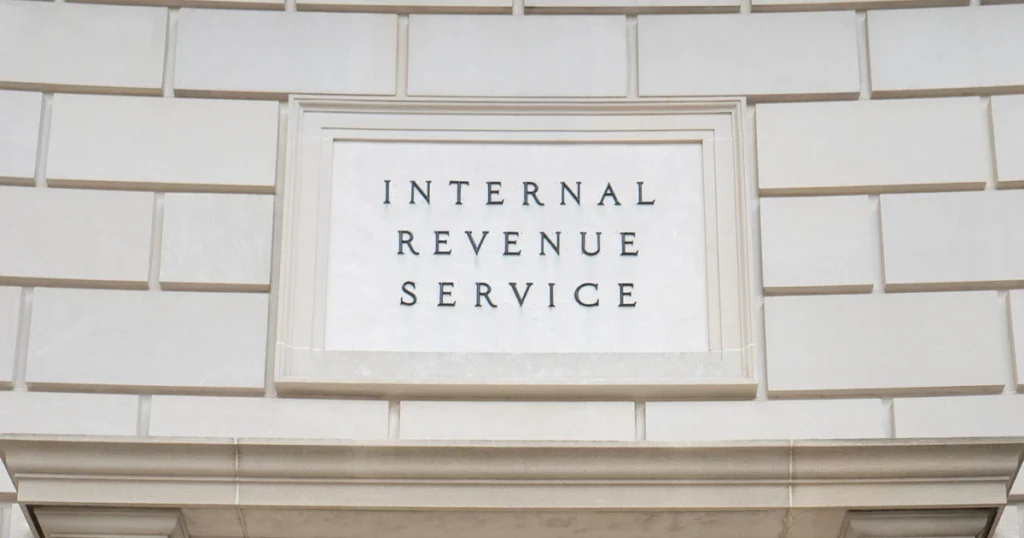
WASHINGTON — The American Institute of CPAs (AICPA) has formally engaged with the Internal Revenue Service (IRS) to seek urgent clarification regarding recent federal guidance that suggests tax practitioners must directly pass artificial intelligence-related cost savings on to their clients. According to the nation’s premier organization representing certified public accountants, the language issued by the IRS Office of Professional Responsibility (OPR) fails to account for the complex financial realities of technology adoption, modern value-based billing structures, and the immense liability and risk assumed by accounting professionals.
The dispute highlights an intensifying collision between traditional regulatory interpretations of ethical billing and the rapid, capital-intensive integration of generative artificial intelligence (AI) within the accounting and tax advisory sectors.
Main Facts
The controversy stems from introductory guidelines released by the IRS Office of Professional Responsibility in June. Designed to outline responsible AI use in federal tax practice, the OPR guidelines advise practitioners who leverage generative AI tools to translate the resulting efficiencies—specifically reduced research and drafting time—into billing practices that benefit the client.
Citing Circular 230, which governs practice before the IRS and explicitly prohibits practitioners from charging "unconscionable fees," the OPR update asserts that tax professionals have an obligation to fairly credit clients for cost reductions driven by automation.
However, leadership at the AICPA argues that this stance is fundamentally flawed. By framing AI adoption merely as a mechanism for time-saving that should automatically discount client invoices, the IRS overlooks:
- The total cost of ownership: Software licensing fees, enterprise-grade infrastructure, and ongoing maintenance.
- Implementation and governance expenses: Establishing internal controls, data security protocols, and compliance frameworks for sensitive client data.
- Professional training investments: The significant hours and financial capital required to train CPAs and firm staff to use AI tools responsibly, effectively, and safely.
- The evolution of billing models: The widespread industry shift away from traditional hourly billing toward value-pricing models, which tie fees to the strategic worth and expertise delivered rather than the raw minutes spent on a task.
- Enduring liability: The reality that despite AI assisting in research or drafting, the ultimate professional liability, legal responsibility, and risk of an inaccurate filing remain squarely with the CPA.
Chronology of Events
The friction between the accounting profession and tax regulators regarding AI oversight has evolved rapidly over the past year:
- Late 2023 to Early 2024: Generative AI tools see explosive adoption across accounting and CPA firms. Practitioners begin integrating large language models (LLMs) into tax research, draft preparation, and data analysis to boost productivity.
- June 2024: The IRS Office of Professional Responsibility publishes its introductory guidelines for responsible AI use in federal tax practice. The document includes controversial advisory language instructing practitioners to pass along time-saving efficiencies to clients under the auspices of Circular 230’s unconscionable fee provisions.
- Summer 2024: CPAs across the United States voice concern and confusion to the AICPA regarding how to reconcile the OPR guidance with existing firm pricing structures, fixed-fee arrangements, and bundled advisory services.
- Recent Weeks: AICPA leadership hosts a dedicated Town Hall and Washington Tax Brief to address member anxieties. Senior executives, including President and CEO Mark Koziel, Vice President of Tax Policy Melanie Lauridsen, and AICPA Chair Jan Lewis, formally announce that the organization is actively collaborating with IRS officials to secure clarifying language and Frequently Asked Questions (FAQs) that reflect modern business realities.
Supporting Data and Industry Context
To fully understand the AICPA’s pushback, industry analysts point to the fundamental transformation of the accounting business model over the past two decades.
Historically, tax preparation was anchored strictly to an hours-times-rate formula. Under that legacy model, any reduction in hours worked naturally translated to a lower bill. However, as the profession has modernized, firms have increasingly adopted value-pricing models. Under value-pricing, a client pays for the outcome, strategic insight, and peace of mind delivered by the practitioner. If a CPA invests hundreds of thousands of dollars into proprietary software and AI infrastructure that allows them to solve a complex tax problem in minutes rather than days, the value to the client—an accurate, optimized return and minimized audit risk—remains identical or even higher.
Furthermore, many modern CPA firms utilize bundled service packages. These offerings combine tax return preparation at little to no standalone cost with high-value advisory services, such as retirement planning, estate structuring, and proactive tax mitigation strategies. This holistic approach is precisely what the AICPA has encouraged its members to adopt to remain competitive and meet evolving client expectations.
From a financial investment standpoint, implementing generative AI safely is far from free. Firms must invest in:
- Secure, enterprise-grade AI environments that guarantee client data confidentiality and compliance with privacy regulations.
- Rigorous quality-control procedures to combat the well-documented phenomenon of AI "hallucinations" or inaccuracies in tax code interpretation.
- Continuous professional education (CPE) to ensure staff understand the limitations and ethical boundaries of automated tools.
Official Responses and Stakeholder Perspectives
The AICPA leadership has mounted a unified, vocal defense of the profession, asserting that the OPR’s current language oversteps regulatory boundaries and demonstrates a misunderstanding of market dynamics.
Eva Simpson, CPA, CGMA
AICPA Vice President — Member Value, Tax & Advisory Services
In an email detailing the association’s position, Simpson did not mince words regarding the simplistic nature of the IRS’s advisory stance:
"The IRS statement implies that any efficiencies gained through AI should be directly passed on to the client. That is an overly simplistic view that ignores the full economics of AI adoption, including software licensing costs, implementation expenses, governance requirements, and the significant investment needed to train professionals to use these tools responsibly and effectively. It also overlooks that professional services are increasingly priced based on value delivered, not just time spent, and that the benefits AI creates for clients should be considered as part of that equation."
Melanie Lauridsen
AICPA Vice President — Tax Policy & Advocacy
Speaking during the AICPA’s recent Town Hall and Washington Tax Brief, Lauridsen emphasized that the institute is locked in constructive dialogues with the IRS to correct the ambiguity:
"We are working with the IRS on clarifying language and FAQs because value pricing is something that is just part of business, and you have to be able to include the liability that you’re taking as you go through all of this."
Jan Lewis, CPA, CGMA
AICPA Chair and Firm Partner
Lewis, a former chair of the AICPA’s Tax Executive Committee, highlighted the intrinsic connection between the quality of AI-generated work and the cost required to achieve that quality safely:
"We know that AI-generated work is valuable to our client, and that value, however it is performed by AI or by the profession, has a cost and it has a benefit, and we need to bill for that service based on the value provided." She added that firms absorb continuous internal costs to train employees and establish strict governance procedures to ensure AI is deployed responsibly.
Mark Koziel, CPA, CGMA
President and CEO, AICPA
Weighing in on the regulatory nature of the OPR’s pronouncements, Koziel noted that practitioners should view the guidance with a discerning eye while advocacy efforts continue:
"The OPR language is not authoritative and could be overstepping a little bit." Koziel reinforced that CPAs bear the ultimate professional risk and legal liability when signing off on tax returns, regardless of whether AI assisted in the drafting phase. "Some CPAs still use the traditional hours-times-rate billing model, but many have moved to a value-pricing model… In addition, CPAs who use AI still have the risk and liability that accompany the preparation and filing of tax returns."
Implications for Tax Practitioners and the Future of AI Regulation
The outcome of the AICPA’s discussions with the IRS will carry profound implications for the accounting profession and the broader integration of artificial intelligence into regulated industries.
1. Regulatory Overreach vs. Consumer Protection
The IRS Office of Professional Responsibility operates primarily to enforce standards of conduct for tax professionals under Circular 230. By wading into billing practices and pricing structures, OPR risks stepping outside its traditional mandate of ethics enforcement and entering the domain of commercial market regulation. If the IRS insists that technology-driven efficiencies must dictate billing minimums, it could inadvertently discourage small and mid-sized accounting firms from investing in innovative tools, placing them at a competitive disadvantage against monolithic tech-driven enterprises.
2. The Legitimacy of Value Pricing
For years, the accounting industry has urged practitioners to abandon the billable hour in favor of value pricing, arguing that the hourly model penalizes efficiency and discourages technological modernization. A federal mandate—even an informal or advisory one—that ties professional fees directly to the time spent using software threatens to undermine this cultural shift. Clarification from the IRS is vital to validate that CPAs retain the autonomy to price services based on expertise, complexity, and strategic value.
3. Accounting for Risk and Liability
Proponents of AI automation often emphasize speed, but fail to account for accountability. A tax return prepared with the assistance of a generative AI tool carries the exact same legal exposure, civil penalties, and potential for preparer oversight as one drafted entirely by hand. CPAs act as the ultimate gatekeepers of the tax system, performing rigorous reviews, human overrides, and strategic tailoring. The AICPA’s advocacy underscores that this irreplaceable human oversight, combined with professional liability insurance and legal risk, must be factored into client billings.
Next Steps and Available Resources
As negotiations and discussions between the AICPA and the IRS continue, the institute has urged its members to stay informed and rely on established professional guidance. The AICPA maintains a robust repository of resources, including specialized guidelines and Frequently Answered Questions (FAQs) designed to help practitioners navigate the ethical, operational, and financial dimensions of AI deployment in federal tax practice.
Tax professionals seeking further guidance or wishing to contribute feedback on the ongoing IRS discussions can access these resources directly through the AICPA-CIMA AI Resource Center.
— To comment on this developing story or to suggest future coverage areas, contact Martha Waggoner at [email protected].