A New Equilibrium: Reassessing the Trajectory of US-China Strategic Relations
By Qiyuan Xu
June 25, 2026
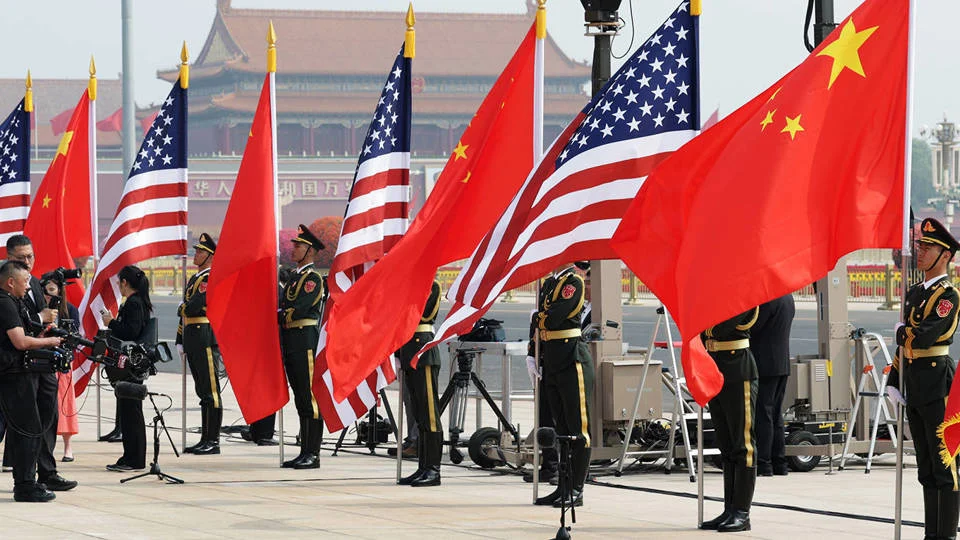
The geopolitical landscape underwent a subtle but profound shift last month. Following a period of escalating rhetoric, trade barriers, and technological containment, the summit between United States President Donald Trump and Chinese President Xi Jinping marked a pivot point in the bilateral relationship. Emerging from the talks was a shared, if tacit, recognition that the era of unbridled confrontation has reached a point of diminishing returns. The two leaders signaled an intent to transition from a policy of mutual disruption toward a framework of "strategic stability."
While the underlying structural tensions remain deeply embedded, the recognition that both nations are "in the same boat"—economically, technologically, and financially—has introduced a new, cautious sobriety to the world’s most consequential diplomatic relationship.
The Core Narrative: From Decoupling to Strategic Stability
The fundamental realization driving this shift is the failure of the "decoupling" narrative to serve the national interests of either power. For years, proponents of total economic separation argued that by isolating their respective innovation ecosystems, each nation could insulate itself from the other’s systemic risks. However, the data suggests otherwise.
The interdependence of the US and Chinese markets has proven too deep to sever without incurring catastrophic damage to domestic industries. When one side attempts to cripple the other, it invariably triggers a blowback effect—eroding the valuation of its own financial markets, stifling the growth of its technology firms, and burdening its consumers with inflationary costs.
In the wake of last month’s summit, the rhetoric has shifted. Officials are no longer speaking of total separation, but of "governed competition." This entails a commitment to managing disputes through established channels rather than through unilateral punitive measures.
Chronology of the Diplomatic Thaw
The road to this recent summit was paved by months of quiet, back-channel negotiations and a sobering realization of the global economic climate.
- Q1 2026: Persistent supply chain volatility and a cooling in the global tech sector forced both Washington and Beijing to re-evaluate the costs of their trade barriers.
- April 2026: Senior ministerial-level meetings in neutral territories laid the groundwork for the summit, focusing on the resumption of high-level dialogue in areas of mutual concern: climate policy, international financial stability, and AI safety protocols.
- May 2026: President Trump and President Xi met in a closed-door session, prioritizing the establishment of "guardrails" to prevent accidental escalation in the South China Sea and the Taiwan Strait.
- June 2026: The post-summit period has seen a cooling of tit-for-tat tariff announcements, with both governments signaling a willingness to discuss a reciprocal framework for market access.
Supporting Data: The Cost of Disruption
The economic data from the preceding two years provides a compelling rationale for this strategic pivot. Analysis of trade flows between the US and China reveals that the "China Plus One" strategy, while effective for diversifying certain supply chains, has led to significantly higher operational costs for multinational corporations.
Market Volatility and Inflationary Pressure
Financial market data indicates that volatility indices in both the S&P 500 and the Shanghai Composite were highly correlated with announcements of new export controls. When trade barriers were at their peak, US technology firms reported a 15% decline in R&D collaboration with Chinese counterparts, leading to a measurable slowdown in patent filings in critical sectors like semiconductors and renewable energy.
The Innovation Ecosystem
The innovation ecosystem, once thought to be a zero-sum game, has proven to be a symbiotic one. Research shows that Chinese investment in US clean-tech startups and US investment in Chinese manufacturing hubs were inextricably linked. The forced separation caused a vacuum in venture capital availability, leading to a stagnation in early-stage startups on both sides of the Pacific. By acknowledging this, the two leaders are effectively admitting that the innovation race is not necessarily a zero-sum contest, but a shared responsibility toward technological progress.
Official Responses and Diplomatic Messaging
The reaction from the respective administrations has been measured, avoiding the inflammatory language that characterized the previous two years.
Washington’s Perspective
The Trump administration has emphasized that its new approach is not a retreat, but a strategic recalibration. Officials state that the goal is "competitive resilience." By maintaining trade while enforcing strict rules on national security-sensitive technologies, the US aims to protect its core interests without destabilizing the global financial order. The White House has highlighted that the summit was a success in establishing a "hotline" for crisis management.
Beijing’s Perspective
In Beijing, the Ministry of Foreign Affairs has characterized the summit as a return to "rationality." President Xi has consistently championed the idea of a "community with a shared future," and the recent messaging emphasizes that China is prepared to offer greater market access in exchange for a removal of discriminatory trade barriers. The Chinese leadership is framing this as a victory for "multilateral stability" and a rejection of Cold War-era brinkmanship.
Implications: What to Expect in the Near Term
The shift toward strategic stability has profound implications for global businesses, regional allies, and international institutions.
Implications for Global Business
For the private sector, this is a signal to breathe easier, though not to let their guard down. The risk of sudden, overnight policy shifts has decreased, allowing for more predictable long-term capital allocation. However, the "governed competition" model means that companies must still navigate a complex regulatory environment where national security remains the primary lens for government policy.
Regional Allies
US allies in the Indo-Pacific—Japan, South Korea, and Australia—are likely to welcome this shift. Many of these nations were caught in the middle of the US-China friction, forced to choose between their security partner (the US) and their largest trading partner (China). A move toward stability allows these regional powers to focus on internal economic development rather than navigating the precarious balance of power.
International Institutions
Institutions like the WTO and the G20 may see a resurgence in relevance. With the two largest economies showing a renewed interest in "rules-based competition," there is an opportunity to reform global trade governance to better address the realities of the digital economy and the transition to green energy.
Conclusion: The Long Road Ahead
While the recent summit is a positive development, it would be naive to suggest that all issues have been resolved. The competition between the United States and China is deep-seated, rooted in divergent political systems and competing visions for the global order. Disputes over technology, human rights, and geopolitical influence remain.
However, the change in tone is significant. By recognizing that they are in the same boat, Presidents Trump and Xi have acknowledged that the global economy is a collective project, not a battlefield to be scorched. The coming months will be a test of this new framework. If the two sides can move from general principles to specific, enforceable agreements, the world may be entering a period of manageable friction rather than existential conflict.
The path forward is not one of friendship, but of necessity. In a globalized economy, the cost of absolute rivalry has become too high to pay. The challenge for both leaders now is to prove that they can compete with rigor, without losing sight of the common interests that keep the global system from collapsing under the weight of their rivalry.