The "Jump Scare" UI: X’s Aggressive New Growth Tactics Spark User Backlash
In the ever-evolving landscape of social media, platform design is rarely accidental. Every button, prompt, and color choice is the result of rigorous A/B testing aimed at maximizing engagement, retention, or revenue. However, as of late October 2026, X (formerly Twitter) has deployed a feature so visually jarring that it has left its user base bewildered, frustrated, and—perhaps most ironically—talking about the platform more than ever.
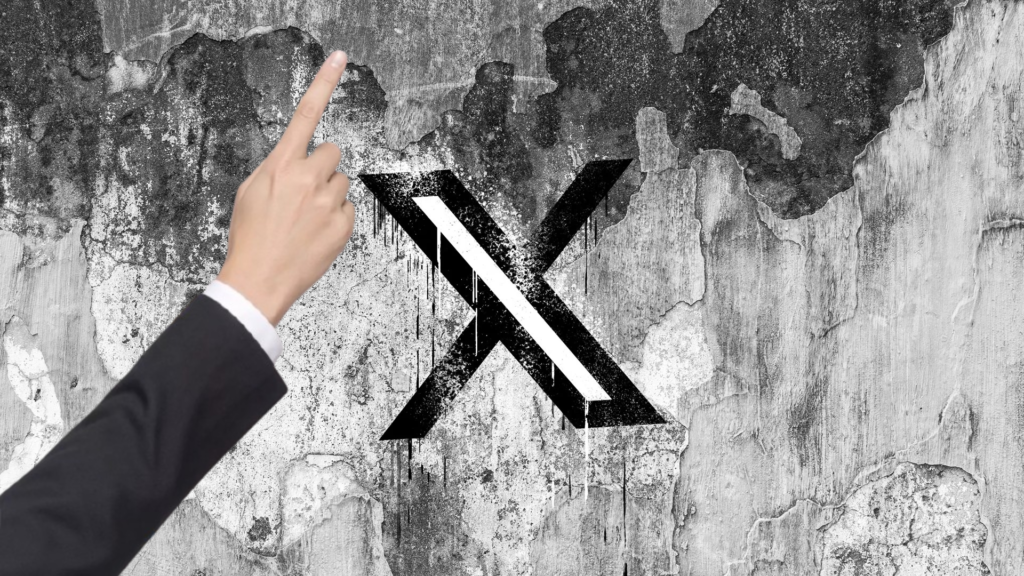
Over the past 24 hours, users across the globe have reported the sudden appearance of a disembodied, animated hand that physically points toward the "Promote" button while they are in the middle of drafting posts. The interaction is sudden, intrusive, and for many, deeply unsettling. While digital "nudges" are a staple of modern app design, this particular implementation has crossed a threshold from helpful UI guidance into the realm of the surreal and the irritating.
The Anatomy of the Disturbance
The feature, which appears to trigger during the composition phase of a post, manifests as a large, graphic hand that pops into the user’s field of vision. It does not wait for a pause in activity; it acts as a kinetic, aggressive prompt designed to convert casual posters into paying advertisers.
For the average user, the experience is akin to a "jump scare" in a horror film—an apt comparison given the proximity to Halloween. Unlike subtle blue banners or passive prompts that suggest "Boost your post to reach more people," this hand is an active obstruction. It occupies significant screen real estate, effectively breaking the flow of thought for anyone attempting to articulate a complex idea or share a personal update.
The consensus among the digital community is one of collective annoyance. Users have taken to their feeds to mock the feature, sharing screenshots and screen recordings of the hand appearing at the most inopportune moments—often while writing about mundane topics or, in some instances, critiquing the platform itself.
A Chronology of the "Hand" rollout
The emergence of this feature marks a significant shift in X’s product strategy under new leadership. The timeline of its introduction and the surrounding administrative changes suggests a coordinated effort to pivot toward more aggressive monetization.
- August 2026: Nikita Bier, widely recognized as a master of high-intensity growth tactics, steps down as X’s head of product after a tenure defined by rapid iteration and bold, sometimes controversial, UI experiments.
- Late October 2026: Users begin reporting the appearance of the "pointing hand" UI. Initial reports are dismissed as localized glitches or browser-specific bugs.
- October 26, 2026: The scale of the reports grows significantly. Influential voices in the tech and creator communities begin documenting the feature, confirming it is a widespread, server-side push rather than an isolated incident.
- October 26, 2026 (Evening): Peter Sellis, formerly of Snap and Discord, officially steps into the role of X’s product chief. His arrival coincides with the peak of the public outcry regarding the new UI element.
The "Nikita-Coded" Legacy and the New Guard
The term "Nikita-coded" has gained traction on X, serving as shorthand for the high-friction, high-engagement growth strategies championed by former product lead Nikita Bier. Bier, known for his work on apps like Gas and TBH, has a reputation for designing features that feel almost "obstructive, yet effective."
The hand-pointing mechanic fits this archetype perfectly. It forces a user to confront the monetization option, ensuring that even if the user does not click "Promote," the existence of the feature is burned into their memory. It is a classic "dark pattern"—a design choice intended to manipulate the user into a specific action through visual dominance.
Whether this is a lingering project from Bier’s tenure or the inaugural "aggressive" maneuver of the newly appointed Peter Sellis remains a subject of intense speculation. Sellis, who announced his arrival with a characteristic nod to Elon Musk’s ambitions—stating he wants to "make shitposting multiplanetary"—has yet to address the specific design choice. His appointment signals a continuation of the platform’s "move fast and break things" philosophy, but the introduction of such a visually polarizing element on his first day suggests that X is willing to test the limits of user tolerance to drive revenue.
Implications for User Experience and Brand Trust
While the primary goal of the "pointing hand" is clearly to increase the volume of promoted posts, the secondary effect may be a degradation of the user experience (UX) that alienates the platform’s core audience.
1. The Erosion of Utility
Social media platforms are, at their core, communication tools. When a tool begins to actively fight its user—obstructing their ability to write and publish—the perceived value of the platform diminishes. Users are already reporting that they are less likely to draft long-form content or nuanced threads if they fear they will be interrupted by intrusive animations.
2. The Psychology of the Jump Scare
Psychologically, the "jump scare" tactic can trigger a negative association with the brand. When a user experiences an intrusive pop-up, they often feel a momentary spike in cortisol, followed by irritation. Over time, this negative conditioning can make the act of opening the X app feel stressful rather than rewarding. If users begin to associate X with "anxiety-inducing pop-ups," they may subconsciously reduce their time spent on the app, leading to the exact opposite of the intended engagement goal.
3. Monetization vs. Retention
There is a precarious balance between driving revenue and maintaining user retention. By forcing the "Promote" option into the user’s line of sight, X is prioritizing short-term conversion metrics over the long-term health of the user ecosystem. If advertisers pay to promote their posts, they expect to reach an engaged, happy audience. If the audience is actively annoyed by the platform’s interface, the effectiveness of those promoted posts may suffer, creating a cycle of diminishing returns.
Official Silence and Future Outlook
As of this writing, X has not issued an official statement regarding the "pointing hand" UI. This silence is typical of the platform’s current communication strategy, which favors action over explanation.
TechCrunch and other outlets have reached out to X’s press team for comment, specifically asking whether this is a permanent feature, a limited-time test, or a Halloween-themed experiment. Given the timing, there is a possibility that this is a "spooky" holiday stunt that will be removed on November 1st. However, if the data shows even a marginal increase in "Promote" clicks, it is highly likely that this aggressive design language will become a permanent fixture of the platform’s architecture.
Conclusion: A Platform at a Crossroads
The introduction of the "pointing hand" is more than just a UI annoyance; it is a signal of where X is heading. Under new product leadership and with the shadow of high-growth veterans looming large, the platform is doubling down on monetization at all costs.
For power users, creators, and casual observers alike, the coming weeks will be telling. Will the backlash force a reversal, or is this the new normal? As X seeks to become a "multiplanetary" hub for information, it must decide if it wants to be a place where people want to share their thoughts, or a place where they are forced to confront the machinery of advertising at every turn. For now, users are left with a simple, albeit frustrating, reality: when you go to post on X, keep an eye out for the hand—it’s not going away just yet.