The Enemy Within: Why Europe’s Greatest Threat Is Not External, But Internal
BRUSSELS — For years, the European Union has cast its gaze outward to measure its vulnerabilities. Policymakers in Brussels, Berlin, and Paris have routinely framed the bloc’s primary existential challenges as external pressures: the rolling geopolitical shockwaves of Russian aggression in Ukraine, the relentless and disruptive tide of subsidized Chinese manufacturing and technology, and the mercurial, transactional trade politics emanating from Washington under U.S. President Donald Trump.
Yet, as the political landscape shifts deeper into the mid-2020s, a growing chorus of analysts, institutionalists, and strategists are warning that the most acute danger to the European project may not wear a foreign flag at all. Instead, it is being cultivated from within.
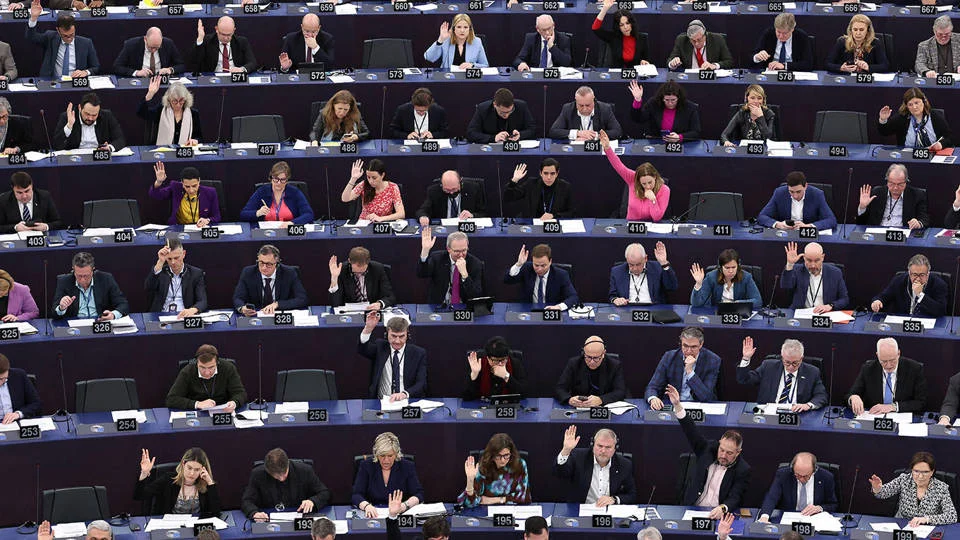
Those seeking to systematically weaken, hollow out, or entirely dismantle the EU’s supranational foundations are no longer hiding in the fringes of national politics. They are actively organizing inside the halls of European power, preparing radical legislative and structural schemes designed to fracture the bloc from the inside out. Among the most visible manifestations of this internal assault is the "New Deal for Europe" recently unveiled by Germany’s far-right Alternative für Deutschland (AfD) inside the European Parliament.
For the pro-EU political mainstream, the writing is on the wall. To survive the coming decade, the defenders of European integration can no longer rely on the inertia of the status quo. They must urgently formulate robust counter-strategies, forge new political coalitions, and contemplate bold institutional arrangements before Eurosceptic forces successfully dismantle the architecture of post-war European unity.
1. Main Facts: The Anatomy of the Internal Threat
The core of the current crisis lies in a fundamental ideological divergence over the nature of sovereignty and governance in Europe. While the foundational ethos of the European Union has always been rooted in pooled sovereignty, supranational oversight, and binding legal frameworks, the rising tide of nationalist and radical-right parties across the continent champions an entirely opposite paradigm: the "Europe of Nations."
The introduction of the AfD’s "New Deal for Europe" in the European Parliament serves as a case study in this strategy. Rather than calling for a sudden, chaotic withdrawal from the EU—a tactic that proved politically toxic for many Eurosceptic movements in the wake of the United Kingdom’s Brexit ordeal—these internal actors have pivoted toward a war of position. Their goal is subversion from within: systematically stripping the European Commission of its regulatory teeth, returning supreme veto powers to national capitals, subordinating EU law to domestic legislation, and dismantling the single market’s regulatory harmonization under the guise of "national restoration."
Key elements defining this internal threat include:
- Institutional Sabotage: Eurosceptic lawmakers are increasingly utilizing committee assignments and legislative procedures not to improve European governance, but to gridlock policy implementation, paralyze climate initiatives, and starve integration-oriented programs of funding.
- The Normalization of Radicals: By softening their public rhetoric while retaining radical core platforms, far-right factions have built cross-border alliances that blur the lines between traditional conservatism and nationalist revisionism.
- Exploitation of Economic Anxiety: Internal detractors weaponize post-pandemic inflation, energy transition costs, and immigration pressures to stoke anti-Brussels sentiment, framing the EU not as a shield against global instability, but as its primary architect.
2. Chronology: The Escalation of Euroscepticism within EU Institutions
To understand how the European Union arrived at this precarious juncture, it is necessary to trace the evolution of Euroscepticism from an external protest movement into an institutionalized fifth column.
- 2014–2016 (The Rise of Protest Politics): Following the sovereign debt crisis and the onset of the migration crisis, nationalist parties gained unprecedented ground in national parliaments. Eurosceptic delegations entered the European Parliament in significant numbers, often operating as disruptive outsiders with little legislative coordination.
- 2016–2020 (The Brexit Shockwave): The UK’s vote to leave the EU served as both a cautionary tale and a tactical pivot. Mainstream European leaders rallied around a renewed sense of unity, while radical movements realized that outright exit campaigns were electoral losers. The strategy shifted rapidly from "Euroscepticism" (criticism of EU policies) to "Alt-Europeanism" (the desire to capture and repurpose European institutions to dismantle them).
- 2021–2024 (Institutional Penetration): As multiple crises converged—the COVID-19 pandemic, the return of war to the European continent, and severe energy shocks—nationalist parties captured significant electoral shares in founding member states like Italy, France, and the Netherlands. Concurrently, these parties coordinated more effectively at the European level, forming powerful new parliamentary groupings.
- Late 2025–October 2026 (The Offensive): The unveiling of systematic counter-proposals, such as the AfD’s "New Deal for Europe" in the European Parliament, marks a critical threshold. Radical factions are no longer merely reacting to EU policy; they are launching comprehensive legislative counter-projects designed to offer an alternative blueprint for the continent—one explicitly engineered to unravel supranational integration.
3. Supporting Data: The Rising Tide of Radical Representation
The threat posed by internal actors is not merely rhetorical; it is backed by hard arithmetic. Recent electoral cycles have redrawn the political map of the European Parliament, shifting the center of gravity and granting radical factions unprecedented leverage.
- Parliamentary Shift: Following the most recent European Parliament elections, right-wing and radical Eurosceptic groups command roughly 25% to 30% of the total seats, depending on fluid coalition alignments. This marks a historic high, effectively breaking the traditional cordon sanitaire that once kept extremist forces isolated from key committee leadership roles.
- National Power Basins: Nationalist and far-right parties either lead governing coalitions, hold decisive kingmaker status, or represent the primary opposition in a majority of the EU’s 27 member states, including economic heavyweights like Germany, France, and Italy.
- Public Opinion Paradox: According to recent Eurobarometer data, while overall support for EU membership remains relatively high across the bloc—averaging above 60%—trust in national governments and the ability of the EU to manage complex crises (such as inflation, housing, and migration) has plummeted. This trust deficit creates a fertile recruiting ground for internal agitators who promise localized protectionism at the expense of collective solidarity.
4. Official Responses: The Pro-EU Camp Mobilizes
The realization that the European Union is facing an internal battle for its survival has prompted frantic deliberations among mainstream political families—the European People’s Party (EPP), the Progressive Alliance of Socialists and Democrats (S&D), and Renew Europe.
Speaking in Brussels following the introduction of the radical right’s legislative challenges, senior institutional figures warned against complacency.
"For too long, we assumed that the irreversible momentum of European integration would protect us from domestic revisionism," remarked a high-ranking European Commission official, speaking on the condition of anonymity. "We spent years building defensive walls against external shocks while ignoring the termites gnawing at the foundations from within. That era of complacency is over."
Mainstream leaders are currently debating a multi-layered response strategy:
- Strengthening the Rule of Law: Accelerating the enforcement mechanisms that tie EU budgetary disbursements to adherence to democratic norms and judicial independence, thereby penalizing member states that backslide into illiberal governance.
- Institutional Reform: Proposing targeted treaty changes or enhanced cooperation frameworks that allow a coalition of the willing to press ahead with deeper integration (such as fiscal union and joint defense initiatives) without being held hostage by nationalist vetoes.
- Counter-Narrative Campaigns: Stepping up direct public communication to dismantle the economic fallacies propagated by radical platforms, demonstrating tangibly how regional cohesion funds, the single market, and freedom of movement directly benefit local communities.
5. Implications: The Crossroads for the European Project
The implications of this internal struggle cannot be overstated. If the pro-EU camp fails to mount an effective political and institutional defense, the European Union risks a slow-motion unraveling.
Unlike a sudden collapse triggered by an external invasion or an economic depression, an internal decay would be far more insidious. It would manifest as a paralysis of decision-making: a union where critical security, economic, and environmental policies are perpetually blocked by national vetoes, where the single market is fractured by rising non-tariff barriers, and where the rule of law is eroded state by state until the European Court of Justice holds no binding authority.
Conversely, this crisis could serve as a vital crucible for the EU. History suggests that European integration has most often advanced in response to existential threats. If mainstream leaders seize the moment to streamline decision-making, rid the bloc of paralyzing unanimity requirements in foreign policy and taxation, and decisively counter the nationalist narrative with a vision of dynamic, accountable democratic governance, the Union could emerge stronger, more resilient, and better equipped for the realities of the twenty-first century.
Ultimately, the choice facing Brussels is stark. The external world—defined by great power competition, economic nationalism, and geopolitical instability—will not wait for Europe to resolve its internal contradictions. The battle for the soul of the European project will not be won or lost in Beijing, Moscow, or Washington, but in the legislative chambers of Strasbourg and Brussels, and in the hearts and minds of European citizens.