The High Cost of Convenience: Understanding the Earned Wage Access Revolution
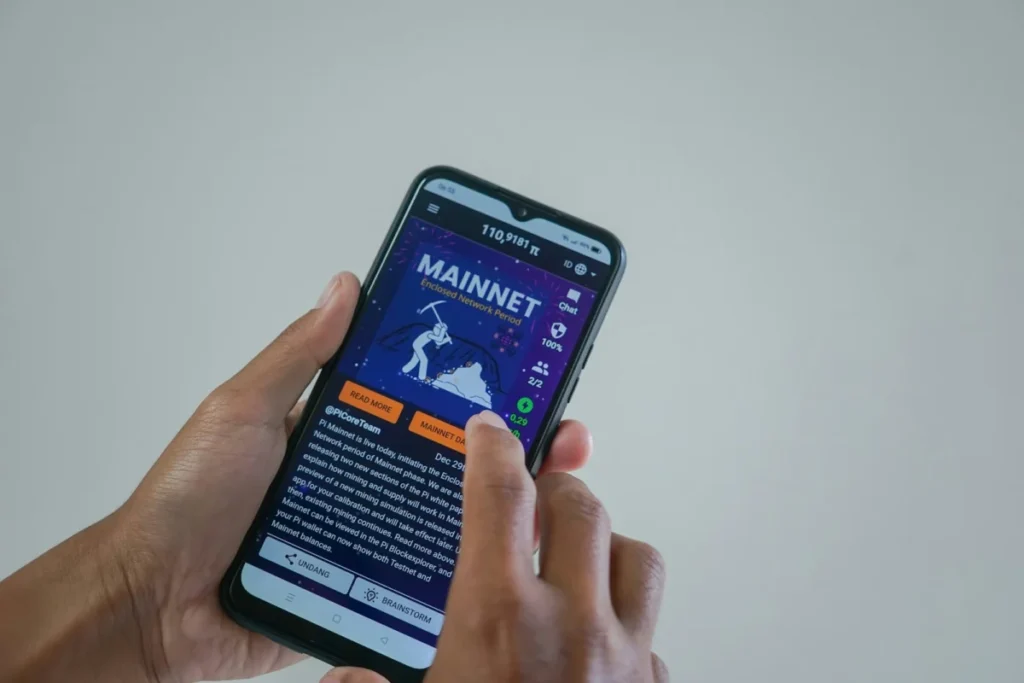
In the modern gig and hourly-wage economy, the traditional two-week pay cycle is increasingly viewed as an outdated relic. For millions of Americans living paycheck to paycheck, a sudden car repair or a medical bill arriving five days before a scheduled deposit can be catastrophic. Enter "Earned Wage Access" (EWA)—a financial technology innovation that allows employees to tap into their earned wages before the official pay date. With a single tap on a smartphone, workers can bridge the gap between financial emergencies and their next paycheck.
However, as the user base for these applications has ballooned to over 10 million workers, the regulatory landscape has fractured, and the true cost of this "instant liquidity" has come under intense scrutiny. While marketing campaigns often frame these services as a benevolent alternative to predatory payday lending, the mathematical reality reveals a more complex, and often expensive, picture.
The Chronology of an Industry Shift
The rise of EWA is a story of rapid digital adoption meeting regulatory stagnation.
- 2021–2022: The industry saw explosive growth as the Consumer Financial Protection Bureau (CFPB) began tracking a surge in advance frequency. In 2021, workers took approximately 43.2 million advances. By 2022, that number had nearly doubled to 83.4 million, signaling that EWA had shifted from a niche novelty to a staple of the American working-class budget.
- 2025: The federal government signaled its stance on the industry. In December, the CFPB issued a landmark advisory opinion, effectively declaring that qualifying EWA products do not constitute "credit" under federal lending laws. This decision exempted most providers from the rigorous truth-in-lending disclosures required of credit card companies and traditional banks.
- 2026: This year marked a turning point in legislative oversight. Recognizing that federal inaction had created a regulatory vacuum, a dozen states—including Connecticut, Maryland, and California—passed aggressive new laws. These statutes began to define the boundaries of "tips," "fees," and "disclosures," setting the stage for a fragmented national market.
Supporting Data: The Hidden Mathematics of Advances
To understand why regulators are concerned, one must look past the "no-interest" branding used by many EWA apps. While these companies explicitly state they do not charge interest, they often replace it with "expedited delivery fees" or "voluntary tips."
When these fees are annualized—a standard method for comparing the cost of debt—the results are staggering. The average EWA advance is approximately $106. If a worker pays a fee for an immediate transfer and repays that amount in a few days, the annualized percentage rate (APR) can climb to 109.5 percent.
The math becomes even more predatory at lower levels. For a $50 advance repaid within four days, the effective APR can soar above 580 percent. Because these apps are not classified as lenders in many jurisdictions, they are not required to display these figures to the user, masking the high cost of what is effectively a short-term, high-interest loan. According to recent CFPB data, the average user spends roughly $69 annually on these advance fees—a significant sum for a household already struggling with liquidity.
Official Responses and the Legislative Tug-of-War
The debate over EWA has pitted consumer advocates against financial technology lobbyists.
The Regulatory Divide
The current legal framework is a patchwork. In states like Connecticut, Maryland, and California, EWA providers are increasingly treated as lenders, subject to state licensing requirements. Connecticut, for instance, has taken a proactive stance by capping fees at $4 per transaction or $30 per month, while simultaneously limiting individual advances to $750. Maryland has gone a step further, effectively banning the "tipping" model that many apps use to obscure the cost of their services.
Conversely, states like Nevada, Utah, and Kansas have adopted a more permissive stance, allowing companies to operate under registration requirements that stop short of declaring the product a "loan." This allows providers to bypass the strict consumer protection laws that have historically governed the payday lending industry.
The Federal Outlook: H.R. 9330
As states continue to forge their own paths, federal lawmakers are attempting to create a floor for consumer protection. H.R. 9330 is currently being debated in Congress, with the goal of establishing a national standard for fees and transparency. Proponents argue that a federal standard is necessary to prevent "regulatory arbitrage," where companies gravitate toward states with the weakest oversight. Critics, however, argue that premature federal regulation could stifle the innovation that makes these apps useful for workers in a pinch.
Implications for the Modern Worker
The ubiquity of EWA apps raises fundamental questions about financial health and the structure of the American workforce.
The Behavioral Trap
The primary danger of EWA is the normalization of deficit spending. When an app provides a seamless interface to access future earnings, it can create a cycle of dependency. If a worker uses an advance every single pay period, they are no longer using the app to cover a one-time emergency; they are using it to cover a structural shortfall in their budget. In this context, the app becomes a "fee-based paycheck," where the worker’s income is permanently diminished by the cost of the advances.
Financial Alternatives
Financial experts suggest that before downloading an EWA app, workers should explore safer, lower-cost alternatives:
- Emergency Funds: Even a small, high-yield savings account acts as a buffer that incurs zero fees.
- Overdraft Grace Periods: Many traditional banks now offer grace periods for minor overdrafts, which are often cheaper than the "express" fees charged by EWA providers.
- Budget Synchronization: Often, the "squeeze" is caused by a misalignment between bill due dates and pay dates. By shifting the due date of a single utility bill or credit card payment, a worker can often eliminate the need for an advance entirely.
Frequently Asked Questions (FAQ)
Q: Is EWA actually a loan?
A: Legally, in most states, no. It is classified as an advancement of earned wages. However, in states like California and Maryland, regulators have begun to reclassify certain products as loans to ensure they meet state consumer protection standards.
Q: Why don’t these apps report to credit bureaus?
A: Because they are not classified as credit products under federal law, they do not report usage to the three major credit bureaus. While this means using the app won’t hurt your credit score, it also means it cannot help you build credit.
Q: Is the "tip" model truly voluntary?
A: While apps frame tips as voluntary, they often use interface designs that nudge users toward "tipping" for the service. In many states, this practice is being investigated as a deceptive fee structure.
Q: Can I use EWA safely?
A: Yes, if used for legitimate, one-time emergencies—such as an unexpected security deposit or an urgent repair. The danger lies in habitual use. Always utilize the "free" standard transfer option rather than paying for "instant" delivery whenever your timeline allows.
Final Thoughts: Navigating the New Normal
Earned Wage Access is neither a miracle cure for poverty nor an inherently malicious instrument. It is a technological reflection of the volatility inherent in modern hourly employment. The danger arises when the convenience of the interface blinds the user to the underlying cost.
For the American worker, the path forward requires a shift in perspective. If you find yourself tapping into your paycheck before it arrives every single cycle, it is not a sign that you have found a useful tool; it is a sign that your expenses have outpaced your income. Instead of relying on the digital convenience of an app, the focus should shift toward building a modest cash buffer and aligning fixed expenses with pay dates.
In the coming years, as Congress and state legislatures continue to refine the rules governing this industry, transparency will likely increase. Until then, the burden of protection falls on the consumer. Read the fine print, avoid the express fees, and remember: the most expensive way to get your money is to get it before it’s actually yours.