Raising Financially Literate Children: A Practical Framework for Parenting in a Consumerist Culture

In an era defined by relentless digital marketing and the ease of one-click commerce, teaching children the fundamental value of money has become a significant challenge for modern parents. For many, the local county fair—a whirlwind of colorful trinkets, sugary treats, and high-pressure sales—serves as the ultimate testing ground for these lessons. This article examines the evolving strategies parents are using to demystify personal finance for children, transforming everyday experiences into structured educational opportunities.
The Core Philosophy: Distinguishing Needs from Wants
The foundation of a successful financial education program at home often begins with a simple, albeit firm, distinction between "needs" and "wants." Many parents are adopting a "Family Money Philosophy" that clarifies the boundaries of parental responsibility.
Under this model, parents provide the essentials: housing, clothing, healthy meals, books, games, and access to educational experiences like museums or fairs. Conversely, discretionary spending—items that fall outside the realm of basic necessity—becomes the sole responsibility of the child. This includes items such as supplemental snacks at restaurants, souvenirs at gift shops, and specific items from school book fairs. By placing the onus of "extra" purchases on the child, parents create an immediate, tangible connection between labor and consumption.

Chronology of Financial Development
Financial literacy is not a lesson to be taught in a single afternoon; it is a developmental scaffold that must be built over years. Experts suggest that the process should follow a logical progression:
- The Counting Phase (Ages 4-5): At this stage, children are introduced to the physical nature of currency. Identifying denominations and understanding that items carry specific price tags are the primary objectives.
- The Labor-for-Income Phase (Ages 6-7): Children begin to understand that money is a byproduct of work. By performing household chores that go beyond daily personal upkeep, children gain their first "wages."
- The Planning and Execution Phase (Ages 7-9): As children become more independent, they are tasked with managing their own money, remembering their own wallets, and deciding whether a purchase is truly worth the effort required to earn the funds.
- The Delayed Gratification Phase (Ages 10+): This stage involves introducing concepts like interest, long-term savings, and the difference between short-term indulgence and long-term asset accumulation.
Establishing a "Fair Market" Chore System
To effectively teach the value of a dollar, parents are increasingly moving away from arbitrary allowances toward a "fair market" compensation model. In this system, children are paid for specific tasks that benefit the household, such as organizing pantry shelves or deep-cleaning communal spaces.
Crucially, this system differentiates between "daily living" responsibilities—such as making one’s bed or clearing one’s own plate—and "economic" chores. While the former are expected as part of being a family member, the latter are treated as professional tasks. To ensure the integrity of this system, parents often enforce strict quality control: a job must be completed to completion, without adult assistance, to merit payment. If a task is botched, the child must rectify the mistake before compensation is released. This teaches the essential life lesson that compensation is tied to productivity and competence.

The Real-World Implications of Debt
Perhaps the most controversial yet effective tool in a parent’s financial toolkit is the "controlled debt" experience. By allowing children to borrow money for a purchase they cannot yet afford, parents provide a visceral lesson in the dangers of spending beyond one’s means.
When a child is forced to work off a debt, they quickly realize that the "fun" of the initial purchase is rapidly eclipsed by the burden of the obligation. This realization—that working to pay for something you already possess is far less satisfying than saving up for a future goal—is a milestone in financial maturity. It moves the conversation from abstract economic theory to a concrete, emotional reality.
Supporting Data and Psychological Perspectives
Research in child psychology consistently indicates that children who understand the source of family income—specifically that parents work for money, which is then exchanged for goods—show less anxiety regarding household stability. When parents transparently explain that the grocery bill or the family car is the result of hours of labor, it helps demystify the adult world.
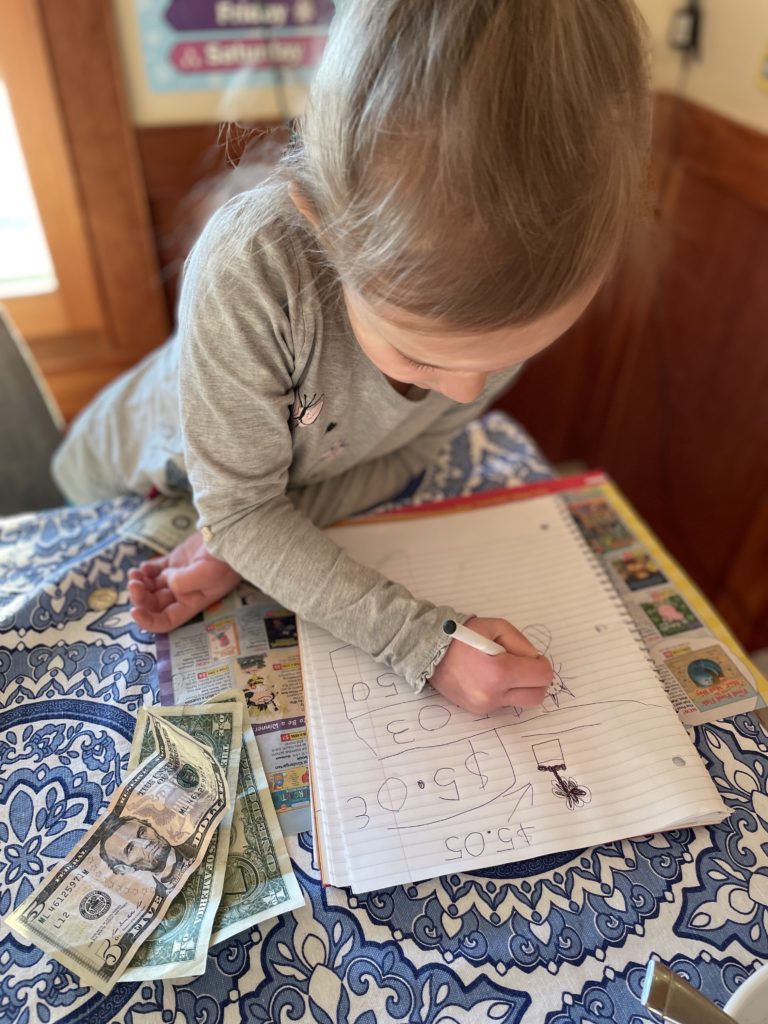
Furthermore, allowing children to make small, "low-stakes" mistakes—like misplacing a wallet at a museum or realizing they forgot their funds at the fair—is vital. These incidents provide safe environments for children to learn the consequences of negligence. When a child has to ask a cashier if their lost wallet has been returned, they learn a lesson about accountability that no classroom lecture could replicate.
Addressing the "Bank of Mom and Dad"
As children graduate from basic money management, parents often look toward more advanced pedagogical tools, such as the implementation of an in-home interest-bearing savings account. The objective here is to incentivize the transition from "spender" to "saver."
By offering a modest interest rate on money held in a "Bank of Parental Units," parents can introduce the concept of compound interest. This shift is critical because it changes the child’s view of money from a tool for immediate consumption to a resource for future growth. It encourages children to ask, "If I save this now, how much more will I have next month?"

Summary of Best Practices
For parents looking to implement these strategies, the following guidelines are recommended:
- Be Transparent: Explain the "why" behind money decisions. Don’t shield children from the fact that items cost time and labor.
- Encourage Autonomy: Let them make their own (small) purchases. If they buy a toy that breaks or a treat they don’t end up liking, that is a valuable lesson in consumer discernment.
- Maintain Consistency: Ensure that chores are paid fairly and that the distinction between unpaid "family" work and paid "economic" work remains clear.
- Emphasize Tools, Not Identity: Reinforce the idea that money is a tool for security and utility, not a measure of personal worth or happiness.
Conclusion: A Lifetime of Literacy
Financial literacy is not about raising children who are obsessed with money; it is about raising children who are comfortable with the mechanics of the world around them. By demystifying the exchange of currency and emphasizing the link between effort and reward, parents can equip their children with the confidence to navigate the complexities of adulthood.
As these children grow, the specific dollar amounts will change, and the complexity of their financial decisions will increase. However, the foundational belief—that one must work, save, and plan to achieve their goals—will remain a constant. Whether they are five or fifteen, the goal remains the same: to turn the intimidating, often silent, world of finance into a transparent system that they can navigate with ease and integrity.