Navigating the Path to Financial Stability: A Case Study of Two Professionals in Connecticut

In the landscape of modern personal finance, many couples find themselves caught in a paradox: earning a solid, middle-to-upper-middle-class income while simultaneously feeling paralyzed by debt and the mounting pressure of the "American Dream." Brian and Michael, both 34, represent a growing demographic of professionals who have achieved significant career success—securing state government positions, robust benefits, and stable employment—yet find themselves struggling to reconcile their current reality with their long-term aspirations of homeownership, academic growth, and permanent debt freedom.
Living in central Connecticut with their two cats, the couple has been together for a decade, marking their ten-year anniversary this November. Despite their combined annual income of approximately $167,544 (gross), they report feeling a profound sense of "stuckness." Their story serves as a poignant case study on the psychological toll of consumer debt and the common struggle to balance present-day lifestyle choices with future financial security.

The Chronology of a Financial Crossroads
The couple’s current urgency stems from a tumultuous year marked by two major life transitions. For eight years, Brian and Michael resided in a cozy, 600-square-foot studio apartment, maintaining a low cost of living that allowed them to dream of property ownership. However, the volatility of the 2022/2023 housing market forced an unexpected relocation.
The move, while necessary, proved costly. Navigating the rental market during a period of high inflation, combined with unexpected veterinary expenses for their two new kittens, depleted their liquid savings. This transition served as a catalyst for the couple to re-evaluate their trajectory. Brian, having previously paid off $58,000 in student loans, found himself back in the cycle of consumer debt. Simultaneously, the couple’s desire to "buy low" in the housing market remains hindered by their current debt-to-income ratio and lack of a substantial down payment.

Financial Snapshot: Income and Obligations
To understand the couple’s predicament, one must look at the hard data. The household commands a strong gross income, yet their net income is eroded by a combination of high taxes, benefit deductions, and, most significantly, a monthly debt repayment burden.
The Debt Portfolio
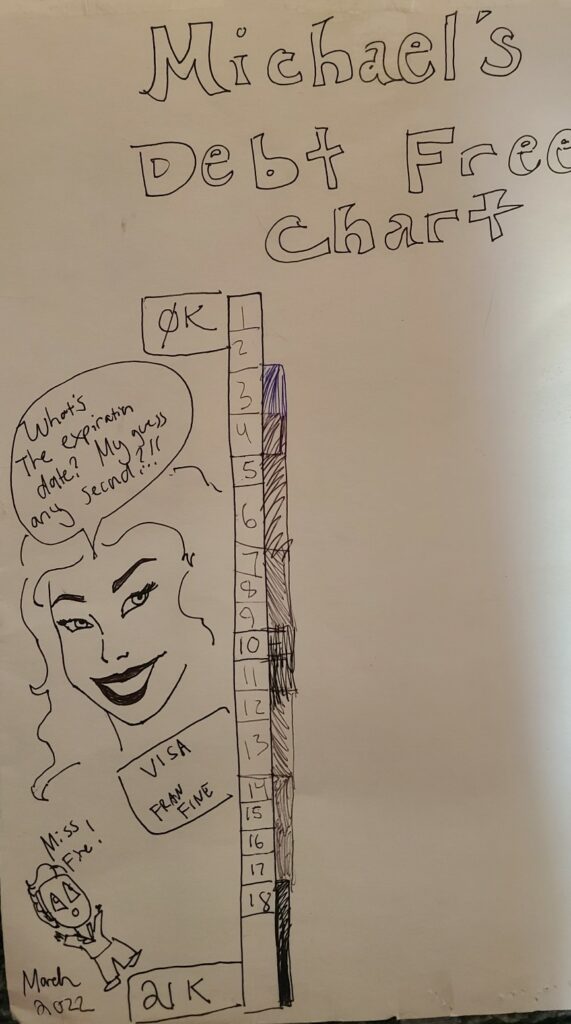
As of the latest reporting, the couple carries a total of $28,259 in consumer debt across three credit card accounts. While some of these balances are currently shielded by 0% interest promotional periods, these windows are closing rapidly.

- Brian’s Visa (SCU): $16,057 balance (0% until Nov 2023, then 17.99%)
- Michael’s Visa Platinum: $9,700 balance (10.99% interest)
- Brian’s Visa Platinum (Navy Federal): $2,503 balance (0.99% until Nov 2023, then 17.74%)
The Spending Breakdown
The couple’s annual spending, which totals approximately $96,414, reveals significant areas of potential optimization. While rent and fixed costs account for a large portion of their budget, discretionary spending—including gifts, personal care, and dining out—collectively acts as a drain on their ability to accelerate debt repayment. Currently, their monthly subtotal is $8,035.
Expert Analysis and Strategic Recommendations
Financial consultant Liz Frugalwoods, who reviewed the case, argues that the couple’s situation is far from dire. She emphasizes that Brian and Michael possess the most important assets: stable government employment with pensions, healthcare, and a strong, shared commitment to their future.

1. The Power of Expense Tracking
The primary recommendation for the couple is the implementation of a rigorous, consistent expense tracking system. By utilizing tools like Empower or a simple spreadsheet, the couple can visualize the "leaks" in their budget. The analysis shows that with a disciplined approach, they should theoretically have over $13,000 in annual surplus. The failure to capture this surplus is the primary reason for their stagnation.
2. The "Spending Detox"
To achieve debt freedom within six months, the consultant recommends an immediate "spending detox." This involves:
- Categorizing Expenses: Dividing all outflows into "Fixed," "Reduceable," and "Discretionary."
- Eliminating Discretionary Costs: Temporarily cutting items like dining out, new home goods, and non-essential personal care.
- Aggressive Reallocation: By reducing their monthly budget to a proposed $6,665, the couple could potentially funnel over $4,400 per month directly into debt repayment.
3. Prioritizing the "Emergency Buffer"
A critical point raised by the expert is the distinction between "unexpected" and "expected" expenses. The couple’s previous debt was triggered by a move and vet bills—costs that, while urgent, should be planned for in a robust emergency fund. Once the credit card debt is cleared, the immediate priority must be the replenishment of a liquid cash emergency fund to prevent future reliance on high-interest credit cards.
Long-Term Implications: Retirement and Education
Brian and Michael are at a pivotal age for retirement planning. With access to 403b, 457, and 401k accounts, as well as a state pension, they have the potential to build a massive tax-advantaged nest egg.

The Master’s Degree Debate
A major point of contention is Brian’s desire to pursue a graduate degree. The expert’s advice is clear: unless the degree provides an iron-clad, documented, and significant increase in salary, it is an "unhelpful detour." For a couple struggling to achieve financial autonomy, the opportunity cost of tuition and time spent studying could be better utilized in retirement contributions or the down payment fund.
The Role of Pensions and Social Security
The uncertainty surrounding Social Security and the stability of state pensions remains a concern for the couple. However, the expert suggests that rather than fearing these systems, the couple should focus on diversifying their assets. They are encouraged to roll over Brian’s old 401k into a self-managed IRA, allowing for greater control over investment fees and risk tolerance.

Conclusion: Reframing the "Adulting" Narrative
The journey for Brian and Michael is not just about numbers; it is about shifting their mindset. They are currently caught in a cycle of "feast or famine," overspending followed by periods of intense restriction. To move forward, they must identify a sustainable middle ground—a lifestyle that is disciplined enough to meet their long-term goals but flexible enough to prevent a "rebound" into debt.
By aggressively paying down the $28,259 in debt, building a robust emergency fund, and maximizing their government-backed retirement vehicles, they can move away from the anxiety of their current situation. As the expert noted, money does not solve life’s deeper problems, but having a handle on it provides the stability required to pursue a life of meaning, legacy, and, ultimately, the freedom to own their own home and garden. The path forward is clear: prioritize the spreadsheet, ignore the pressure of peer comparison, and focus on the long-term compounding of their current, enviable resources.