Treasury and IRS Issue Landmark Regulations to Automatically Enroll Millions of Children in Trump Accounts
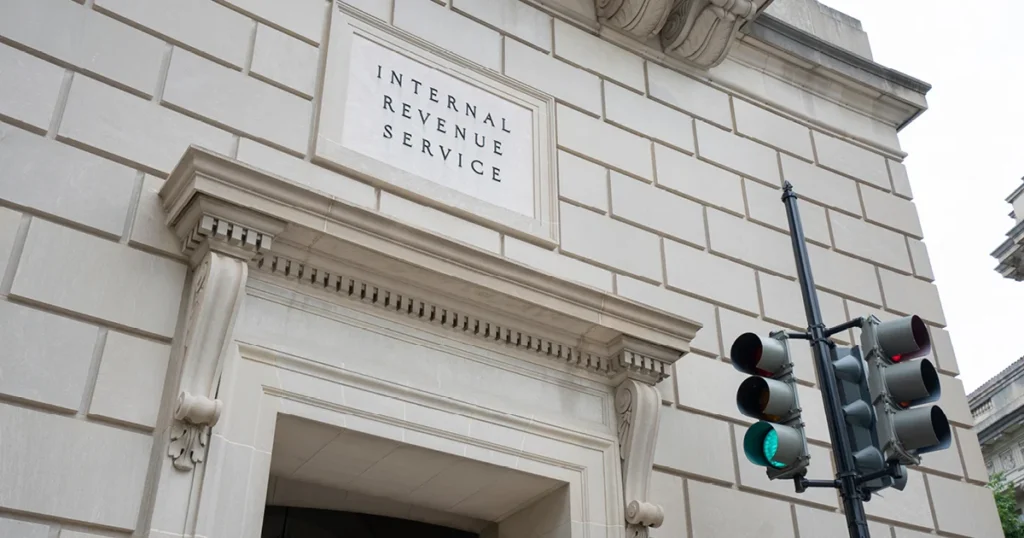
WASHINGTON — In a sweeping regulatory move expected to dramatically reshape the financial landscape for America’s youth, the U.S. Department of the Treasury and the Internal Revenue Service (IRS) issued a critical package of temporary regulations (T.D. 10056) and proposed regulations (CC-00226466-26). The newly unveiled framework paves the way for the automatic enrollment of eligible children into "Trump accounts"—a novel class of individual retirement accounts designed specifically for minors under the landmark legislation known as the Omnibus Budget and Benefit Balancing Act (OBBBA).
According to Treasury estimates, this administrative breakthrough will increase the number of children with active Trump accounts in 2026 by more than 60 million. In total, the regulations are projected to directly affect roughly 73 million children spread across 44 million families nationwide.
The publication of these rules follows an intensive push from accounting professionals, tax experts, and philanthropic organizations who warned that without automatic enrollment, bureaucratic inertia and a lack of public awareness would leave millions of vulnerable or low-income children locked out of vital federal savings and investment benefits.
Main Facts
At the core of the newly released guidance is a systemic fix allowing the federal government to bypass traditional, manual account-opening hurdles. Under the temporary and proposed rules, the Treasury is officially permitted to establish accounts on behalf of eligible children who do not already possess a Trump account. Furthermore, the agency is authorized to make the necessary administrative elections to secure the program’s standard government contribution.
Key Elements of the Trump Account Program:
- The Federal Seed Contribution: Under H.R. 1, P.L. 119-21 (OBBBA), eligible children are entitled to a $1,000 federal contribution delivered through the Trump account pilot program.
- Account Architecture: Trump accounts function as a specialized iteration of individual retirement accounts (IRAs) tailored to minors, intended to build long-term generational wealth.
- The "Responsible Party": The regulatory framework carefully preserves and recognizes a designated "responsible party" who acts on behalf of the child, ensuring that parents or legal guardians retain oversight capabilities once accounts are established.
- Massive Scale: The rules affect an estimated 73 million children across 44 million households, with automatic creation projected to add over 60 million new accounts in 2026 alone.
- Stock Contributions & Philanthropy: The regulations set forth comprehensive guidelines governing qualified stock contributions, opening the door for sweeping corporate and philanthropic investments. Notably, the framework has already galvanized a $6.25 billion pledge from the Michael and Susan Dell Foundation, with additional major donors signaling interest.
Chronology
The journey from a legislative concept to a fully automated national enrollment system highlights a complex intersection of tax law, data privacy hurdles, and strategic advocacy from the accounting sector.
Legislative Genesis and Early Roadblocks
The Trump account framework was authorized under H.R. 1, P.L. 119-21 (OBBBA). In the initial phases of rolling out the program, Treasury and IRS officials operated under the assumption that automatic enrollment was legally and administratively unfeasible. The primary obstacle centered on federal taxpayer privacy laws and logistical constraints: how could the government automatically open financial accounts for tens of millions of minors without violating strict taxpayer data disclosure rules or placing an impossible compliance burden on financial institutions?
The AICPA Intervention
Recognizing the threat of low participation rates, the Association of International Certified Professional Accountants (AICPA) stepped up its engagement. Drawing lessons from prior state-level initiatives—such as a grant program in Maine where parental action requirements resulted in participation stalling out at roughly 50%—the AICPA argued that relying on parents to manually open accounts would inevitably create massive procedural barriers.
In February, the AICPA formally urged Treasury and the IRS to implement automatic enrollment, emphasizing that many families would otherwise remain entirely unaware of the program or fail to navigate the necessary paperwork. The professional body stressed that automatic enrollment was the only viable path to ensuring equitable, nationwide access.
The Technological and Legal Breakthrough
Heeding these warnings, Treasury and IRS technical teams went back to the drawing board. They successfully engineered an innovative administrative structure utilizing a master group trust. This mechanism bridges the gap, allowing the federal government to facilitate automatic enrollment while strictly adhering to privacy statutes and avoiding the unlawful disclosure of underlying taxpayer information.
Issuance of Temporary and Proposed Regulations
With the structural barriers dismantled, Treasury and the IRS formally published T.D. 10056 and CC-00226466-26 on a Tuesday in late spring, translating months of behind-the-scenes legal engineering into enforceable administrative law. In lockstep with the government’s announcement, the AICPA rapidly updated its comprehensive resources, including its dedicated timeline and insights page, to help tax practitioners advise clients on the sweeping changes.
Supporting Data
The quantitative impact of transitioning from an opt-in model to an automatic enrollment framework cannot be overstated. Federal data and comparative case studies illustrate a stark contrast in program efficacy.
| Metric / Indicator | Opt-In Model (Initial Projections) | Automatic Enrollment Model (New Regulations) |
|---|---|---|
| Projected 2026 Participation Rate | ~50% (Based on Maine grant program benchmarks) | Near 100% of eligible children |
| Total Children Affected | Fragmented / Low millions | ~73 million children |
| Total Families Impacted | Fragmented | ~44 million families |
| New Accounts Established (2026) | Tens of millions short of full capacity | More than 60 million newly created accounts |
| Philanthropic Leverage | Limited to direct, manual high-net-worth gifts | Facilitates billions via broad stock contribution rules |
Treasury officials highlighted that the decision to permit general funding contributions using stock of publicly traded domestic corporations will fundamentally change the scale of the program. By allowing contributions to approved asset classes to receive the exact same tax and regulatory treatment as qualified classes, the agency anticipates unlocking billions of additional dollars per year.
The cornerstone of this private-sector influx is the Michael and Susan Dell Foundation’s landmark $6.25 billion pledge earmarked for qualifying children. Treasury reports indicate that numerous other private donors and corporate entities are actively preparing to mirror this initiative, utilizing the newly minted Trump account infrastructure to distribute broad-based wealth-building assets.
Official Responses
The release of the temporary and proposed regulations drew immediate praise from financial regulatory observers, tax professionals, and policy advocates who viewed the rules as a masterclass in administrative problem-solving.
The preamble to the temporary regulations explicitly details the strategic intent behind the Treasury’s discretionary decisions:
"The major areas of discretion in the temporary regulations require the [Treasury] Secretary to create Trump accounts for eligible children, allow contributions to approved classes to receive the same treatment as contributions to qualified classes, and allow general funding contributions to be made with stock of publicly traded domestic corporations," the preamble states.
"All of these decisions increase the appeal of funding contributions to classes of Trump account beneficiaries and are expected to result in billions of additional dollars per year in general funding contributions, which will be allocated across the Trump accounts of tens of millions of children."
The AICPA, which championed the structural pivot earlier in the year, reiterated its support for the regulatory overhaul. In its ongoing commentary, the organization underscored that eliminating the requirement for proactive parental filing closes equity gaps that historically favored more affluent, tax-literate households over low-income or marginalized communities.
Tax practitioners have similarly praised the clarity provided in the text, noting that the guidance successfully resolves complex operational questions regarding account administration, automatic enrollment procedures, qualified investment options, stock contributions, and the exact legal boundaries of Treasury’s establishment role.
Implications
The rollout of automatic enrollment for Trump accounts carries profound implications for American households, the financial services sector, tax practitioners, and the broader economy.
1. For American Families and Children
For millions of low- and middle-income families who might otherwise have missed out due to administrative friction, the program delivers an immediate $1,000 federal foundation. More importantly, it integrates millions of children into the financial mainstream from infancy, setting the stage for decades of compounding investment returns. Because a designated "responsible party" retains oversight, parents maintain ultimate guidance over the assets as their children mature.
2. For Tax and Accounting Professionals
CPA firms and tax practitioners face a new operational reality. With over 60 million accounts opening automatically in 2026, practitioners will need to familiarize themselves with the intersection of Trump accounts, traditional IRAs, and individual tax filings. Advising clients on how these accounts interact with family gift strategies, corporate stock donations, and estate planning will become a staple of modern tax practice. The AICPA’s updated FAQs and insights serve as an essential roadmap for navigating these waters.
3. For Corporate Philanthropy and Capital Markets
The codification of rules governing qualified stock contributions turns Trump accounts into a powerful vehicle for corporate social responsibility and institutional philanthropy. The Dell Foundation’s $6.25 billion commitment is widely viewed as a bellwether. By streamlining the mechanism through which publicly traded corporations can allocate stock to broad classes of beneficiaries, the regulations create an efficient channel for massive capital deployment directly into consumer-level equity.
4. Administrative and Legal Precedent
From a governance perspective, the successful design of the master group trust to bypass taxpayer data disclosure restrictions while achieving universal enrollment sets a powerful precedent. It demonstrates that federal agencies can leverage modern trust and data-handling frameworks to execute large-scale social and economic policy without violating statutory privacy guardrails.
As Treasury and the IRS move past the initial regulatory hurdle, the focus shifts toward operational execution. With tens of millions of accounts slated for creation, the coming months will test the infrastructure of financial institutions and tax administrators alike—all working toward the shared goal of building a more financially secure foundation for the next generation of Americans.
To comment on this article or to suggest an idea for future reporting, contact Martha Waggoner at [email protected].